Documentation

Documentation

Index 
- Constants
- Variables
- func ByteSymbolString(b byte) (string, bool)
- func Const2Hook[C1 any, C2 any](c1 C1, c2 C2) func(Value) (C1, C2)
- func ConstHook[C any](c C) func(Value) C
- func DecodeOctets(b []byte) []rune
- func DecodeText(s string) []rune
- func ElementsToBytes(elems []Value) ([]byte, bool)
- func ElementsToEntries(elems []Value) (map[string]Value, bool)
- func ElementsToRunes(elems []Value) ([]rune, bool)
- func EncodeOctets(rs []rune) []byte
- func EncodeRuneText(r rune) string
- func EncodeString(b []byte, val string) []byte
- func EncodeText(rs []rune) string
- func EscapeRuneOctet(r rune) byte
- func IntAddChecked(l, r int64) (int64, bool)
- func IntInRuneDomain(i int64) bool
- func IntMulChecked(l, r int64) (int64, bool)
- func IntShlChecked(l, r int64) (int64, bool)
- func IntSubChecked(l, r int64) (int64, bool)
- func IsASCIIText(s string) bool
- func IsBlankByte(b byte) bool
- func IsBlankElement(e Value) bool
- func IsBlankRune(r rune) bool
- func IsEscapeRune(r rune) bool
- func NormalizeIndex(index int64, length int64) (int64, bool)
- func NormalizeSliceBounds(start int64, hasStart bool, end int64, hasEnd bool, length int64) (int64, int64)
- func NormalizeSliceBoundsStep(si int64, hasStart bool, ei int64, hasEnd bool, step int64, length int64) (int64, int64)
- func OctetEscapeRune(b byte) rune
- func OctetsAreASCII(b []byte) bool
- func RuneInDomain(r rune) bool
- func RuneIsValid(r rune) bool
- func RunesAreASCII(rs []rune) bool
- func RunesAreValid(rs []rune) bool
- func SeqAccessHook[T any](t2v func(T) Value, resolve func(Value) *Seq[T]) func(Value, Value, bc.Opcode) (Value, error)
- func SeqAssignHook[T any](resolve func(Value) *Seq[T], as func(Value) (T, bool), tn string) func(Value, Value, Value, bc.Opcode) error
- func SeqIndexRun[T any](elems []T, run []T, t2v func(T) Value, last bool) (int64, bool)
- func SeqIterKeyHook[T any](resolve func(v Value) *SeqIter[T]) func(Value) (Value, error)
- func SeqIterNextHook[T any](resolve func(v Value) *SeqIter[T]) func(Value) bool
- func SeqIterStringHook[T any](tn string, resolve func(v Value) *SeqIter[T]) func(Value) string
- func SeqIterValueHook[T any](t2v func(T) Value, resolve func(v Value) *SeqIter[T]) func(Value) (Value, error)
- func SeqNameHook(name string, immutableName string) func(Value) string
- func SeqPadWidth(name string, n int64) (int, error)
- func SeqRepeatOperand(other Value) (int, bool, error)
- func SeqRepeatTotal(name string, n, elems int) (int, error)
- func SeqSliceHook[T any](alloc func([]T, bool) Value, resolve func(Value) *Seq[T]) func(Value, Value, Value) (Value, error)
- func SeqSliceStepHook[T any](alloc func([]T, bool) Value, resolve func(Value) *Seq[T]) func(Value, Value, Value, Value) (Value, error)
- func SetValueType(t uint8, f ValueTypeDescr) error
- func TextIsValid(s string) bool
- func TextRuneCount(s string) int
- func TimeFromComponents(m map[string]Value) (time.Time, error)
- func ValueHook(v Value, e error) func(Value) (Value, error)
- type Array
- type ArrayIterator
- type BuiltinClosure
- type BuiltinFunction
- type Bytes
- type BytesIterator
- type CompiledFunction
- func (o *CompiledFunction) DecodeBinary(data []byte) error
- func (o *CompiledFunction) EncodeBinary() ([]byte, error)
- func (o *CompiledFunction) GobDecode(data []byte) error
- func (o CompiledFunction) GobEncode() ([]byte, error)
- func (o *CompiledFunction) HasNamedResult() bool
- func (o *CompiledFunction) NamedResultSlot() int
- func (o *CompiledFunction) Set(instructions bc.Instructions, free []*Value, sourceMap map[int]Pos, ...)
- func (o *CompiledFunction) Size() int64
- func (o *CompiledFunction) SourcePos(ip int) Pos
- type Dict
- type DictIterator
- type Error
- type FormatSpec
- type IntRange
- type IntRangeIterator
- type NativeFunc
- type Pos
- type Primitive
- type Record
- type Runes
- type RunesIterator
- type Seq
- type SeqIter
- type Static
- type VM
- type Value
- func BoolValue(b bool) Value
- func BuiltinFunctionValue(id uint64) Value
- func ByteValue(v byte) Value
- func DictToRecord(v Value, share bool) Value
- func FloatValue(f float64) Value
- func ForEachCallback(args []Value) (Value, error)
- func IntValue(i int64) Value
- func MapToSortedEntries(m map[string]Value) []Value
- func NewArrayIteratorValue(arr []Value) Value
- func NewArrayValue(arr []Value, immutable bool) Value
- func NewBuiltinClosureValue(name string, fn NativeFunc, arity int, variadic bool) Value
- func NewBytesIteratorValue(b []byte) Value
- func NewBytesValue(b []byte, immutable bool) Value
- func NewCompiledFunctionValue(instructions bc.Instructions, free []*Value, sourceMap map[int]Pos, ...) Value
- func NewDecimalValue(d dec128.Dec128) Value
- func NewDictIteratorValue(m map[string]Value) Value
- func NewDictValue(m map[string]Value, immutable bool) Value
- func NewErrorValue(payload Value, kind string, fatal bool) Value
- func NewIntRangeIteratorValue(start, stop, step int64) Value
- func NewIntRangeValue(start, stop, step int64) Value
- func NewRecordValue(m map[string]Value, immutable bool) Value
- func NewRunesIteratorValue(s []rune) Value
- func NewRunesValue(r []rune, immutable bool) Value
- func NewRuntimeErrorValue(kind string, fatal bool, message string) Value
- func NewStaticBytesValue(b *Bytes) Value
- func NewStaticCompiledFunctionValue(cf *CompiledFunction) Value
- func NewStaticDecimalValue(d *dec128.Dec128) Value
- func NewStaticFormatSpecValue(fs *FormatSpec) Value
- func NewStaticIntRangeValue(o *IntRange) Value
- func NewStaticRunesValue(r *Runes) Value
- func NewStaticStringValue(s *string) Value
- func NewStaticStringValueCounted(s *string, runeLen int64) Value
- func NewStaticTimeValue(t *time.Time) Value
- func NewStringValue(s string) Value
- func NewTimeValue(t time.Time) Value
- func NewValuePtrValue(p *Value) Value
- func RangeFromComponents(m map[string]Value) (Value, error)
- func RecordToDict(v Value, share bool) Value
- func RefValue(v Value) Value
- func RuneValue(c rune) Value
- func SeqAnchoredMember[T any](name string, v Value, args []Value, alloc func([]T, bool) Value, ...) (Value, error)
- func SeqChunk[T any](v Value, args []Value, alloc func([]T, bool) Value, ...) (Value, error)
- func SeqChunkView[T any](v Value, args []Value, alloc func([]T, bool) Value, ...) (Value, error)
- func SeqForEach[T any](vm VM, v Value, args []Value, t2v func(T) Value, resolve func(Value) *Seq[T]) (Value, error)
- func SeqIndex[T any](vm VM, v Value, args []Value, last bool, t2v func(T) Value, ...) (Value, error)
- func SeqMap[T any](vm VM, v Value, args []Value, t2v func(T) Value, resolve func(Value) *Seq[T]) (Value, error)
- func SeqMatchMember[T any](vm VM, name string, v Value, args []Value, t2v func(T) Value, ...) (Value, error)
- func SeqPadMember[T any](name string, v Value, args []Value, alloc func([]T, bool) Value, ...) (Value, error)
- func SeqPartitionMember[T any](vm VM, name string, v Value, args []Value, t2v func(T) Value, ...) (Value, error)
- func SeqReduce[T any](vm VM, v Value, args []Value, t2v func(T) Value, resolve func(Value) *Seq[T]) (Value, error)
- func SeqReplaceMember[T any](name string, v Value, args []Value, alloc func([]T, bool) Value, ...) (Value, error)
- func SeqSlice(v Value, args []Value) (Value, error)
- func SeqSliceView[T any](v Value, args []Value, alloc func([]T, bool) Value, ...) (Value, error)
- func SeqSplice[T any](args []Value, mutate bool, alloc func([]T, bool) Value, ...) (Value, error)
- func SeqSplitMember[T any](vm VM, name string, v Value, args []Value, t2v func(T) Value, ...) (Value, error)
- func SeqStructuralMember[T any](name string, v Value, args []Value, alloc func([]T, bool) Value, ...) (Value, error)
- func SeqTrimMember[T any](name string, v Value, args []Value, alloc func([]T, bool) Value, ...) (Value, error)
- func TripleFlatMapMember[T any](vm VM, name string, v Value, args []Value, t2v func(T) Value, ...) (Value, error)
- func TripleMapMember[T any](vm VM, name string, v Value, args []Value, t2v func(T) Value, ...) (Value, error)
- func TripleMatchMember[T any](vm VM, name string, v Value, args []Value, t2v func(T) Value, ...) (Value, error)
- func (v Value) Access(index Value, mode bc.Opcode) (Value, error)
- func (v Value) Append(args []Value, mutate bool) (Value, error)
- func (v Value) Arity() int
- func (v Value) AsArray() ([]Value, bool)
- func (v Value) AsBool() (bool, bool)
- func (v Value) AsByte() (byte, bool)
- func (v Value) AsBytes() ([]byte, bool)
- func (v Value) AsDecimal() (dec128.Dec128, bool)
- func (v Value) AsDict() (map[string]Value, bool)
- func (v Value) AsFloat() (float64, bool)
- func (v Value) AsInt() (int64, bool)
- func (v Value) AsIntRange() (IntRange, bool)
- func (v Value) AsRune() (rune, bool)
- func (v Value) AsRunes() ([]rune, bool)
- func (v Value) AsString() (string, bool)
- func (v Value) AsTime() (time.Time, bool)
- func (v Value) AsValue() (Value, bool)
- func (v Value) Assign(idx Value, val Value, mode bc.Opcode) error
- func (v Value) BinaryOp(op token.Token, rhs Value) (Value, error)
- func (v Value) Call(vm VM, args []Value) (Value, error)
- func (v Value) Contains(e Value) (bool, error)
- func (v *Value) Copy(deep bool) (Value, error)
- func (v *Value) DecodeBinary(data []byte) error
- func (v Value) Delete(key Value, mutate bool) (Value, error)
- func (v Value) Elem() (Value, error)
- func (v Value) EncodeBinary() ([]byte, error)
- func (v Value) EncodeJSON() ([]byte, error)
- func (v Value) Equal(rhs Value) bool
- func (v Value) Format(sp fspec.FormatSpec) (string, error)
- func (v Value) Freeze() (Value, error)
- func (v *Value) GobDecode(data []byte) error
- func (v Value) GobEncode() ([]byte, error)
- func (v Value) Interface() any
- func (v Value) IsCallable() bool
- func (v Value) IsIterable() bool
- func (v Value) IsPrimitive() bool
- func (v Value) IsTrue() (bool, error)
- func (v Value) IsUserDefined() bool
- func (v Value) IsVariadic() bool
- func (v Value) Iterator() (Value, error)
- func (v Value) Key() (Value, error)
- func (v Value) Len() int64
- func (v *Value) MarkImmutableDeep()
- func (v Value) MethodCall(vm VM, name string, args []Value) (Value, error)
- func (v Value) Next() bool
- func (v *Value) Set(val Value)
- func (v Value) Slice(s Value, e Value) (Value, error)
- func (v Value) SliceStep(s Value, e Value, step Value) (Value, error)
- func (v Value) String() string
- func (v Value) ToImmutable() (Value, error)
- func (v Value) TypeName() string
- func (v Value) UnaryOp(op token.Token) (Value, error)
- func (v Value) Value() (Value, error)
- type ValueTypeDescr
Constants 
const (
	// Pos constants
	NoPos Pos = 0

	// Builtin module/function slot constants
	ModuleSlotSize = 128
	MaxModules     = 32
)
const KindUser = "user"
const MaxSequenceLen = 1 << 32
MaxSequenceLen bounds every count-driven sequence allocation (`repeat`, the `*` operator, `pad_start` and `pad_end`). Go's makeslice PANICS — not raises — for a length it cannot represent, and a Go panic escaping into the host is exactly what the error model forbids, so the count is checked against this ceiling first and answers a catchable error instead. The value is far past any real script and below makeslice's own limit for every element type Kavun has (byte, rune, Value), which makes that panic unreachable through these paths.
Variables 
var (
	Undefined   = Value{}
	True        = Value{Type: value.Bool, Immutable: true, Data: 1}
	False       = Value{Type: value.Bool, Immutable: true, Data: 0}
	EmptyString = Value{Type: value.String, Immutable: true, Ptr: unsafe.Pointer(&emptyString)}
)
var BuiltinFunctions [MaxModules * ModuleSlotSize]*BuiltinFunction
Builtin module/function registry
var DefaultValueType = ValueTypeDescr{
	Name:         func(v Value) string { return fmt.Sprintf("<unknown:%d>", v.Type) },
	String:       func(v Value) string { return v.TypeName() },
	Format:       defaultFormat,
	Interface:    func(_ Value) any { return nil },
	EncodeJSON:   func(v Value) ([]byte, error) { return nil, errs.NewJSONEncodingError(v.TypeName()) },
	EncodeBinary: func(v Value) ([]byte, error) { return nil, errs.NewBinaryEncodingError(v.TypeName()) },
	DecodeBinary: func(v *Value, _ []byte) error { return errs.NewBinaryEncodingError(v.TypeName()) },
	IsTrue:       Const2Hook[bool, error](false, nil),
	Copy:         func(v Value, _ bool) (Value, error) { return v, nil },
	Equal:        defaultEqual,
	BinaryOp:     defaultBinaryOp,
	UnaryOp:      defaultUnaryOp,

	MethodCall: defaultMethodCall,

	IsIterable: ConstHook(false),
	Contains: func(v Value, e Value) (bool, error) {
		return false, errs.NewInvalidBinaryOperatorError("in", e.TypeName(), v.TypeName())
	},
	Len:      ConstHook(int64(0)),
	Iterator: ValueHook(Undefined, nil),
	Assign:   func(v Value, _, _ Value, _ bc.Opcode) error { return errs.NewNotAssignableError(v.TypeName()) },
	Delete:   defaultDelete,

	Access:    defaultAccess,
	Append:    defaultAppend,
	Slice:     defaultSlice,
	SliceStep: defaultSliceStep,

	IsCallable: ConstHook(false),
	IsVariadic: ConstHook(false),
	Arity:      ConstHook(0),

	Call: defaultCall,

	Next:  ConstHook(false),
	Key:   ValueHook(Undefined, nil),
	Value: ValueHook(Undefined, nil),
	Elem: func(v Value) (Value, error) {
		return ValueTypes[v.Type].Value(v)
	},

	AsBool:     Const2Hook(false, false),
	AsByte:     Const2Hook(byte(0), false),
	AsRune:     Const2Hook(rune(0), false),
	AsInt:      Const2Hook(int64(0), false),
	AsFloat:    Const2Hook(float64(0), false),
	AsDecimal:  Const2Hook(dec128.Decimal0, false),
	AsTime:     Const2Hook(time.Time{}, false),
	AsString:   Const2Hook("", false),
	AsBytes:    Const2Hook[[]byte](nil, false),
	AsArray:    func(Value) ([]Value, bool) { return nil, false },
	AsDict:     func(Value) (map[string]Value, bool) { return nil, false },
	AsRunes:    defaultAsRunes,
	AsIntRange: Const2Hook(IntRange{}, false),

	IsMethodPure: func(string) bool { return false },
}
DefaultValueType provides default implementations for all ValueType hooks.
var TypeArray = ValueTypeDescr{
	Name:         SeqNameHook(arrayTypeName, immutableArrayTypeName),
	String:       arrayTypeString,
	Format:       arrayTypeFormat,
	Interface:    arrayTypeInterface,
	EncodeJSON:   arrayTypeEncodeJSON,
	EncodeBinary: arrayTypeEncodeBinary,
	DecodeBinary: arrayTypeDecodeBinary,
	IsTrue:       func(v Value) (bool, error) { return len((*Array)(v.Ptr).Elements) > 0, nil },
	IsIterable:   ConstHook(true),
	Iterator:     arrayTypeIterator,
	Equal:        arrayTypeEqual,
	BinaryOp:     arrayTypeBinaryOp,
	Copy:         arrayTypeCopy,
	Len:          func(v Value) int64 { return int64(len((*Array)(v.Ptr).Elements)) },
	MethodCall:   arrayTypeMethodCall,
	Access:       SeqAccessHook(RefValue, arrayTypeResolve),
	Assign:       SeqAssignHook(arrayTypeResolve, Value.AsValue, anyTypeName),
	Contains:     arrayTypeContains,
	Append:       arrayTypeAppend,
	Slice:        SeqSliceHook(NewArrayValue, arrayTypeResolve),
	SliceStep:    SeqSliceStepHook(NewArrayValue, arrayTypeResolve),
	AsBool:       func(v Value) (bool, bool) { return len((*Array)(v.Ptr).Elements) > 0, true },

	AsRunes: arrayTypeAsRunes,
	AsBytes: arrayTypeAsBytes,
	AsArray: func(v Value) ([]Value, bool) { return (*Array)(v.Ptr).Elements, true },

	IsMethodPure: func(name string) bool { return !strings.HasSuffix(name, "_in_place") },
}
var TypeArrayIterator = ValueTypeDescr{
	Name:   ConstHook(arrayIteratorTypeName),
	String: SeqIterStringHook[Value](arrayIteratorTypeName, arrayIteratorResolve),
	Next:   SeqIterNextHook[Value](arrayIteratorResolve),
	Key:    SeqIterKeyHook[Value](arrayIteratorResolve),
	Value:  SeqIterValueHook(RefValue, arrayIteratorResolve),
}
var TypeBool = ValueTypeDescr{
	Name:         ConstHook(boolTypeName),
	String:       boolTypeString,
	Format:       boolTypeFormat,
	Interface:    func(v Value) any { return v.Data != 0 },
	EncodeJSON:   boolTypeEncodeJSON,
	EncodeBinary: boolTypeEncodeBinary,
	DecodeBinary: boolTypeDecodeBinary,
	IsTrue:       func(v Value) (bool, error) { return v.Data != 0, nil },
	Equal:        boolTypeEqual,
	BinaryOp:     boolTypeBinaryOp,
	UnaryOp:      boolTypeUnaryOp,
	MethodCall:   boolTypeMethodCall,
	Len:          ConstHook(int64(1)),
	AsString:     boolTypeAsString,
	AsInt:        boolTypeAsInt,
	AsBool:       func(v Value) (bool, bool) { return v.Data != 0, true },
	IsMethodPure: func(string) bool { return true },
}
var TypeBuiltinClosure = ValueTypeDescr{
	Name:         builtinClosureTypeName,
	String:       func(v Value) string { return builtinClosureTypeName(v) },
	Format:       callableFormat,
	IsTrue:       Const2Hook[bool, error](true, nil),
	IsCallable:   ConstHook(true),
	IsVariadic:   builtinClosureTypeIsVariadic,
	Arity:        builtinClosureTypeArity,
	Call:         builtinClosureTypeCall,
	MethodCall:   builtinClosureTypeMethodCall,
	IsMethodPure: func(string) bool { return true },
}
var TypeBuiltinFunction = ValueTypeDescr{
	Name:         builtinFunctionTypeName,
	String:       func(v Value) string { return builtinFunctionTypeName(v) },
	Format:       callableFormat,
	EncodeBinary: builtinFunctionTypeEncodeBinary,
	DecodeBinary: builtinFunctionTypeDecodeBinary,
	IsTrue:       Const2Hook[bool, error](true, nil),
	IsCallable:   ConstHook(true),
	IsVariadic:   builtinFunctionTypeIsVariadic,
	Arity:        builtinFunctionTypeArity,
	Call:         builtinFunctionTypeCall,
	MethodCall:   builtinFunctionTypeMethodCall,
	IsMethodPure: func(string) bool { return true },
}
var TypeByte = ValueTypeDescr{
	Name:         ConstHook(byteTypeName),
	String:       func(v Value) string { return fmt.Sprintf("byte(%d)", v.Data) },
	Format:       byteTypeFormat,
	Interface:    func(v Value) any { return byte(v.Data) },
	EncodeJSON:   byteTypeEncodeJSON,
	EncodeBinary: byteTypeEncodeBinary,
	DecodeBinary: byteTypeDecodeBinary,
	IsTrue:       func(v Value) (bool, error) { return v.Data != 0, nil },
	Len:          ConstHook(int64(1)),
	Equal:        byteTypeEqual,
	BinaryOp:     byteTypeBinaryOp,
	UnaryOp:      byteTypeUnaryOp,
	MethodCall:   byteTypeMethodCall,

	AsString:     func(v Value) (string, bool) { return ByteSymbolString(byte(v.Data)) },
	AsInt:        func(v Value) (int64, bool) { return int64(v.Data), true },
	AsRune:       byteTypeAsRune,
	AsByte:       func(v Value) (byte, bool) { return byte(v.Data), true },
	IsMethodPure: func(string) bool { return true },
}
var TypeBytes = ValueTypeDescr{
	Name:         SeqNameHook(bytesTypeName, immutableBytesTypeName),
	String:       bytesTypeString,
	Format:       bytesTypeFormat,
	Interface:    func(v Value) any { return (*Bytes)(v.Ptr).Elements },
	EncodeJSON:   bytesTypeEncodeJSON,
	EncodeBinary: bytesTypeEncodeBinary,
	DecodeBinary: bytesTypeDecodeBinary,
	IsTrue:       func(v Value) (bool, error) { return len((*Bytes)(v.Ptr).Elements) > 0, nil },
	IsIterable:   ConstHook(true),
	Iterator:     bytesTypeIterator,
	Equal:        bytesTypeEqual,
	BinaryOp:     bytesTypeBinaryOp,
	Copy:         bytesTypeCopy,
	Len:          func(v Value) int64 { return int64(len((*Bytes)(v.Ptr).Elements)) },
	MethodCall:   bytesTypeMethodCall,
	Access:       SeqAccessHook(ByteValue, bytesTypeResolve),
	Assign:       SeqAssignHook(bytesTypeResolve, Value.AsByte, byteTypeName),
	Append:       bytesTypeAppend,
	Contains:     bytesTypeContains,
	Slice:        SeqSliceHook(NewBytesValue, bytesTypeResolve),
	SliceStep:    SeqSliceStepHook(NewBytesValue, bytesTypeResolve),
	AsBool:       func(v Value) (bool, bool) { return conv.ParseBool(string((*Bytes)(v.Ptr).Elements)) },
	AsString:     func(v Value) (string, bool) { return string((*Bytes)(v.Ptr).Elements), true },
	AsBytes:      func(v Value) ([]byte, bool) { return (*Bytes)(v.Ptr).Elements, true },
	AsArray:      bytesTypeAsArray,

	IsMethodPure: func(name string) bool { return !strings.HasSuffix(name, "_in_place") },
}
var TypeBytesIterator = ValueTypeDescr{
	Name:   ConstHook(bytesIteratorTypeName),
	String: SeqIterStringHook[byte](bytesIteratorTypeName, bytesIteratorResolve),
	Next:   SeqIterNextHook[byte](bytesIteratorResolve),
	Key:    SeqIterKeyHook[byte](bytesIteratorResolve),
	Value:  SeqIterValueHook(ByteValue, bytesIteratorResolve),
}
var TypeCompiledFunction = ValueTypeDescr{
	Name:         compiledFunctionTypeName,
	String:       func(v Value) string { return compiledFunctionTypeName(v) },
	Format:       callableFormat,
	EncodeBinary: compiledFunctionTypeEncodeBinary,
	DecodeBinary: compiledFunctionTypeDecodeBinary,
	IsTrue:       Const2Hook[bool, error](true, nil),
	IsCallable:   ConstHook(true),
	IsVariadic:   compiledFunctionTypeIsVariadic,
	Arity:        compiledFunctionTypeArity,
	Call:         compiledFunctionTypeCall,
	MethodCall:   compiledFunctionTypeMethodCall,
	IsMethodPure: func(string) bool { return true },
}
var TypeDecimal = ValueTypeDescr{
	Name:         ConstHook(decimalTypeName),
	String:       decimalTypeString,
	Format:       decimalTypeFormat,
	Interface:    func(v Value) any { return *(*dec128.Dec128)(v.Ptr) },
	EncodeJSON:   func(v Value) ([]byte, error) { return (*dec128.Dec128)(v.Ptr).MarshalJSON() },
	EncodeBinary: decimalTypeEncodeBinary,
	DecodeBinary: decimalTypeDecodeBinary,
	IsTrue:       decimalTypeIsTrue,
	Equal:        decimalTypeEqual,
	BinaryOp:     decimalTypeBinaryOp,
	UnaryOp:      decimalTypeUnaryOp,
	Len:          ConstHook(int64(1)),
	MethodCall:   decimalTypeMethodCall,
	AsString:     func(v Value) (string, bool) { return (*dec128.Dec128)(v.Ptr).String(), true },
	AsInt:        decimalTypeAsInt,
	AsFloat:      decimalTypeAsFloat,
	AsDecimal:    func(v Value) (dec128.Dec128, bool) { return *(*dec128.Dec128)(v.Ptr), true },
	AsTime:       decimalTypeAsTime,
	AsBool:       decimalTypeAsBool,
	IsMethodPure: func(string) bool { return true },
}
var TypeDict = ValueTypeDescr{
	Name:         SeqNameHook(dictTypeName, immutableDictTypeName),
	String:       dictTypeString,
	Format:       dictTypeFormat,
	Interface:    dictTypeInterface,
	EncodeJSON:   dictTypeEncodeJSON,
	EncodeBinary: dictTypeEncodeBinary,
	DecodeBinary: dictTypeDecodeBinary,
	IsTrue:       dictTypeIsTrue,
	IsIterable:   ConstHook(true),
	Iterator:     dictTypeIterator,
	Equal:        dictTypeEqual,
	BinaryOp:     dictTypeBinaryOp,
	Copy:         dictTypeCopy,
	Len:          dictTypeLen,
	MethodCall:   dictTypeMethodCall,
	Access:       dictTypeAccess,
	Assign:       dictTypeAssign,
	Contains:     dictTypeContains,
	Delete:       dictTypeDelete,
	AsBool:       dictTypeAsBool,
	AsDict:       dictTypeAsDict,

	IsMethodPure: func(name string) bool { return !strings.HasSuffix(name, "_in_place") },
}
var TypeDictIterator = ValueTypeDescr{
	Name:   ConstHook(dictIteratorTypeName),
	String: dictIteratorTypeString,
	Next:   dictIteratorTypeNext,
	Key:    dictIteratorTypeKey,
	Value:  dictIteratorTypeValue,
	Elem:   dictIteratorTypeKey,
}
var TypeError = ValueTypeDescr{
	Name:         ConstHook(errorTypeName),
	String:       errorTypeString,
	Format:       errorTypeFormat,
	Interface:    func(v Value) any { return errors.New(v.String()) },
	EncodeJSON:   errorTypeEncodeJSON,
	EncodeBinary: errorTypeEncodeBinary,
	DecodeBinary: errorTypeDecodeBinary,
	IsTrue:       Const2Hook[bool, error](true, nil),
	Copy:         errorTypeCopy,
	Equal:        errorTypeEqual,
	BinaryOp:     errorTypeBinaryOp,
	UnaryOp:      errorTypeUnaryOp,
	MethodCall:   errorTypeMethodCall,
	AsString:     errorTypeAsString,
	AsBool:       Const2Hook(true, true),
	IsMethodPure: func(string) bool { return true },
}
var TypeFloat = ValueTypeDescr{
	Name:         ConstHook(floatTypeName),
	String:       floatTypeString,
	Format:       floatTypeFormat,
	Interface:    func(v Value) any { return math.Float64frombits(v.Data) },
	EncodeJSON:   floatTypeEncodeJSON,
	EncodeBinary: floatTypeEncodeBinary,
	DecodeBinary: floatTypeDecodeBinary,
	IsTrue:       floatTypeIsTrue,
	Len:          ConstHook(int64(1)),
	Equal:        floatTypeEqual,
	BinaryOp:     floatTypeBinaryOp,
	UnaryOp:      floatTypeUnaryOp,
	MethodCall:   floatTypeMethodCall,
	AsInt:        floatTypeAsInt,
	AsFloat:      floatTypeAsFloat,
	AsDecimal:    floatTypeAsDecimal,
	AsBool:       floatTypeAsBool,
	AsString:     floatTypeAsString,
	AsTime:       floatTypeAsTime,
	IsMethodPure: func(string) bool { return true },
}
var TypeFormatSpec = ValueTypeDescr{
	Name:   ConstHook(formatSpecTypeName),
	String: formatSpecTypeString,
}
var TypeInt = ValueTypeDescr{
	Name:         ConstHook(intTypeName),
	String:       func(v Value) string { return strconv.FormatInt(int64(v.Data), 10) },
	Format:       intTypeFormat,
	Interface:    func(v Value) any { return int64(v.Data) },
	EncodeJSON:   intTypeEncodeJSON,
	EncodeBinary: intTypeEncodeBinary,
	DecodeBinary: intTypeDecodeBinary,
	IsTrue:       func(v Value) (bool, error) { return v.Data != 0, nil },
	Len:          ConstHook(int64(1)),
	Equal:        intTypeEqual,
	BinaryOp:     intTypeBinaryOp,
	UnaryOp:      intTypeUnaryOp,
	MethodCall:   intTypeMethodCall,
	AsString:     func(v Value) (string, bool) { return strconv.FormatInt(int64(v.Data), 10), true },
	AsInt:        func(v Value) (int64, bool) { return int64(v.Data), true },
	AsFloat:      func(v Value) (float64, bool) { return float64(int64(v.Data)), true },
	AsDecimal:    func(v Value) (dec128.Dec128, bool) { return dec128.FromInt64(int64(v.Data)), true },
	AsBool:       func(v Value) (bool, bool) { return v.Data != 0, true },
	AsRune:       intTypeAsRune,
	AsTime:       func(v Value) (time.Time, bool) { return time.Unix(int64(v.Data), 0).UTC(), true },
	AsByte:       intTypeAsByte,
	IsMethodPure: func(string) bool { return true },
}
var TypeIntRange = ValueTypeDescr{
	Name:         ConstHook(intRangeTypeName),
	EncodeBinary: intRangeTypeEncodeBinary,
	DecodeBinary: intRangeTypeDecodeBinary,
	String:       intRangeTypeString,
	Format:       intRangeTypeFormat,
	IsTrue:       intRangeTypeIsTrue,
	IsIterable:   ConstHook(true),
	Iterator:     intRangeTypeIterator,
	Equal:        intRangeTypeEqual,
	Len:          intRangeTypeLen,
	MethodCall:   intRangeTypeMethodCall,
	Access:       intRangeTypeAccess,
	Contains:     intRangeTypeContains,
	AsBool:       intRangeTypeAsBool,
	AsArray:      intRangeTypeAsArray,
	AsIntRange:   intRangeTypeAsIntRange,

	IsMethodPure: func(string) bool { return true },
}
var TypeIntRangeIterator = ValueTypeDescr{
	Name:   ConstHook(intRangeIteratorTypeName),
	String: intRangeIteratorTypeString,
	Next:   intRangeIteratorTypeNext,
	Key:    intRangeIteratorTypeKey,
	Value:  intRangeIteratorTypeValue,
}
var TypeRecord = ValueTypeDescr{
	Name:         SeqNameHook(recordTypeName, immutableRecordTypeName),
	String:       recordTypeString,
	Format:       recordTypeFormat,
	Interface:    recordTypeInterface,
	EncodeJSON:   recordTypeEncodeJSON,
	EncodeBinary: recordTypeEncodeBinary,
	DecodeBinary: recordTypeDecodeBinary,
	IsTrue:       recordTypeIsTrue,
	IsIterable:   ConstHook(true),
	Iterator:     recordTypeIterator,
	Copy:         recordTypeCopy,
	Len:          recordTypeLen,
	Equal:        recordTypeEqual,
	BinaryOp:     recordTypeBinaryOp,
	MethodCall:   recordTypeMethodCall,
	Access:       recordTypeAccess,
	Assign:       recordTypeAssign,
	Contains:     recordTypeContains,
	Delete:       recordTypeDelete,
	AsBool:       recordTypeAsBool,
	AsDict:       recordTypeAsDict,
	IsMethodPure: func(string) bool { return false },
}
var TypeRune = ValueTypeDescr{
	Name:         ConstHook(runeTypeName),
	String:       func(v Value) string { return fmt.Sprintf("%q", rune(v.Data)) },
	Format:       runeTypeFormat,
	Interface:    func(v Value) any { return rune(v.Data) },
	EncodeJSON:   runeTypeEncodeJSON,
	EncodeBinary: runeTypeEncodeBinary,
	DecodeBinary: runeTypeDecodeBinary,
	IsTrue:       func(v Value) (bool, error) { return v.Data != 0, nil },
	Len:          ConstHook(int64(1)),
	Equal:        runeTypeEqual,
	BinaryOp:     runeTypeBinaryOp,
	MethodCall:   runeTypeMethodCall,
	AsString:     func(v Value) (string, bool) { return EncodeRuneText(rune(v.Data)), true },
	AsInt:        func(v Value) (int64, bool) { return int64(v.Data), true },
	AsBool:       func(v Value) (bool, bool) { return v.Data != 0, true },
	AsRune:       func(v Value) (rune, bool) { return rune(v.Data), true },
	AsByte:       runeTypeAsByte,
	IsMethodPure: func(string) bool { return true },
}
var TypeRunes = ValueTypeDescr{
	Name:         SeqNameHook(runesTypeName, immutableRunesTypeName),
	String:       func(v Value) string { return "u" + strconv.Quote(EncodeText((*Runes)(v.Ptr).Elements)) },
	Format:       runesTypeFormat,
	Interface:    func(v Value) any { return (*Runes)(v.Ptr).Elements },
	EncodeJSON:   runesTypeEncodeJSON,
	EncodeBinary: runesTypeEncodeBinary,
	DecodeBinary: runesTypeDecodeBinary,
	IsTrue:       func(v Value) (bool, error) { return len((*Runes)(v.Ptr).Elements) > 0, nil },
	IsIterable:   ConstHook(true),
	Iterator:     runesTypeIterator,
	Copy:         runesTypeCopy,
	Len:          func(v Value) int64 { return int64(len((*Runes)(v.Ptr).Elements)) },
	Equal:        runesTypeEqual,
	BinaryOp:     runesTypeBinaryOp,
	MethodCall:   runesTypeMethodCall,
	Access:       SeqAccessHook(RuneValue, runesTypeResolve),
	Assign:       SeqAssignHook(runesTypeResolve, Value.AsRune, runeTypeName),
	Append:       runesTypeAppend,
	Contains:     runesTypeContains,
	Slice:        SeqSliceHook(NewRunesValue, runesTypeResolve),
	SliceStep:    SeqSliceStepHook(NewRunesValue, runesTypeResolve),
	AsBool:       runesTypeAsBool,
	AsInt:        runesTypeAsInt,
	AsFloat:      runesTypeAsFloat,
	AsDecimal:    runesTypeAsDecimal,
	AsTime:       runesTypeAsTime,
	AsString:     func(v Value) (string, bool) { return EncodeText((*Runes)(v.Ptr).Elements), true },
	AsRunes:      func(v Value) ([]rune, bool) { return (*Runes)(v.Ptr).Elements, true },
	AsBytes:      runesTypeAsBytes,
	AsArray:      runesTypeAsArray,

	IsMethodPure: func(name string) bool { return !strings.HasSuffix(name, "_in_place") },
}
var TypeRunesIterator = ValueTypeDescr{
	Name:   ConstHook(runesIteratorTypeName),
	String: SeqIterStringHook[rune](runesIteratorTypeName, runesIteratorResolve),
	Next:   SeqIterNextHook[rune](runesIteratorResolve),
	Key:    SeqIterKeyHook[rune](runesIteratorResolve),
	Value:  SeqIterValueHook(RuneValue, runesIteratorResolve),
}
var TypeString = ValueTypeDescr{
	Name:         ConstHook(stringTypeName),
	String:       func(v Value) string { return strconv.Quote(*(*string)(v.Ptr)) },
	Format:       stringTypeFormat,
	Interface:    func(v Value) any { return *(*string)(v.Ptr) },
	EncodeJSON:   stringTypeEncodeJSON,
	EncodeBinary: stringTypeEncodeBinary,
	DecodeBinary: stringTypeDecodeBinary,
	IsTrue:       func(v Value) (bool, error) { return len(*(*string)(v.Ptr)) > 0, nil },
	IsIterable:   ConstHook(true),
	Iterator:     stringTypeIterator,
	Len:          func(v Value) int64 { return int64(v.Data) },
	Equal:        stringTypeEqual,
	BinaryOp:     stringTypeBinaryOp,
	MethodCall:   stringTypeMethodCall,
	Access:       stringTypeAccess,
	Contains:     stringTypeContains,
	Slice:        stringTypeSlice,
	SliceStep:    stringTypeSliceStep,
	AsBool:       func(v Value) (bool, bool) { return conv.ParseBool(*(*string)(v.Ptr)) },
	AsInt:        stringTypeAsInt,
	AsFloat:      stringTypeAsFloat,
	AsDecimal:    stringTypeAsDecimal,
	AsTime:       stringTypeAsTime,
	AsString:     func(v Value) (string, bool) { return *(*string)(v.Ptr), true },
	AsRunes:      func(v Value) ([]rune, bool) { return DecodeText(*(*string)(v.Ptr)), true },
	AsBytes:      func(v Value) ([]byte, bool) { return []byte(*(*string)(v.Ptr)), true },
	AsArray:      stringTypeAsArray,
	IsMethodPure: func(string) bool { return true },
}
TypeString is a string type descriptor.
var TypeTime = ValueTypeDescr{
	Name:         ConstHook(timeTypeName),
	String:       timeTypeString,
	Format:       timeTypeFormat,
	Interface:    timeTypeInterface,
	EncodeJSON:   timeTypeEncodeJSON,
	EncodeBinary: timeTypeEncodeBinary,
	DecodeBinary: timeTypeDecodeBinary,
	IsTrue:       timeTypeIsTrue,
	Len:          ConstHook(int64(1)),
	Equal:        timeTypeEqual,
	BinaryOp:     timeTypeBinaryOp,
	MethodCall:   timeTypeMethodCall,
	AsString:     timeTypeAsString,
	AsInt:        timeTypeAsInt,
	AsFloat:      timeTypeAsFloat,
	AsDecimal:    timeTypeAsDecimal,
	AsTime:       timeTypeAsTime,
	IsMethodPure: timeTypeIsMethodPure,
}
TypeTime is a time type descriptor.
var TypeUndefined = ValueTypeDescr{
	Name:         ConstHook(undefinedTypeName),
	Interface:    func(Value) any { return nil },
	String:       func(Value) string { return undefinedTypeName },
	Format:       undefinedTypeFormat,
	EncodeJSON:   func(Value) ([]byte, error) { return []byte("null"), nil },
	EncodeBinary: func(Value) ([]byte, error) { return []byte{}, nil },
	DecodeBinary: func(v *Value, _ []byte) error { *v = Undefined; return nil },
	IsTrue:       Const2Hook[bool, error](false, nil),

	IsIterable:   ConstHook(false),
	Equal:        undefinedTypeEqual,
	BinaryOp:     undefinedTypeBinaryOp,
	UnaryOp:      undefinedTypeUnaryOp,
	MethodCall:   undefinedTypeMethodCall,
	Access:       func(Value, Value, bc.Opcode) (Value, error) { return Undefined, nil },
	Slice:        func(Value, Value, Value) (Value, error) { return Undefined, nil },
	SliceStep:    func(Value, Value, Value, Value) (Value, error) { return Undefined, nil },
	AsBool:       func(Value) (bool, bool) { return false, true },
	IsMethodPure: func(string) bool { return true },
}
var TypeValuePtr = ValueTypeDescr{
	Name: func(v Value) string { return fmt.Sprintf("<%s:%s>", valuePtrTypeName, v.TypeName()) },
}
var ValueTypes [256]ValueTypeDescr
ValueTypes is the global registry of value type descriptors, indexed by type ID.
Functions 
func ByteSymbolString ¶ added in v0.7.1
ByteSymbolString is a byte's TEXT CONTENT — the one-octet text that holds it. TOTAL: below 0x80 that text is the octet's ASCII symbol, and at or above it the text holds the octet itself, which reads back as the octet's escape and converts back to this same byte. The old Latin-1 leak the partial version guarded against (equality reading "\xFF" as "ÿ") cannot happen now: "\xFF" is one ESCAPE symbol, never U+00FF, so b'\xff' == "\xff" is true and b'\xff' == "ÿ" is false, which is what both should be. The RENDER of a byte stays its number (format(b) -> "65").
func Const2Hook ¶ added in v0.3.2
func DecodeOctets ¶ added in v0.7.1
DecodeOctets is DecodeText over a byte slice. PURE by contract.
func DecodeText ¶ added in v0.7.1
DecodeText is `[]rune(s)` with the escape: it never substitutes U+FFFD and never loses an octet. PURE by contract.
func ElementsToBytes ¶ added in v0.7.1
ElementsToBytes is ElementsToRunes' octet twin.
func ElementsToEntries ¶ added in v0.7.1
ElementsToEntries reads a sequence as a map: each element must be EXACTLY a 2-element array (an entry) — any other element fails, including a 2-element text sequence, so a misread never silently becomes a map. The key goes through its own string conversion (absent on undefined/dict/record/callables, which therefore fail) and later entries overwrite earlier ones, the same last-wins rule as merging maps.
func ElementsToRunes ¶ added in v0.7.1
ElementsToRunes converts an element container's content to symbols: each element through its own rune conversion, all-or-nothing — a failing element fails the whole conversion, with no partial result and no substituted placeholder (the silent NUL/U+FFFD corruption this replaces).
func EncodeOctets ¶ added in v0.7.1
EncodeOctets is EncodeText answering the octets directly. PURE by contract.
func EncodeRuneText ¶ added in v0.7.1
EncodeRuneText is `string(r)` with the escape — one symbol, or the one octet an escape stands for. PURE by contract.
func EncodeString 
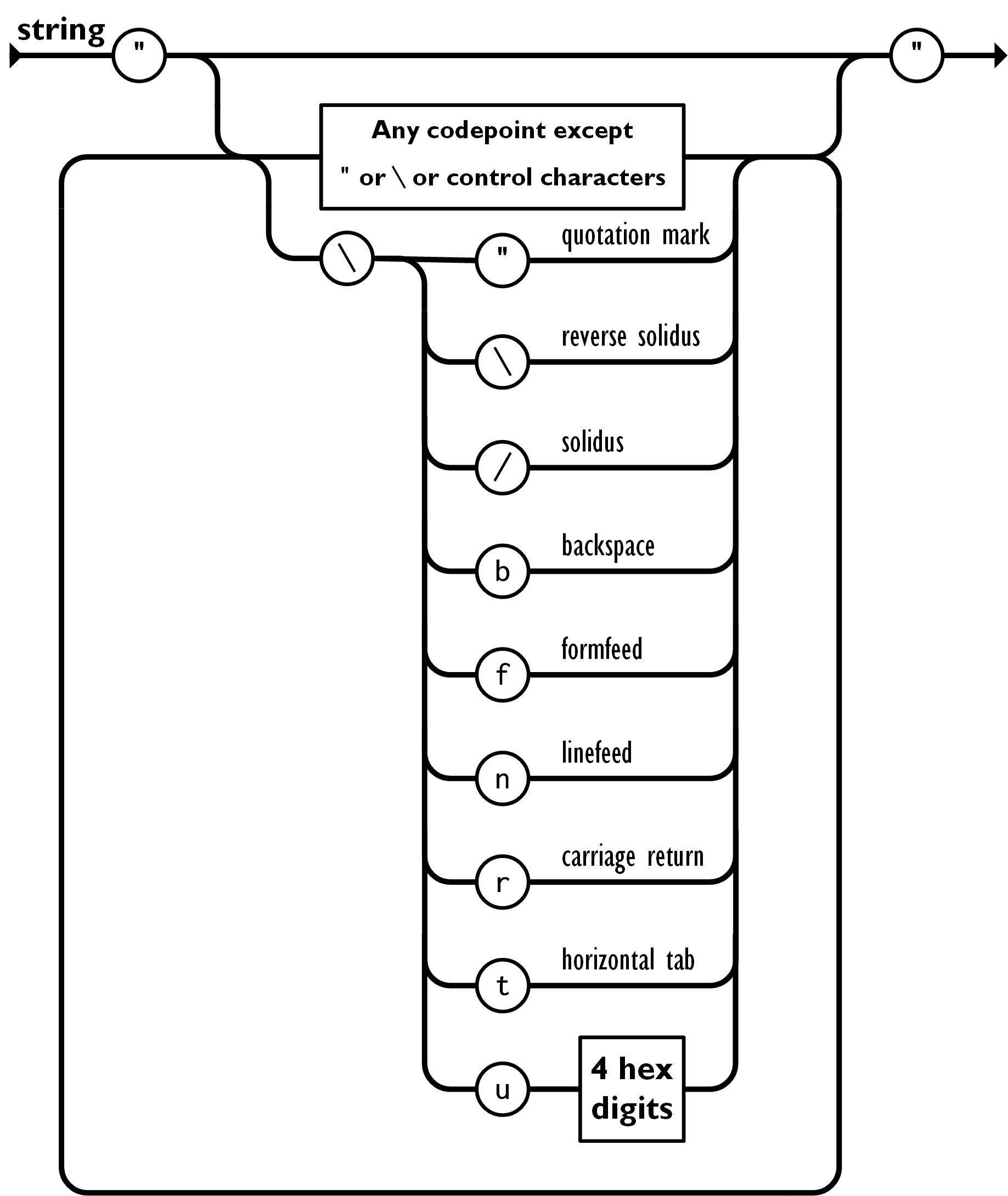
EncodeString encodes given string as JSON string according to https://www.json.org/img/string.png Implementation is inspired by https://github.com/json-iterator/go
func EncodeText ¶ added in v0.7.1
EncodeText is `string(rs)` with the escape: an escape rune contributes the single octet it stands for, so a value that came from DecodeText round-trips exactly. A rune outside the domain cannot reach here — see RuneInDomain — but is written as U+FFFD rather than panicking if one ever does. PURE by contract.
func EscapeRuneOctet ¶ added in v0.7.1
EscapeRuneOctet returns the octet an escape rune stands for. Meaningless for any other rune. PURE by contract.
func IntAddChecked ¶ added in v0.7.1
PURE by contract IntAddChecked / IntSubChecked / IntMulChecked / IntShlChecked are int's checked arithmetic — ok=false means the mathematical result does not fit int64 and the operation must raise instead of wrapping. Shared by the operator implementations here and the VM's integer fast paths.
func IntInRuneDomain ¶ added in v0.7.1
IntInRuneDomain is RuneInDomain over an int64, checking the wider range before the narrowing conversion — rune(1<<32 + 65) would otherwise truncate to 'A' and pass. PURE by contract.
func IntMulChecked ¶ added in v0.7.1
func IntShlChecked ¶ added in v0.7.1
func IntSubChecked ¶ added in v0.7.1
func IsASCIIText ¶ added in v0.7.1
IsASCIIText reports whether every octet is ASCII. This is the fast-path test for the text types: it implies well-formed, one octet per symbol, and byte offsets equal symbol offsets. Note what it is NOT: a rune count equal to the octet count, which an undecodable octet also satisfies while being none of those things. PURE by contract.
func IsBlankByte ¶ added in v0.7.1
IsBlankByte is the octet projection of the same notion: NUL plus ASCII whitespace, a fixed set of literal octets — deciding anything wider would require decoding, which octets never get.
func IsBlankElement ¶ added in v0.7.1
IsBlankElement reports whether e is "insignificant content" for a general container: undefined, or the element type's own zero value. Match-taking members called with NO argument act on this set (count() counts the significant elements, keep() answers exactly those, remove() drops the blanks, index() locates the first significant one). Each verb reads against the set the way its own name implies, which is why keep() and remove() land on the same answer with no argument: two different actions (keep the significant / remove the blank), not one operation under two names. It is a DEFAULT, not a policy — the argument forms override it at any call site, and a script that means "zeros are data" passes its own set. The text triple uses whitespace sets instead (IsBlankRune/IsBlankByte): these members are about separators and filler, and whitespace is text's filler.
func IsBlankRune ¶ added in v0.7.1
IsBlankRune: the symbol types' blank set — NUL plus Unicode whitespace. The blank set is one notion, NUL ∪ whitespace, projected into each receiver's ELEMENT DOMAIN: symbols (string/runes) take the Unicode White_Space class, octets (bytes) the ASCII subset — all the whitespace an octet can express — so the two sets agree everywhere both domains overlap and neither type imports the other's limitation.
func IsEscapeRune ¶ added in v0.7.1
IsEscapeRune reports whether r is one of the 128 reserved octet escapes. PURE by contract.
func NormalizeIndex ¶ added in v0.3.2
NormalizeIndex normalizes index (-1 = last element, -2 = second to last, etc.) and checks if it's within bounds.
func NormalizeSliceBounds ¶ added in v0.3.2
func NormalizeSliceBounds(start int64, hasStart bool, end int64, hasEnd bool, length int64) (int64, int64)
NormalizeSliceBounds normalizes slice bounds (negative values count from the end, missing start defaults to 0, missing end defaults to length) and clamps them to [0, length]. If start > end after normalization, start is set to end.
func NormalizeSliceBoundsStep ¶ added in v0.3.2
func NormalizeSliceBoundsStep(si int64, hasStart bool, ei int64, hasEnd bool, step int64, length int64) (int64, int64)
NormalizeSliceBoundsStep returns the effective start and end for a step-based slice. Caller must ensure step != 0. For step > 0 the iteration is start..end (exclusive). For step < 0 the iteration is start..end (exclusive, with end possibly -1 to include index 0).
func OctetEscapeRune ¶ added in v0.7.1
OctetEscapeRune returns the escape rune reserved for an undecodable octet. PURE by contract.
func OctetsAreASCII ¶ added in v0.7.1
OctetsAreASCII reports whether every octet is ASCII. PURE by contract.
func RuneInDomain ¶ added in v0.7.1
RuneInDomain reports whether r may exist as a `rune` value at all: a scalar value, or an escape. Everything else — a high surrogate, a negative, anything past U+10FFFF — has no octets to be and is refused where it would enter, so that every rune that exists can be encoded and no conversion out of `rune`/`runes` can fail. PURE by contract.
func RuneIsValid ¶ added in v0.7.1
RuneIsValid reports whether r is a real symbol — a Unicode scalar value. An escape is deliberately NOT valid: it stands for an octet that is not a symbol, which is exactly what a script needs to test for. PURE by contract.
func RunesAreASCII ¶ added in v0.7.1
RunesAreASCII reports whether every element is an ASCII symbol. PURE by contract.
func RunesAreValid ¶ added in v0.7.1
RunesAreValid reports whether every element is a real symbol (no escapes). PURE by contract.
func SeqAccessHook ¶ added in v0.3.2
func SeqAccessHook[T any](
	t2v func(T) Value,
	resolve func(Value) *Seq[T],
) func(Value, Value, bc.Opcode) (Value, error)
SeqAccessHook returns a hook function that allows accessing an element of the sequence at a specified index. PURE by contract.
func SeqAssignHook ¶ added in v0.3.2
func SeqAssignHook[T any](
	resolve func(Value) *Seq[T],
	as func(Value) (T, bool),
	tn string,
) func(Value, Value, Value, bc.Opcode) error
IMPURE: returned Assign hook writes into the receiver. Not folded by the optimizer. See docs/purity.md.
SeqAssignHook returns a hook function that allows assigning a value to an element of the sequence at a specified index.
func SeqIndexRun ¶ added in v0.7.1
SeqIndexRun searches for a contiguous run by element equality — leftmost (or rightmost) match of the whole run, non-overlapping being irrelevant for a single locator.
func SeqIterKeyHook ¶ added in v0.4.1
PURE: returned Key hook reads the iterator's current cursor without advancing it. See docs/purity.md.
func SeqIterNextHook ¶ added in v0.4.1
LOCALISED-STATE: returned Next hook advances the iterator's internal cursor. Iterators are expected to be held by a single consumer for the duration of iteration; the optimizer never speculatively evaluates iterator advancement. See docs/purity.md.
func SeqIterStringHook ¶ added in v0.4.1
func SeqIterValueHook ¶ added in v0.4.1
func SeqIterValueHook[T any](
	t2v func(T) Value,
	resolve func(v Value) *SeqIter[T],
) func(Value) (Value, error)
PURE: returned Value hook reads the iterator's current element without advancing it. See docs/purity.md.
func SeqNameHook ¶ added in v0.4.1
SeqNameHook returns a hook function that provides the type name for the sequence based on its mutability.
func SeqPadWidth ¶ added in v0.7.1
SeqPadWidth reads a pad's target WIDTH as an allocation size, raising rather than panicking. It is the same ceiling as `repeat`'s, checked directly instead of as a product: a pad's width IS the resulting element count. The caller must have handled the no-op case (a width at or below the length) first, so what reaches here is always a real allocation. PURE by contract.
func SeqRepeatOperand ¶ added in v0.7.1
SeqRepeatOperand reads the right operand of a sequence's `*` as a repeat count, so `x * n` is exactly `x.repeat(n)`. Only a numeric operand is a count: anything else is not a `*` at all and the caller must fall through to its ordinary invalid-operator path (a `false` second result), so `[1] * "ab"` reads as `invalid_binary_operator` rather than a count that failed to parse. A numeric one is held to the member's contract — whole-valued and non-negative — and its failures are catchable, named for the operator. PURE by contract.
func SeqRepeatTotal ¶ added in v0.7.1
SeqRepeatTotal computes len(receiver) * count for a repeat, raising rather than overflowing or panicking. PURE by contract.
func SeqSliceHook ¶ added in v0.3.2
func SeqSliceHook[T any](
	alloc func([]T, bool) Value,
	resolve func(Value) *Seq[T],
) func(Value, Value, Value) (Value, error)
SeqSliceHook returns a hook function that allows slicing the sequence using start and end indices. Always returns an independently-owned copy of the selected range (P4-002, closing P01/P02) — sharing backing storage with the source is SeqSliceView's job now (the explicit `_view` twin), not this hook's. PURE by contract.
func SeqSliceStepHook ¶ added in v0.3.2
func SeqSliceStepHook[T any](
	alloc func([]T, bool) Value,
	resolve func(Value) *Seq[T],
) func(Value, Value, Value, Value) (Value, error)
SeqSliceStepHook returns a hook function that allows slicing the sequence using start and end indices with a specified step. PURE by contract.
func SetValueType 
func SetValueType(t uint8, f ValueTypeDescr) error
SetValueType registers a user-defined value type descriptor for the given type ID.
func TextIsValid ¶ added in v0.7.1
TextIsValid reports whether s decodes with no escapes — i.e. it is well-formed UTF-8. PURE by contract.
func TextRuneCount ¶ added in v0.7.1
TextRuneCount counts symbols the way DecodeText produces them: one per symbol, one per undecodable octet. utf8.RuneCountInString already counts each bad octet as one, so the two agree by construction. PURE by contract.
func TimeFromComponents ¶ added in v0.7.1
TimeFromComponents rebuilds an instant from its constitutive parts. Every key is optional and defaults to the zero time's part, so an empty map is the zero time; an UNKNOWN key raises, so a typo is an error rather than silently year 1. The way back from t.components().
Types 
type ArrayIterator 
type BuiltinClosure ¶ added in v0.4.1
type BuiltinClosure struct {
	Func     NativeFunc
	Name     string
	Arity    int
	Variadic bool
}
func (*BuiltinClosure) Set ¶ added in v0.4.1
func (f *BuiltinClosure) Set(fn NativeFunc, name string, arity int, variadic bool)
type BuiltinFunction 
type BuiltinFunction struct {
	Func     NativeFunc
	Module   string
	Name     string
	Arity    int
	Variadic bool
	Pure     bool
}
func NewBuiltinFunction ¶ added in v0.4.1
func NewBuiltinFunction(name string, fn NativeFunc, arity int, variadic bool, pure bool) *BuiltinFunction
NewBuiltinFunction creates a new builtin function object. name is the name of the function. fn is the native function to be called. arity is the number of arguments the function takes. variadic is true if the function takes a variable number of arguments, in which case arity is the minimum number of arguments required. pure is true if the function does not have side effects, does not rely on external state, and always returns the same output for the same input.
type BytesIterator 
type CompiledFunction 
type CompiledFunction struct {
	Instructions  bc.Instructions
	Free          []*Value
	SourceMap     map[int]Pos
	NumLocals     int // number of local variables (including function parameters)
	MaxStack      int // estimated maximum operand-stack depth which can be reached during execution
	NumParameters int
	NamedResult   int // local-slot index of function's named result: 0 = no named result, N > 0 means slot N-1
	VarArgs       bool
}
func (*CompiledFunction) DecodeBinary ¶ added in v0.4.1
func (o *CompiledFunction) DecodeBinary(data []byte) error
func (*CompiledFunction) EncodeBinary ¶ added in v0.4.1
func (o *CompiledFunction) EncodeBinary() ([]byte, error)
func (*CompiledFunction) GobDecode ¶ added in v0.4.1
func (o *CompiledFunction) GobDecode(data []byte) error
GobDecode wraps binary decoding to mirror GobEncode.
func (CompiledFunction) GobEncode ¶ added in v0.4.1
func (o CompiledFunction) GobEncode() ([]byte, error)
GobEncode wraps binary encoding so gob does not reflect over fields like Free []*Value (which include unsafe.Pointer).
func (*CompiledFunction) HasNamedResult ¶ added in v0.2.1
func (o *CompiledFunction) HasNamedResult() bool
func (*CompiledFunction) NamedResultSlot ¶ added in v0.2.1
func (o *CompiledFunction) NamedResultSlot() int
NamedResultSlot returns the local-slot index of the named result. Caller should check HasNamedResult first.
func (*CompiledFunction) Set 
func (o *CompiledFunction) Set(instructions bc.Instructions, free []*Value, sourceMap map[int]Pos, numLocals, maxStack int, numParameters int, namedResult int, varArgs bool)
func (*CompiledFunction) Size 
func (o *CompiledFunction) Size() int64
func (*CompiledFunction) SourcePos 
func (o *CompiledFunction) SourcePos(ip int) Pos
type Dict ¶ added in v0.0.8
type DictIterator ¶ added in v0.0.8
type DictIterator struct {
	Elements map[string]Value
	Keys     []string
	// contains filtered or unexported fields
}
func (*DictIterator) Set ¶ added in v0.0.8
func (o *DictIterator) Set(m map[string]Value)
Set snapshots the map's keys in sorted order. Iteration over a map is ORDERED: `for k in d` and `for k, v in d` visit keys lexically, on a `record` as much as a `dict` (both types iterate through this one iterator). The order is part of the contract, not an accident of the Go map — a script that folds, prints or accumulates over a map is reproducible run to run, and agrees with `keys()`/`values()`/`array()` and every other member, all of which sort too.
type FormatSpec ¶ added in v0.4.1
type FormatSpec struct {
	Spec fspec.FormatSpec
	Text string // original mini-language text (without the leading ':')
}
FormatSpec wraps a fully parsed fspec.FormatSpec together with its original textual form. It is an internal value kind: it lives only in the constant pool (referenced by OpFormat) and is never visible to user code.
func (FormatSpec) Equal ¶ added in v0.4.1
func (f FormatSpec) Equal(other FormatSpec) bool
func (*FormatSpec) Set ¶ added in v0.4.1
func (f *FormatSpec) Set(spec fspec.FormatSpec, text string)
type IntRangeIterator 
type IntRangeIterator struct {
	// contains filtered or unexported fields
}
func (*IntRangeIterator) Set 
func (i *IntRangeIterator) Set(start, stop, step int64)
type Record ¶ added in v0.4.1
type RunesIterator ¶ added in v0.0.6
type Seq ¶ added in v0.3.2
type Seq[T any] struct {
	Elements []T
	// IsView reports whether Elements shares backing storage with some other Value, rather than being an
	// independently-owned allocation. Set only by the explicit `_view` constructors (slice_view/chunk_view);
	// every other constructor path leaves it at its zero value (false), including today's still-sharing
	// `slice`/`chunk` default — that default hasn't been renamed to `_view` yet (see P4-002), so it isn't
	// tagged as one. Read by the `is_view()` member predicate.
	IsView bool
}
type SeqIter ¶ added in v0.4.1
type SeqIter[T any] struct {
	Elements []T
	// contains filtered or unexported fields
}
type Static ¶ added in v0.4.1
type Static struct {
	Primitives        []Primitive
	Decimals          []dec128.Dec128
	Strings           []string
	StringLens        []int64 // rune count per static string — always len(Strings) entries, see BuildStringLens
	Runes             []Runes
	Bytes             []Bytes
	Times             []time.Time
	FormatSpecs       []FormatSpec
	CompiledFunctions []CompiledFunction
	NameLists         [][]string
	Ranges            []IntRange
}
Static variables
func (*Static) BuildStringLens ¶ added in v0.7.1
func (s *Static) BuildStringLens()
BuildStringLens populates StringLens with the rune count of each static string. It must run at every point a Static is finalized (compiler build, bytecode decode) so the VM's LoadStaticString never recounts on the hot path. Idempotent.
type VM 
type VM interface {
	Abort()                             // aborts execution of the current script
	IsStackEmpty() bool                 // returns true if there are no frames on the call stack
	Call(Value, []Value) (Value, error) // calls a compiled function
	Run() error                         // runs the VM until completion
	Recover() Value                     // returns the in-flight error if in "deferred-for" frame
}
type Value 
Value represents a boxed Kavun value.
func BuiltinFunctionValue 
BuiltinFunctionValue creates new boxed builtin function value.
func DictToRecord ¶ added in v0.7.1
DictToRecord converts a dict to a record. share=true reuses the dict's own map directly (record_view() / record_view(dict_val) — the explicit performance opt-in, today's original dict.record() behavior preserved under the new name); share=false (record() / dict_val.record()) builds an independent shallow copy — a new top-level map, elements copied by reference (not recursively cloned), matching every other type's own `.record()` conversion (array/bytes/runes/string/range all shallow-copy the same way). Used by both the dict.record()/dict.record_view() member cases and the free record()/record_view() constructors.
func FloatValue 
func ForEachCallback ¶ added in v0.3.2
ForEachCallback validates that the only argument is a callback (non-variadic function of arity 1 or 2) and returns it as a Value.
func MapToSortedEntries ¶ added in v0.7.1
MapToSortedEntries materializes a map's conversion elements — its entries — as [[k, v], ...] in canonical key-sorted order, so the two directions of the sequence<->map boundary round-trip up to that ordering.
func NewArrayIteratorValue 
func NewArrayValue 
func NewBuiltinClosureValue ¶ added in v0.4.1
func NewBuiltinClosureValue(name string, fn NativeFunc, arity int, variadic bool) Value
func NewBytesIteratorValue 
func NewBytesValue 
func NewDecimalValue 
func NewDictIteratorValue ¶ added in v0.0.8
func NewIntRangeValue 
func NewRunesIteratorValue ¶ added in v0.0.6
func NewRunesValue ¶ added in v0.0.6
func NewRuntimeErrorValue ¶ added in v0.2.1
func NewStaticBytesValue ¶ added in v0.5.1
func NewStaticCompiledFunctionValue ¶ added in v0.4.1
func NewStaticCompiledFunctionValue(cf *CompiledFunction) Value
func NewStaticDecimalValue ¶ added in v0.4.1
func NewStaticFormatSpecValue ¶ added in v0.4.1
func NewStaticFormatSpecValue(fs *FormatSpec) Value
func NewStaticIntRangeValue ¶ added in v0.6.3
NewStaticIntRangeValue wraps a range backed by the compiler's static pool (see compiler/static.go), sharing the pool's storage directly instead of allocating a fresh IntRange. Safe because IntRange is always immutable and has no reachable mutable substructure — mirrors NewStaticDecimalValue/NewStaticTimeValue.
func NewStaticRunesValue ¶ added in v0.4.1
func NewStaticStringValue ¶ added in v0.4.1
func NewStaticStringValueCounted ¶ added in v0.7.1
NewStaticStringValueCounted is NewStaticStringValue with a precomputed rune count
func NewStaticTimeValue ¶ added in v0.5.1
func NewStringValue 
func NewTimeValue 
func NewValuePtrValue ¶ added in v0.4.1
func RangeFromComponents ¶ added in v0.7.1
RangeFromComponents rebuilds a range from {start, stop[, step]}: start and stop are required, step defaults to 1, an unknown key raises. The way back from r.components().
func RecordToDict ¶ added in v0.7.1
RecordToDict converts a record to a dict. share=true reuses the record's own map directly (dict_view(record_val) — the explicit performance opt-in, today's original dict(record_val) behavior preserved under the new name); share=false (dict(record_val)) builds an independent shallow copy — a new top-level map, elements copied by reference (not recursively cloned), matching every other type's own `.dict()` conversion. Only ever reached via the free `dict`/`dict_view` constructors: record has no `MethodCall` switch (see P14), so there is no `record_val.dict()` member form and never was.
func SeqAnchoredMember ¶ added in v0.7.1
func SeqAnchoredMember[T any](
	name string,
	v Value,
	args []Value,
	alloc func([]T, bool) Value,
	resolve func(Value) *Seq[T],
	encode func(name string, a Value) (run []T, elementClass bool, err error),
	eq func(T, T) bool,
	suffix bool,
	remove bool,
) (Value, error)
SeqAnchoredMember implements has_prefix/has_suffix (a bool: is any run in the set anchored there?) and remove_prefix/remove_suffix (remove one exact anchored run, ONCE; absent from the receiver → unchanged; the longest matching run in a variadic set wins, keeping the set order-independent). Element | run | homogeneous set; no predicate ("the first element satisfies f" is index(f) == 0) and no no-argument form. The empty run is anchored everywhere: has_prefix on it answers true, remove_prefix on it removes nothing.
func SeqChunk ¶ added in v0.3.2
func SeqChunk[T any](
	v Value,
	args []Value,
	alloc func([]T, bool) Value,
	resolve func(Value) *Seq[T],
) (Value, error)
SeqChunk divides the sequence into chunks of the specified size and returns a new sequence containing the chunks — always independently-owned copies (P4-002: the `copy` bool parameter is retired; chunk_view() is the explicit opt-in for sharing now, not a second argument here).
func SeqChunkView ¶ added in v0.7.1
func SeqChunkView[T any](
	v Value,
	args []Value,
	alloc func([]T, bool) Value,
	resolve func(Value) *Seq[T],
) (Value, error)
SeqChunkView is the `_view` twin of chunk(): always shares backing storage with the source (today's chunk(size, false) behavior), and marks every resulting chunk as a view via IsView.
func SeqForEach ¶ added in v0.3.2
func SeqForEach[T any](
	vm VM,
	v Value,
	args []Value,
	t2v func(T) Value,
	resolve func(Value) *Seq[T],
) (Value, error)
SeqForEach iterates over the elements of the sequence and calls the provided callback function for each element.
func SeqIndex ¶ added in v0.7.1
func SeqIndex[T any](
	vm VM,
	v Value,
	args []Value,
	last bool,
	t2v func(T) Value,
	resolve func(Value) *Seq[T],
	isRun func(Value) bool,
	matchRun func(elems []T, run Value, last bool) (int64, bool, error),
	checkElem func(name string, a Value) error,
	isBlank func(T) bool,
) (Value, error)
SeqIndex is the locator: index([x[, default]]) / index_last([x[, default]]). One name, and the argument's type selects the reading — a function is a predicate, an argument of the receiver's own kind is a contiguous run (the caller supplies matchRun for that; nil means the reading is not available), no argument means the first/last SIGNIFICANT element (the blank set), anything else is one element compared with ==. Never variadic: the trailing slot is the default, and no type test could tell a second needle from a fallback.
func SeqMap ¶ added in v0.3.2
func SeqMap[T any](
	vm VM,
	v Value,
	args []Value,
	t2v func(T) Value,
	resolve func(Value) *Seq[T],
) (Value, error)
SeqMap applies a given function to each element in the sequence and returns a new sequence containing the results.
func SeqMatchMember ¶ added in v0.7.1
func SeqMatchMember[T any](
	vm VM,
	name string,
	v Value,
	args []Value,
	t2v func(T) Value,
	alloc func([]T, bool) Value,
	resolve func(Value) *Seq[T],
	toElem func(Value) (T, bool, error),
	isRunArg func(Value) bool,
	toRun func(Value) ([]T, error),
	eq func(T, T) bool,
	isBlank func(T) bool,
) (Value, error)
SeqMatchMember implements contains/count/keep/remove/any/all over one dispatch. any/all refuse a run PERMANENTLY (the contiguous-run query is contains's, and "every element is this subsequence" has no universal reading); remove's no-argument form drops the blanks (the one destructive no-arg cell — documented, not guarded).
func SeqPadMember ¶ added in v0.7.1
func SeqPadMember[T any](
	name string,
	v Value,
	args []Value,
	alloc func([]T, bool) Value,
	resolve func(Value) *Seq[T],
	fill func(name string, a Value) (T, error),
	defaultFill T,
	start bool,
) (Value, error)
SeqPadMember implements pad_start(n[, fill]) / pad_end(n[, fill]): n counts ELEMENTS, the fill is exactly one element — a run fill raises, because cycling a multi-element fill hides a truncation rule — and its default is the blank set's canonical member. A width at or below the length is a no-op; one past MaxSequenceLen raises rather than panicking the host in makeslice.
func SeqPartitionMember ¶ added in v0.7.1
func SeqPartitionMember[T any](
	vm VM,
	name string,
	v Value,
	args []Value,
	t2v func(T) Value,
	alloc func([]T, bool) Value,
	resolve func(Value) *Seq[T],
	encode func(name string, a Value) (run []T, elementClass bool, err error),
	eq func(T, T) bool,
	isBlank func(T) bool,
) (Value, error)
SeqPartitionMember implements partition(...seps): the one-split form — [before, separator, after], the separator as matched; a miss answers [receiver, empty, empty]. Same separator menu as split; the leftmost hit wins, the longest at that position (the set stays order-independent). The blank no-argument form takes the whole maximal run of filler as the separator, exactly the run split's derivation collapses on one hit.
func SeqReduce ¶ added in v0.3.2
func SeqReduce[T any](
	vm VM,
	v Value,
	args []Value,
	t2v func(T) Value,
	resolve func(Value) *Seq[T],
) (Value, error)
SeqReduce reduces the sequence to a single value by applying a given binary function cumulatively to the elements of the sequence, from left to right. The function can have arity 2 (accumulator, element) or 3 (accumulator, index, element).
func SeqReplaceMember ¶ added in v0.7.1
func SeqReplaceMember[T any](
	name string,
	v Value,
	args []Value,
	alloc func([]T, bool) Value,
	resolve func(Value) *Seq[T],
	encode func(name string, a Value) (run []T, elementClass bool, err error),
	eq func(T, T) bool,
) (Value, error)
SeqReplaceMember implements replace(old, new): element or run in BOTH positions, each argument read by its own type (the two slots have different roles, so no homogeneity constraint applies between them); every occurrence, leftmost non-overlapping. Never variadic — position 2 is the replacement — and never a predicate. An empty old run matches nothing: the receiver comes back unchanged.
func SeqSlice ¶ added in v0.7.1
SeqSlice is the member-call form of two-part slicing (`x.slice(start, end)`), reusing the same (now always-copying, per P4-002) Slice hook the `a[i:j]` operator uses — same operation, second spelling, per Rule 10. Accepts 0, 1, or 2 args, mirroring the operator's own optional start/end.
func SeqSliceView ¶ added in v0.7.1
func SeqSliceView[T any](
	v Value,
	args []Value,
	alloc func([]T, bool) Value,
	resolve func(Value) *Seq[T],
) (Value, error)
SeqSliceView is the `_view` twin of two-part slicing: shares backing storage with the source via a raw re-slice — the sharing behavior `a[i:j]` itself had before P4-002, preserved here as the explicit opt-in. Marked as a view via IsView. Accepts 0, 1, or 2 args, mirroring the operator's own optional start/end.
func SeqSplice ¶ added in v0.7.1
func SeqSplice[T any](
	args []Value,
	mutate bool,
	alloc func([]T, bool) Value,
	resolve func(Value) *Seq[T],
	convertItems func(args []Value, methodName string) ([]T, error),
	typeName string,
) (Value, error)
SeqSplice implements splice()/splice_in_place() for any Seq[T]-backed type (array/bytes/runes). args[0] is the receiver value — kept as the first positional arg (rather than a separate v Value parameter) so the "argument first/second/third" error wording, established when array was the only type this ran for, stays identical now that bytes/runes share this same function (P5-002). convertItems turns the trailing variadic args (from index 3 on) into []T: array's is a plain identity (elements are already Values, no conversion or flattening), while bytes'/runes' reuse the same flattening-and-type-checking logic append() already uses (bytesAppendItems/runesAppendItems), so passing a bytes/runes value as one of splice's insert items spreads it exactly like it does for append(), rather than erroring or nesting it as a single opaque element. mutate=true: IMPURE, mutates the receiver in place and returns the deleted items (splice_in_place()) — rejects an immutable receiver. mutate=false: PURE, returns the modified sequence instead of the deleted items (splice()), never touching the receiver — works regardless of the receiver's mutability. See docs/purity.md.
func SeqSplitMember ¶ added in v0.7.1
func SeqSplitMember[T any](
	vm VM,
	name string,
	v Value,
	args []Value,
	t2v func(T) Value,
	alloc func([]T, bool) Value,
	resolve func(Value) *Seq[T],
	encode func(name string, a Value) (run []T, elementClass bool, err error),
	eq func(T, T) bool,
	isBlank func(T) bool,
) (Value, error)
SeqSplitMember implements split(...seps): separator element | run | homogeneous set | element-level predicate | absent = the blank set. Explicit separators keep empty pieces between adjacent hits (n matches answer n+1 pieces, so an empty receiver splits into one empty piece); the blank form answers the maximal runs of SIGNIFICANT content — the blanks are filler, and there is no piece between two of them — which is what preserves the classic no-argument whitespace split. Runs match leftmost-longest, non-overlapping; an empty separator run matches nothing.
func SeqStructuralMember ¶ added in v0.7.1
func SeqStructuralMember[T any](
	name string,
	v Value,
	args []Value,
	alloc func([]T, bool) Value,
	resolve func(Value) *Seq[T],
	encode func(name string, a Value) (run []T, elementClass bool, err error),
	fill func(name string, a Value) (T, error),
	defaultFill T,
	eq func(T, T) bool,
	isBlank func(T) bool,
) (Value, error)
SeqStructuralMember routes one structural member — or the pure half of its _in_place twin — by verb. The caller strips nothing: the full member name reaches every error message; only the verb switch ignores the suffix. has_prefix/has_suffix answer a bool and so have no twins; the caller's case list enforces that.
func SeqTrimMember ¶ added in v0.7.1
func SeqTrimMember[T any](
	name string,
	v Value,
	args []Value,
	alloc func([]T, bool) Value,
	resolve func(Value) *Seq[T],
	encode func(name string, a Value) (run []T, elementClass bool, err error),
	eq func(T, T) bool,
	isBlank func(T) bool,
	start bool,
	end bool,
) (Value, error)
SeqTrimMember implements trim(...set) / trim_start / trim_end: drop leading/trailing elements while they belong to the set — repeat-while, ELEMENTS only. A run argument raises (the anchored exact-run form is remove_prefix/remove_suffix — people who write trim(run) mean that), and so does a predicate; no argument means the blank set.
func TripleFlatMapMember ¶ added in v0.7.1
func TripleFlatMapMember[T any](
	vm VM,
	name string,
	v Value,
	args []Value,
	t2v func(T) Value,
	alloc func([]T, bool) Value,
	resolve func(Value) *Seq[T],
	encode func(name string, a Value) (run []T, elementClass bool, err error),
) (Value, error)
TripleFlatMapMember: flat_map on a text receiver — each callback result is text content read as a run (a single element is a length-1 run), undefined contributes nothing.
func TripleMapMember ¶ added in v0.7.1
func TripleMapMember[T any](
	vm VM,
	name string,
	v Value,
	args []Value,
	t2v func(T) Value,
	alloc func([]T, bool) Value,
	resolve func(Value) *Seq[T],
	encode func(name string, a Value) (run []T, elementClass bool, err error),
) (Value, error)
TripleMapMember: map on a text receiver — strictly 1:1, answering the receiver's type.
func TripleMatchMember ¶ added in v0.7.1
func TripleMatchMember[T any](
	vm VM,
	name string,
	v Value,
	args []Value,
	t2v func(T) Value,
	alloc func([]T, bool) Value,
	resolve func(Value) *Seq[T],
	encode func(name string, a Value) (run []T, elementClass bool, err error),
	eq func(T, T) bool,
	isBlank func(T) bool,
) (Value, error)
TripleMatchMember is the match engine for the text triple, where acceptance collapses: every accepted argument is TEXT CONTENT, encoded into the receiver's representation and read as a run (a length-1 run is the element case). The element/run classes survive only for the homogeneity check of a variadic set, decided by argument TYPE (byte/rune/in-range int = element class; string/runes/bytes = run class), never by length.
func (Value) Append 
MUTATE-DEPENDENT by contract: mutate=true mutates the receiver in place (append_in_place()); mutate=false returns an independent value with the items appended (append()).
func (Value) AsIntRange ¶ added in v0.6.3
PURE by contract
func (Value) Contains 
PURE by contract Contains is the `in` operator: exactly the contains member's VALUE readings — element | run | family, full member acceptance — raising on an unacceptable operand. A callable operand raises too: an operator operand is always a value; the predicate reading is the member's (contains(f) ≡ any(f)).
func (*Value) Copy 
PURE by contract: deep=true recursively copies nested Values (copy()); deep=false copies only the top-level container/wrapper, sharing nested structure (copy_shallow()).
func (*Value) DecodeBinary 
IMPURE by contract (mutates target)
func (Value) Delete 
MUTATE-DEPENDENT by contract: mutate=true mutates the receiver in place (delete_in_place()); mutate=false returns an independent container without the key (delete()).
func (Value) Elem ¶ added in v0.7.1
LOCALISED-STATE by contract (reads iterator cursor) Elem is the single-variable for-in binding: the container's ELEMENT — the Value hook everywhere except map iterators, whose element is the KEY (the value is the attachment; the two-variable form reads both).
func (Value) Format ¶ added in v0.1.3
func (v Value) Format(sp fspec.FormatSpec) (string, error)
PURE by contract
func (Value) Freeze ¶ added in v0.7.1
PURE by contract: never mutates the receiver or affects any existing alias into it. Deep-copies first (Copy(true)), then marks only the fresh, not-yet-observable clone immutable throughout (MarkImmutableDeep) — safe for the same reason export's codegen is (see MarkImmutableDeep's own precondition): nothing outside this call can reach the clone yet. This is freeze()'s definition; freeze_shallow() is ToImmutable() by another name — the explicit twin that skips the detach and so does NOT protect against another live, still-mutable alias into the same body.
func (Value) GobEncode 
GobEncode wraps binary encoding so gob does not reflect over unsafe.Pointer field.
func (*Value) MarkImmutableDeep ¶ added in v0.7.1
func (v *Value) MarkImmutableDeep()
IMPURE by contract (mutates target)
MarkImmutableDeep flips Immutable to true on v and, recursively, on every Value reachable through it — array/dict/record elements and an error's payload — without cloning anything. Unlike ToImmutable, which only ever flips the top-level flag, this walks into containers so that no reachable nested Value keeps looking mutable after the top-level one no longer is. Only safe to call when nothing outside the caller can still observe v (or anything under it) as mutable. Deliberately does not recurse into a compiled function's closed-over free variables (CompiledFunction.Free) or ValuePtr indirection: those are variable-capture aliasing, a different mechanism from container nesting, and out of scope here. Does not guard against cyclic containers, matching every other recursive Value walk in this package (e.g. arrayTypeCopy) — Kavun's shared-by-default container model doesn't defend against that anywhere today.
func (Value) MethodCall 
METHOD-DEPENDENT by contract: purity varies per method name, reported by IsMethodPure (see docs/purity.md)
func (Value) ToImmutable ¶ added in v0.3.2
PURE by contract: exposed to scripts as freeze_shallow() (member call and free builtin). Despite the naming symmetry with freeze()'s "_shallow"/deep split, this never mutates any shared storage — it returns a new header (Immutable flag flipped) pointing at the same body, so it's a genuinely pure operation like copy() or copy_shallow(), not an "_in_place"-style body mutation: the caller must capture and reassign the result (`x = x.freeze_shallow()` / `x = freeze_shallow(x)`) to see any effect on their own variable, and a pre-existing sibling binding into the same body is unaffected and stays independently mutable. Renamed from freeze_in_place 2026-08-17 — that name wrongly implied the same "mutates without reassignment" behavior as append_in_place/splice_in_place/delete_in_place, which this operation structurally cannot do (Immutable lives on the header, not the body).
type ValueTypeDescr ¶ added in v0.4.1
type ValueTypeDescr struct {
	Name         func(v Value) string                                                      // PURE by contract
	String       func(v Value) string                                                      // PURE by contract
	Format       func(v Value, sp fspec.FormatSpec) (string, error)                        // PURE by contract
	Interface    func(v Value) any                                                         // PURE by contract
	EncodeJSON   func(v Value) ([]byte, error)                                             // PURE by contract
	EncodeBinary func(v Value) ([]byte, error)                                             // PURE by contract
	DecodeBinary func(v *Value, data []byte) error                                         // IMPURE by contract (mutates target)
	IsTrue       func(v Value) (bool, error)                                               // PURE by contract
	Copy         func(v Value, deep bool) (Value, error)                                   // PURE by contract: deep=true recursively copies nested Values (copy()); deep=false copies only the top-level container/wrapper, sharing nested structure (copy_shallow())
	Equal        func(v Value, other Value, final bool) bool                               // PURE by contract
	BinaryOp     func(v Value, other Value, op token.Token, reflected bool) (Value, error) // PURE by contract
	UnaryOp      func(v Value, op token.Token) (Value, error)                              // PURE by contract
	MethodCall   func(vm VM, v Value, name string, args []Value) (Value, error)            // METHOD-DEPENDENT by contract: purity varies per method name, reported by IsMethodPure (see docs/purity.md)

	IsIterable func(v Value) bool                                         // PURE by contract
	Contains   func(v Value, e Value) (bool, error)                       // PURE by contract — the `in` operator: contains' VALUE readings (element | run | family), raising on an unacceptable operand; a callable raises, an operator operand is always a value
	Len        func(v Value) int64                                        // PURE by contract
	Iterator   func(v Value) (Value, error)                               // PURE by contract (constructs fresh iterator)
	Access     func(v Value, index Value, mode bc.Opcode) (Value, error)  // PURE by contract
	Assign     func(v Value, index Value, r Value, mode bc.Opcode) error  // IMPURE by contract (mutates target); mode is AccessIndex or AccessSelector — the spelling the assignment used
	Append     func(v Value, args []Value, mutate bool) (Value, error)    // MUTATE-DEPENDENT by contract: mutate=true mutates the receiver in place (append_in_place()); mutate=false returns an independent value with the items appended (append())
	Slice      func(v Value, s Value, e Value) (Value, error)             // PURE by contract
	Delete     func(v Value, key Value, mutate bool) (Value, error)       // MUTATE-DEPENDENT by contract: mutate=true mutates the receiver in place (delete_in_place()); mutate=false returns an independent container without the key (delete())
	SliceStep  func(v Value, s Value, e Value, step Value) (Value, error) // PURE by contract

	IsCallable func(v Value) bool                                // PURE by contract
	IsVariadic func(v Value) bool                                // PURE by contract
	Arity      func(v Value) int                                 // PURE by contract
	Call       func(vm VM, v Value, args []Value) (Value, error) // CALLABLE-DEPENDENT by contract

	Next  func(v Value) bool           // LOCALISED-STATE by contract (advances iterator cursor)
	Key   func(v Value) (Value, error) // LOCALISED-STATE by contract (reads iterator cursor)
	Value func(v Value) (Value, error) // LOCALISED-STATE by contract (reads iterator cursor)
	Elem  func(v Value) (Value, error) // LOCALISED-STATE by contract: the single-variable for-in binding — the container's ELEMENT. Defaults to the Value hook; a map iterator answers the KEY, because a map's element is its key

	AsBool     func(v Value) (bool, bool)             // PURE by contract
	AsByte     func(v Value) (byte, bool)             // PURE by contract
	AsRune     func(v Value) (rune, bool)             // PURE by contract
	AsInt      func(v Value) (int64, bool)            // PURE by contract
	AsFloat    func(v Value) (float64, bool)          // PURE by contract
	AsDecimal  func(v Value) (dec128.Dec128, bool)    // PURE by contract
	AsTime     func(v Value) (time.Time, bool)        // PURE by contract
	AsString   func(v Value) (string, bool)           // PURE by contract
	AsRunes    func(v Value) ([]rune, bool)           // PURE by contract
	AsBytes    func(v Value) ([]byte, bool)           // PURE by contract
	AsArray    func(v Value) ([]Value, bool)          // PURE by contract
	AsDict     func(v Value) (map[string]Value, bool) // PURE by contract
	AsIntRange func(v Value) (IntRange, bool)         // PURE by contract

	IsMethodPure func(name string) bool
}
ValueTypeDescr is a Kavun data type descriptor structure. See docs/purity.md for purity contract.
 Source Files

Source Files

- array.go
- array_iterator.go
- bool.go
- builtin_closure.go
- builtin_function.go
- byte.go
- bytes.go
- bytes_iterator.go
- compiled_function.go
- decimal.go
- dict.go
- dict_iterator.go
- error.go
- float.go
- format_spec.go
- generic.go
- generic_seq.go
- generic_seq_iter.go
- init.go
- int.go
- int_range.go
- int_range_iterator.go
- record.go
- rune.go
- runes.go
- runes_iterator.go
- string.go
- text_escape.go
- time.go
- tools.go
- types.go
- undefined.go
- value.go
- value_ptr.go
 Directories