

 README

README

Goptuna


Decentralized hyperparameter optimization framework, inspired by Optuna [1]. This library is particularly designed for machine learning, but everything will be able to optimize if you can define the objective function (e.g. Optimizing the number of goroutines of your server and the memory buffer size of the caching systems).
Supported algorithms:
Goptuna supports various state-of-the-art Bayesian optimization, evolution strategies and Multi-armed bandit algorithms. All algorithms are implemented in pure Go and continuously benchmarked on GitHub Actions.
- Random search
- TPE: Tree-structured Parzen Estimators [2]
- CMA-ES: Covariance Matrix Adaptation Evolution Strategy [3]
- IPOP-CMA-ES: CMA-ES with increasing population size [4]
- BIPOP-CMA-ES: BI-population CMA-ES [5]
- Median Stopping Rule [6]
- ASHA: Asynchronous Successive Halving Algorithm (Optuna flavored version) [1,7,8]
- Quasi-monte carlo sampling based on Sobol sequence [10, 11]
Projects using Goptuna:
- Kubeflow/Katib: Kubernetes-based system for hyperparameter tuning and neural architecture search.
- c-bata/goptuna-bayesopt: Goptuna sampler for Gaussian Process based bayesian optimization using d4l3k/go-bayesopt. [9]
- c-bata/goptuna-isucon9q: Applying bayesian optimization for the parameters of MySQL, Nginx and Go web applications.
- (If you have a project which uses Goptuna and want your own project to be listed here, please submit a GitHub issue.)
Installation
You can integrate Goptuna in wide variety of Go projects because of its portability of pure Go.
$ go get -u github.com/c-bata/goptuna
Usage
Goptuna supports Define-by-Run style API like Optuna. You can dynamically construct the search spaces.
Basic usage
package main

import (
    "log"
    "math"

    "github.com/c-bata/goptuna"
    "github.com/c-bata/goptuna/tpe"
)

// ① Define an objective function which returns a value you want to minimize.
func objective(trial goptuna.Trial) (float64, error) {
    // ② Define the search space via Suggest APIs.
    x1, _ := trial.SuggestFloat("x1", -10, 10)
    x2, _ := trial.SuggestFloat("x2", -10, 10)
    return math.Pow(x1-2, 2) + math.Pow(x2+5, 2), nil
}

func main() {
    // ③ Create a study which manages each experiment.
    study, err := goptuna.CreateStudy(
        "goptuna-example",
        goptuna.StudyOptionSampler(tpe.NewSampler()))
    if err != nil { ... }

    // ④ Evaluate your objective function.
    err = study.Optimize(objective, 100)
    if err != nil { ... }

    // ⑤ Print the best evaluation parameters.
    v, _ := study.GetBestValue()
    p, _ := study.GetBestParams()
    log.Printf("Best value=%f (x1=%f, x2=%f)",
        v, p["x1"].(float64), p["x2"].(float64))
}
Link: Go Playground
Furthermore, I recommend you to use RDB storage backend for following purposes.
- Continue from where we stopped in the previous optimizations.
- Scale studies to tens of workers that connecting to the same RDB storage.
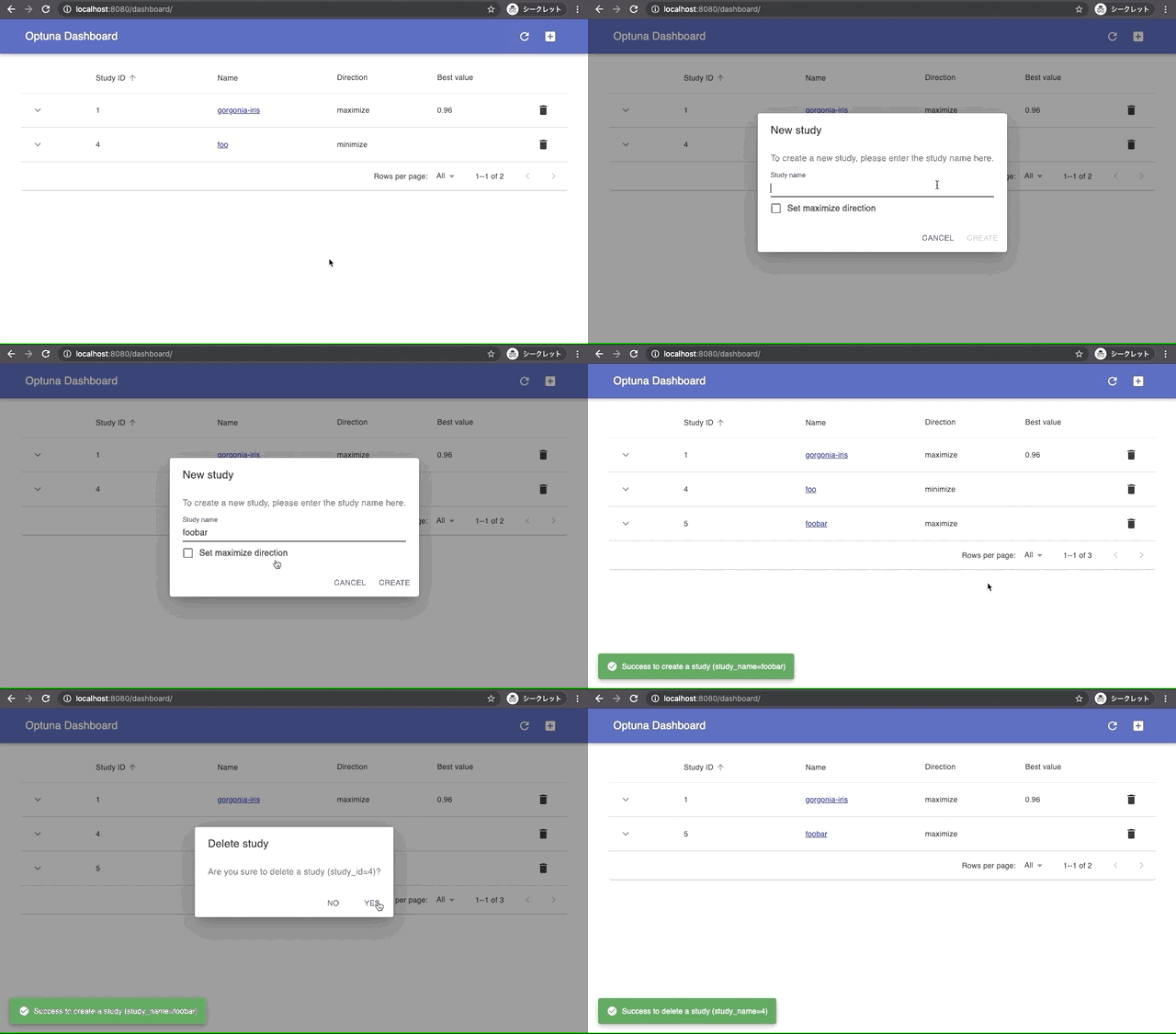
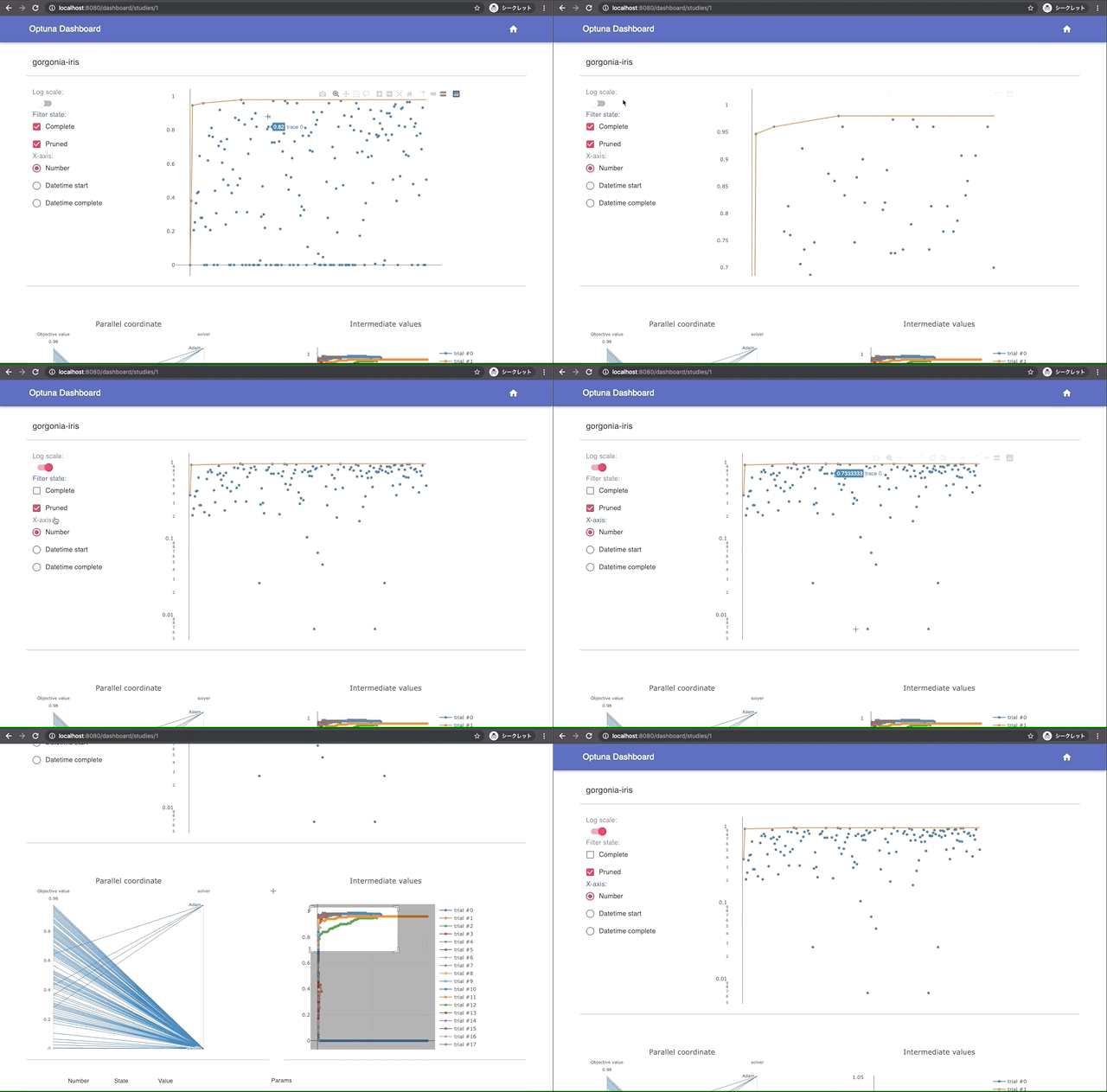
- Check optimization results via a built-in dashboard.
Built-in Web Dashboard
You can check optimization results by built-in web dashboard.
- SQLite3:
$ goptuna dashboard --storage sqlite:///example.db(See here for details). - MySQL:
$ goptuna dashboard --storage mysql://goptuna:password@127.0.0.1:3306/yourdb(See here for details)
| Manage optimization results | Interactive live-updating graphs |
|---|---|
 |
 |
Advanced Usage
Parallel optimization with multiple goroutine workers
Optimize method of goptuna.Study object is designed as the goroutine safe.
So you can easily optimize your objective function using multiple goroutine workers.
package main

import ...

func main() {
    study, _ := goptuna.CreateStudy(...)

    eg, ctx := errgroup.WithContext(context.Background())
    study.WithContext(ctx)
    for i := 0; i < 5; i++ {
        eg.Go(func() error {
            return study.Optimize(objective, 100)
        })
    }
    if err := eg.Wait(); err != nil { ... }
    ...
}
Distributed optimization using MySQL
There is no complicated setup to use RDB storage backend. First, setup MySQL server like following to share the optimization result.
$ docker pull mysql:8.0
$ docker run \
  -d \
  --rm \
  -p 3306:3306 \
  -e MYSQL_USER=goptuna \
  -e MYSQL_DATABASE=goptuna \
  -e MYSQL_PASSWORD=password \
  -e MYSQL_ALLOW_EMPTY_PASSWORD=yes \
  --name goptuna-mysql \
  mysql:8.0
Then, create a study object using Goptuna CLI.
$ goptuna create-study --storage mysql://goptuna:password@localhost:3306/yourdb --study yourstudy
yourstudy
$ mysql --host 127.0.0.1 --port 3306 --user goptuna -ppassword -e "SELECT * FROM studies;"
+----------+------------+-----------+
| study_id | study_name | direction |
+----------+------------+-----------+
|        1 | yourstudy  | MINIMIZE  |
+----------+------------+-----------+
1 row in set (0.00 sec)
Finally, run the Goptuna workers which contains following code. You can execute distributed optimization by just executing this script from multiple server instances.
package main

import ...

func main() {
    db, _ := gorm.Open(mysql.Open("goptuna:password@tcp(localhost:3306)/yourdb?parseTime=true"), &gorm.Config{
        Logger: logger.Default.LogMode(logger.Silent),
    })
    storage := rdb.NewStorage(db)
    defer db.Close()

    study, _ := goptuna.LoadStudy(
        "yourstudy",
        goptuna.StudyOptionStorage(storage),
        ...,
    )
    _ = study.Optimize(objective, 50)
    ...
}
Full source code is available here.
Receive notifications of each trials
You can receive notifications of each trials via channel. It can be used for logging and any notification systems.
package main

import ...

func main() {
    trialchan := make(chan goptuna.FrozenTrial, 8)
    study, _ := goptuna.CreateStudy(
        ...
        goptuna.StudyOptionIgnoreObjectiveErr(true),
        goptuna.StudyOptionSetTrialNotifyChannel(trialchan),
    )

    var wg sync.WaitGroup
    wg.Add(2)
    go func() {
        defer wg.Done()
        err = study.Optimize(objective, 100)
        close(trialchan)
    }()
    go func() {
        defer wg.Done()
        for t := range trialchan {
            log.Println("trial", t)
        }
    }()
    wg.Wait()
    if err != nil { ... }
    ...
}
Links
References:
- [1] T. Akiba, S. Sano, T. Yanase, T. Ohta, and M. Koyama, Optuna: A Next-generation Hyperparameter Optimization Framework, KDD, 2019.
- [2] J. Bergstra, R. Bardenet, Y. Bengio, and B. Kégl, Algorithms for hyper-parameter optimization. NeurIPS, 2011.
- [3] N. Hansen, The CMA Evolution Strategy: A Tutorial. arXiv:1604.00772, 2016.
- [4] A. Auger and N. Hansen, A restart CMA evolution strategy with increasing population size, CEC, 2005.
- [5] N. Hansen, Benchmarking a BI-Population CMA-ES on the BBOB-2009 Function Testbed, GECCO Workshop, 2009.
- [6] D. Golovin, B. Sonik, S. Moitra, G. Kochanski, J. Karro, and D.Sculley, Google Vizier: A service for black-box optimization. KDD, 2017.
- [7] K. Jamieson and T. Ameet, Non-stochastic best arm identification and hyperparameter optimization, AISTATS, 2016.
- [8] L. Li, K. Jamieson, A. Rostamizadeh, E. Gonina, M. Hardt, B. Recht, and A. Talwalkar, Massively parallel hyperparameter tuning, arXiv:1810.05934, 2018.
- [9] J. Snoek, H. Larochelle, and R. Adams. Practical Bayesian optimization of machine learning algorithms. NeurIPS, 2012.
- [10] S. Joe and F. Y. Kuo, Remark on Algorithm 659: Implementing Sobol's quasirandom sequence generator, ACM Trans, 2003.
- [11] S. Kucherenko, D. Albrecht, and A. Saltelli, Exploring multi-dimensional spaces: A comparison of latin hypercube and quasi monte carlo sampling techniques, arXiv:1505.02350, 2015.
Presentations:
Blog posts:
Status:
License
This software is licensed under the MIT license, see LICENSE for more information.
 Documentation

Documentation

Index 
- Constants
- Variables
- func DeleteStudy(name string, storage Storage) error
- func DistributionIsSingle(distribution interface{}) (bool, error)
- func DistributionToJSON(distribution interface{}) ([]byte, error)
- func IntersectionSearchSpace(study *Study) (map[string]interface{}, error)
- func JSONToDistribution(jsonBytes []byte) (interface{}, error)
- func ToExternalRepresentation(distribution interface{}, ir float64) (interface{}, error)
- type BlackHoleStorage
- func (s *BlackHoleStorage) CloneTrial(studyID int, baseTrial FrozenTrial) (int, error)
- func (s *BlackHoleStorage) CreateNewStudy(name string) (int, error)
- func (s *BlackHoleStorage) CreateNewTrial(studyID int) (int, error)
- func (s *BlackHoleStorage) DeleteStudy(studyID int) error
- func (s *BlackHoleStorage) GetAllStudySummaries() ([]StudySummary, error)
- func (s *BlackHoleStorage) GetAllTrials(studyID int) ([]FrozenTrial, error)
- func (s *BlackHoleStorage) GetBestTrial(studyID int) (FrozenTrial, error)
- func (s *BlackHoleStorage) GetStudyDirection(studyID int) (StudyDirection, error)
- func (s *BlackHoleStorage) GetStudyIDFromName(name string) (int, error)
- func (s *BlackHoleStorage) GetStudyIDFromTrialID(trialID int) (int, error)
- func (s *BlackHoleStorage) GetStudyNameFromID(studyID int) (string, error)
- func (s *BlackHoleStorage) GetStudySystemAttrs(studyID int) (map[string]string, error)
- func (s *BlackHoleStorage) GetStudyUserAttrs(studyID int) (map[string]string, error)
- func (s *BlackHoleStorage) GetTrial(trialID int) (FrozenTrial, error)
- func (s *BlackHoleStorage) GetTrialNumberFromID(trialID int) (int, error)
- func (s *BlackHoleStorage) GetTrialParam(trialID int, paramName string) (float64, error)
- func (s *BlackHoleStorage) GetTrialParams(trialID int) (map[string]interface{}, error)
- func (s *BlackHoleStorage) GetTrialSystemAttrs(trialID int) (map[string]string, error)
- func (s *BlackHoleStorage) GetTrialUserAttrs(trialID int) (map[string]string, error)
- func (s *BlackHoleStorage) SetStudyDirection(studyID int, direction StudyDirection) error
- func (s *BlackHoleStorage) SetStudySystemAttr(studyID int, key string, value string) error
- func (s *BlackHoleStorage) SetStudyUserAttr(studyID int, key string, value string) error
- func (s *BlackHoleStorage) SetTrialIntermediateValue(trialID int, step int, value float64) error
- func (s *BlackHoleStorage) SetTrialParam(trialID int, paramName string, paramValueInternal float64, ...) error
- func (s *BlackHoleStorage) SetTrialState(trialID int, state TrialState) error
- func (s *BlackHoleStorage) SetTrialSystemAttr(trialID int, key string, value string) error
- func (s *BlackHoleStorage) SetTrialUserAttr(trialID int, key string, value string) error
- func (s *BlackHoleStorage) SetTrialValue(trialID int, value float64) error
- type CategoricalDistribution
- type DiscreteUniformDistribution
- type Distribution
- type FrozenTrial
- type FuncObjective
- type InMemoryStorage
- func (s *InMemoryStorage) CloneTrial(studyID int, baseTrial FrozenTrial) (int, error)
- func (s *InMemoryStorage) CreateNewStudy(name string) (int, error)
- func (s *InMemoryStorage) CreateNewTrial(studyID int) (int, error)
- func (s *InMemoryStorage) DeleteStudy(studyID int) error
- func (s *InMemoryStorage) GetAllStudySummaries() ([]StudySummary, error)
- func (s *InMemoryStorage) GetAllTrials(studyID int) ([]FrozenTrial, error)
- func (s *InMemoryStorage) GetBestTrial(studyID int) (FrozenTrial, error)
- func (s *InMemoryStorage) GetStudyDirection(studyID int) (StudyDirection, error)
- func (s *InMemoryStorage) GetStudyIDFromName(name string) (int, error)
- func (s *InMemoryStorage) GetStudyIDFromTrialID(trialID int) (int, error)
- func (s *InMemoryStorage) GetStudyNameFromID(studyID int) (string, error)
- func (s *InMemoryStorage) GetStudySystemAttrs(studyID int) (map[string]string, error)
- func (s *InMemoryStorage) GetStudyUserAttrs(studyID int) (map[string]string, error)
- func (s *InMemoryStorage) GetTrial(trialID int) (FrozenTrial, error)
- func (s *InMemoryStorage) GetTrialNumberFromID(trialID int) (int, error)
- func (s *InMemoryStorage) GetTrialParam(trialID int, paramName string) (float64, error)
- func (s *InMemoryStorage) GetTrialParams(trialID int) (map[string]interface{}, error)
- func (s *InMemoryStorage) GetTrialSystemAttrs(trialID int) (map[string]string, error)
- func (s *InMemoryStorage) GetTrialUserAttrs(trialID int) (map[string]string, error)
- func (s *InMemoryStorage) SetStudyDirection(studyID int, direction StudyDirection) error
- func (s *InMemoryStorage) SetStudySystemAttr(studyID int, key string, value string) error
- func (s *InMemoryStorage) SetStudyUserAttr(studyID int, key string, value string) error
- func (s *InMemoryStorage) SetTrialIntermediateValue(trialID int, step int, value float64) error
- func (s *InMemoryStorage) SetTrialParam(trialID int, paramName string, paramValueInternal float64, ...) error
- func (s *InMemoryStorage) SetTrialState(trialID int, state TrialState) error
- func (s *InMemoryStorage) SetTrialSystemAttr(trialID int, key string, value string) error
- func (s *InMemoryStorage) SetTrialUserAttr(trialID int, key string, value string) error
- func (s *InMemoryStorage) SetTrialValue(trialID int, value float64) error
- type IntUniformDistribution
- type LogUniformDistribution
- type Logger
- type LoggerLevel
- type Pruner
- type RandomSampler
- type RandomSamplerOption
- type RandomSearchSampler
- type RandomSearchSamplerOption
- type RelativeSampler
- type Sampler
- type StdLogger
- type StepIntUniformDistribution
- type Storage
- type Study
- func (s *Study) Direction() StudyDirection
- func (s *Study) EnqueueTrial(internalParams map[string]float64) error
- func (s *Study) GetBestParams() (map[string]interface{}, error)
- func (s *Study) GetBestValue() (float64, error)
- func (s *Study) GetLogger() Logger
- func (s *Study) GetSystemAttrs() (map[string]string, error)
- func (s *Study) GetTrials() ([]FrozenTrial, error)
- func (s *Study) GetUserAttrs() (map[string]string, error)
- func (s *Study) Optimize(objective FuncObjective, evaluateMax int) error
- func (s *Study) SetSystemAttr(key, value string) error
- func (s *Study) SetUserAttr(key, value string) error
- func (s *Study) WithContext(ctx context.Context)
- type StudyDirection
- type StudyOption
- func StudyOptionDefineSearchSpace(space map[string]interface{}) StudyOption
- func StudyOptionDirection(direction StudyDirection) StudyOption
- func StudyOptionIgnoreError(ignore bool) StudyOption
- func StudyOptionLoadIfExists(loadIfExists bool) StudyOption
- func StudyOptionLogger(logger Logger) StudyOption
- func StudyOptionPruner(pruner Pruner) StudyOption
- func StudyOptionRelativeSampler(sampler RelativeSampler) StudyOption
- func StudyOptionSampler(sampler Sampler) StudyOption
- func StudyOptionStorage(storage Storage) StudyOption
- func StudyOptionTrialNotifyChannel(notify chan FrozenTrial) StudyOption
- type StudySummary
- type Trial
- func (t *Trial) CallRelativeSampler() error
- func (t *Trial) GetContext() context.Context
- func (t *Trial) GetSystemAttrs() (map[string]string, error)
- func (t *Trial) GetUserAttrs() (map[string]string, error)
- func (t *Trial) Number() (int, error)
- func (t *Trial) SetSystemAttr(key, value string) error
- func (t *Trial) SetUserAttr(key, value string) error
- func (t *Trial) ShouldPrune(step int, value float64) error
- func (t *Trial) SuggestCategorical(name string, choices []string) (string, error)
- func (t *Trial) SuggestDiscreteFloat(name string, low, high, q float64) (float64, error)
- func (t *Trial) SuggestDiscreteUniform(name string, low, high, q float64) (float64, error)
- func (t *Trial) SuggestFloat(name string, low, high float64) (float64, error)
- func (t *Trial) SuggestInt(name string, low, high int) (int, error)
- func (t *Trial) SuggestLogFloat(name string, low, high float64) (float64, error)
- func (t *Trial) SuggestLogUniform(name string, low, high float64) (float64, error)
- func (t *Trial) SuggestStepInt(name string, low, high, step int) (int, error)
- func (t *Trial) SuggestUniform(name string, low, high float64) (float64, error)
- type TrialState
- type UniformDistribution
Examples 
Constants 
const CategoricalDistributionName = "CategoricalDistribution"
CategoricalDistributionName is the identifier name of CategoricalDistribution
const DiscreteUniformDistributionName = "DiscreteUniformDistribution"
DiscreteUniformDistributionName is the identifier name of DiscreteUniformDistribution
const InMemoryStorageStudyID = 1
InMemoryStorageStudyID is a study id for in memory storage backend.
const InMemoryStorageStudyUUID = "00000000-0000-0000-0000-000000000000"
InMemoryStorageStudyUUID is a UUID for in memory storage backend
const IntUniformDistributionName = "IntUniformDistribution"
IntUniformDistributionName is the identifier name of IntUniformDistribution
const LogUniformDistributionName = "LogUniformDistribution"
LogUniformDistributionName is the identifier name of LogUniformDistribution
const StepIntUniformDistributionName = "StepIntUniformDistribution"
StepIntUniformDistributionName is the identifier name of IntUniformDistribution
const UniformDistributionName = "UniformDistribution"
UniformDistributionName is the identifier name of UniformDistribution
Variables 
var (
	// RandomSearchSamplerOptionSeed sets seed number.
	// Deprecated: this is renamed to RandomSamplerOptionSeed.
	RandomSearchSamplerOptionSeed = RandomSamplerOptionSeed

	// NewRandomSearchSampler implements random search algorithm.
	// Deprecated: this is renamed to NewRandomSampler.
	NewRandomSearchSampler = NewRandomSampler
)
var (
	// ErrInvalidStudyID represents invalid study id.
	ErrInvalidStudyID = errors.New("invalid study id")
	// ErrInvalidTrialID represents invalid trial id.
	ErrInvalidTrialID = errors.New("invalid trial id")
	// ErrTrialCannotBeUpdated represents trial cannot be updated.
	ErrTrialCannotBeUpdated = errors.New("trial cannot be updated")
	// ErrNoCompletedTrials represents no trials are completed yet.
	ErrNoCompletedTrials = errors.New("no trials are completed yet")
)
var (
	// ErrTrialAlreadyDeleted means that trial is already deleted.
	ErrTrialAlreadyDeleted = errors.New("trial is already deleted")
	// ErrTrialsPartiallyDeleted means that trials are partially deleted.
	ErrTrialsPartiallyDeleted = errors.New("some trials are already deleted")
	// ErrDeleteNonFinishedTrial means that non finished trial is deleted.
	ErrDeleteNonFinishedTrial = errors.New("non finished trial is deleted")
)
var DefaultStudyNamePrefix = "no-name-"
DefaultStudyNamePrefix is a prefix of the default study name.
var (
	// ErrTrialPruned represents the pruned.
	ErrTrialPruned = errors.New("trial is pruned")
)
var (
	// ErrUnknownDistribution returns the distribution is unknown.
	ErrUnknownDistribution = errors.New("unknown distribution")
)
var (
	// ErrUnsupportedSearchSpace represents sampler does not support a given search space.
	ErrUnsupportedSearchSpace = errors.New("unsupported search space")
)
var StudyOptionSetDirection = StudyOptionDirection
StudyOptionSetDirection change the direction of optimize Deprecated: please use StudyOptionDirection instead.
var StudyOptionSetLogger = StudyOptionLogger
StudyOptionSetLogger sets Logger. Deprecated: please use StudyOptionLogger instead.
var StudyOptionSetTrialNotifyChannel = StudyOptionTrialNotifyChannel
StudyOptionSetTrialNotifyChannel to subscribe the finished trials.
Functions 
func DeleteStudy ¶ added in v0.2.0
DeleteStudy delete a study object.
func DistributionIsSingle ¶ added in v0.2.0
DistributionIsSingle whether the distribution contains just a single value.
func DistributionToJSON ¶ added in v0.0.2
DistributionToJSON serialize a distribution to JSON format.
func IntersectionSearchSpace ¶ added in v0.2.0
IntersectionSearchSpace return return the intersection search space of the Study.
Intersection search space contains the intersection of parameter distributions that have been suggested in the completed trials of the study so far. If there are multiple parameters that have the same name but different distributions, neither is included in the resulting search space (i.e., the parameters with dynamic value ranges are excluded).
func JSONToDistribution ¶ added in v0.0.2
JSONToDistribution deserialize a distribution in JSON format.
func ToExternalRepresentation ¶ added in v0.0.4
ToExternalRepresentation converts to external representation
Types 
type BlackHoleStorage ¶ added in v0.6.0
type BlackHoleStorage struct {
	// contains filtered or unexported fields
}
BlackHoleStorage is an in-memory storage, but designed for over 100k trials. Please note that this storage just holds the 'nTrials' trials.
Methods to create a trial might return ErrDeleteNonFinishedTrial. GetAllTrials method might return ErrTrialsPartiallyDeleted. Methods to get or update a trial might return ErrTrialAlreadyDeleted.
Currently, RandomSampler and CMA-ES sampler supports this storage.
func NewBlackHoleStorage ¶ added in v0.6.0
func NewBlackHoleStorage(n int) *BlackHoleStorage
NewBlackHoleStorage returns BlackHoleStorage.
func (*BlackHoleStorage) CloneTrial ¶ added in v0.6.0
func (s *BlackHoleStorage) CloneTrial(studyID int, baseTrial FrozenTrial) (int, error)
CloneTrial creates new Trial from the given base Trial.
func (*BlackHoleStorage) CreateNewStudy ¶ added in v0.6.0
func (s *BlackHoleStorage) CreateNewStudy(name string) (int, error)
CreateNewStudy creates study and returns studyID.
func (*BlackHoleStorage) CreateNewTrial ¶ added in v0.6.0
func (s *BlackHoleStorage) CreateNewTrial(studyID int) (int, error)
CreateNewTrial creates trial and returns trialID.
func (*BlackHoleStorage) DeleteStudy ¶ added in v0.6.0
func (s *BlackHoleStorage) DeleteStudy(studyID int) error
DeleteStudy deletes a study.
func (*BlackHoleStorage) GetAllStudySummaries ¶ added in v0.6.0
func (s *BlackHoleStorage) GetAllStudySummaries() ([]StudySummary, error)
GetAllStudySummaries returns all study summaries.
func (*BlackHoleStorage) GetAllTrials ¶ added in v0.6.0
func (s *BlackHoleStorage) GetAllTrials(studyID int) ([]FrozenTrial, error)
GetAllTrials returns the all trials.
func (*BlackHoleStorage) GetBestTrial ¶ added in v0.6.0
func (s *BlackHoleStorage) GetBestTrial(studyID int) (FrozenTrial, error)
GetBestTrial returns the best trial.
func (*BlackHoleStorage) GetStudyDirection ¶ added in v0.6.0
func (s *BlackHoleStorage) GetStudyDirection(studyID int) (StudyDirection, error)
GetStudyDirection returns study direction of the objective.
func (*BlackHoleStorage) GetStudyIDFromName ¶ added in v0.6.0
func (s *BlackHoleStorage) GetStudyIDFromName(name string) (int, error)
GetStudyIDFromName return the study id from study name.
func (*BlackHoleStorage) GetStudyIDFromTrialID ¶ added in v0.6.0
func (s *BlackHoleStorage) GetStudyIDFromTrialID(trialID int) (int, error)
GetStudyIDFromTrialID return the study id from trial id.
func (*BlackHoleStorage) GetStudyNameFromID ¶ added in v0.6.0
func (s *BlackHoleStorage) GetStudyNameFromID(studyID int) (string, error)
GetStudyNameFromID return the study name from study id.
func (*BlackHoleStorage) GetStudySystemAttrs ¶ added in v0.6.0
func (s *BlackHoleStorage) GetStudySystemAttrs(studyID int) (map[string]string, error)
GetStudySystemAttrs to restore the attributes for the system.
func (*BlackHoleStorage) GetStudyUserAttrs ¶ added in v0.6.0
func (s *BlackHoleStorage) GetStudyUserAttrs(studyID int) (map[string]string, error)
GetStudyUserAttrs to restore the attributes for the user.
func (*BlackHoleStorage) GetTrial ¶ added in v0.6.0
func (s *BlackHoleStorage) GetTrial(trialID int) (FrozenTrial, error)
GetTrial returns Trial.
func (*BlackHoleStorage) GetTrialNumberFromID ¶ added in v0.6.0
func (s *BlackHoleStorage) GetTrialNumberFromID(trialID int) (int, error)
GetTrialNumberFromID returns the trial's number.
func (*BlackHoleStorage) GetTrialParam ¶ added in v0.6.0
func (s *BlackHoleStorage) GetTrialParam(trialID int, paramName string) (float64, error)
GetTrialParam returns the internal parameter of the trial
func (*BlackHoleStorage) GetTrialParams ¶ added in v0.6.0
func (s *BlackHoleStorage) GetTrialParams(trialID int) (map[string]interface{}, error)
GetTrialParams returns the external parameters in the trial
func (*BlackHoleStorage) GetTrialSystemAttrs ¶ added in v0.6.0
func (s *BlackHoleStorage) GetTrialSystemAttrs(trialID int) (map[string]string, error)
GetTrialSystemAttrs to restore the attributes for the system.
func (*BlackHoleStorage) GetTrialUserAttrs ¶ added in v0.6.0
func (s *BlackHoleStorage) GetTrialUserAttrs(trialID int) (map[string]string, error)
GetTrialUserAttrs to restore the attributes for the user.
func (*BlackHoleStorage) SetStudyDirection ¶ added in v0.6.0
func (s *BlackHoleStorage) SetStudyDirection(studyID int, direction StudyDirection) error
SetStudyDirection sets study direction of the objective.
func (*BlackHoleStorage) SetStudySystemAttr ¶ added in v0.6.0
func (s *BlackHoleStorage) SetStudySystemAttr(studyID int, key string, value string) error
SetStudySystemAttr to store the value for the system.
func (*BlackHoleStorage) SetStudyUserAttr ¶ added in v0.6.0
func (s *BlackHoleStorage) SetStudyUserAttr(studyID int, key string, value string) error
SetStudyUserAttr to store the value for the user.
func (*BlackHoleStorage) SetTrialIntermediateValue ¶ added in v0.6.0
func (s *BlackHoleStorage) SetTrialIntermediateValue(trialID int, step int, value float64) error
SetTrialIntermediateValue sets the intermediate value of trial.
func (*BlackHoleStorage) SetTrialParam ¶ added in v0.6.0
func (s *BlackHoleStorage) SetTrialParam(
	trialID int,
	paramName string,
	paramValueInternal float64,
	distribution interface{},
) error
SetTrialParam sets the sampled parameters of trial.
func (*BlackHoleStorage) SetTrialState ¶ added in v0.6.0
func (s *BlackHoleStorage) SetTrialState(trialID int, state TrialState) error
SetTrialState sets the state of trial.
func (*BlackHoleStorage) SetTrialSystemAttr ¶ added in v0.6.0
func (s *BlackHoleStorage) SetTrialSystemAttr(trialID int, key string, value string) error
SetTrialSystemAttr to store the value for the system.
func (*BlackHoleStorage) SetTrialUserAttr ¶ added in v0.6.0
func (s *BlackHoleStorage) SetTrialUserAttr(trialID int, key string, value string) error
SetTrialUserAttr to store the value for the user.
func (*BlackHoleStorage) SetTrialValue ¶ added in v0.6.0
func (s *BlackHoleStorage) SetTrialValue(trialID int, value float64) error
SetTrialValue sets the value of trial.
type CategoricalDistribution ¶ added in v0.0.2
type CategoricalDistribution struct {
	// Choices is a candidates of parameter values
	Choices []string `json:"choices"`
}
CategoricalDistribution is a distribution for categorical parameters
func (*CategoricalDistribution) Contains ¶ added in v0.0.2
func (d *CategoricalDistribution) Contains(ir float64) bool
Contains to check a parameter value is contained in the range of this distribution.
func (*CategoricalDistribution) Single ¶ added in v0.0.2
func (d *CategoricalDistribution) Single() bool
Single to test whether the range of this distribution contains just a single value.
func (*CategoricalDistribution) ToExternalRepr ¶ added in v0.0.2
func (d *CategoricalDistribution) ToExternalRepr(ir float64) interface{}
ToExternalRepr to convert internal representation of a parameter value into external representation.
type DiscreteUniformDistribution ¶ added in v0.0.3
type DiscreteUniformDistribution struct {
	// High is higher endpoint of the range of the distribution (included in the range).
	High float64 `json:"high"`
	// Low is lower endpoint of the range of the distribution (included in the range).
	Low float64 `json:"low"`
	// Q is a discretization step.
	Q float64 `json:"q"`
}
DiscreteUniformDistribution is a discretized uniform distribution in the linear domain.
func (*DiscreteUniformDistribution) Contains ¶ added in v0.0.3
func (d *DiscreteUniformDistribution) Contains(ir float64) bool
Contains to check a parameter value is contained in the range of this distribution.
func (*DiscreteUniformDistribution) Single ¶ added in v0.0.3
func (d *DiscreteUniformDistribution) Single() bool
Single to test whether the range of this distribution contains just a single value.
func (*DiscreteUniformDistribution) ToExternalRepr ¶ added in v0.0.3
func (d *DiscreteUniformDistribution) ToExternalRepr(ir float64) interface{}
ToExternalRepr to convert internal representation of a parameter value into external representation.
type Distribution 
type Distribution interface {
	// ToExternalRepr to convert internal representation of a parameter value into external representation.
	ToExternalRepr(float64) interface{}
	// Single to test whether the range of this distribution contains just a single value.
	Single() bool
	// Contains to check a parameter value is contained in the range of this distribution.
	Contains(float64) bool
}
Distribution represents a parameter that can be optimized.
type FrozenTrial 
type FrozenTrial struct {
	ID                 int                    `json:"trial_id"`
	StudyID            int                    `json:"study_id"`
	Number             int                    `json:"number"`
	State              TrialState             `json:"state"`
	Value              float64                `json:"value"`
	IntermediateValues map[int]float64        `json:"intermediate_values"`
	DatetimeStart      time.Time              `json:"datetime_start"`
	DatetimeComplete   time.Time              `json:"datetime_complete"`
	InternalParams     map[string]float64     `json:"internal_params"`
	Params             map[string]interface{} `json:"params"`
	Distributions      map[string]interface{} `json:"distributions"`
	UserAttrs          map[string]string      `json:"user_attrs"`
	SystemAttrs        map[string]string      `json:"system_attrs"`
}
FrozenTrial holds the status and results of a Trial.
func (FrozenTrial) GetLatestStep ¶ added in v0.2.0
func (t FrozenTrial) GetLatestStep() (step int, exist bool)
GetLatestStep returns the latest step in intermediate values.
type FuncObjective 
FuncObjective is a type of objective function
type InMemoryStorage 
type InMemoryStorage struct {
	// contains filtered or unexported fields
}
InMemoryStorage stores data in memory of the Go process.
func NewInMemoryStorage 
func NewInMemoryStorage() *InMemoryStorage
NewInMemoryStorage returns new memory storage.
func (*InMemoryStorage) CloneTrial ¶ added in v0.3.0
func (s *InMemoryStorage) CloneTrial(studyID int, baseTrial FrozenTrial) (int, error)
CloneTrial creates new Trial from the given base Trial.
func (*InMemoryStorage) CreateNewStudy ¶ added in v0.2.0
func (s *InMemoryStorage) CreateNewStudy(name string) (int, error)
CreateNewStudy creates study and returns studyID.
Example 
package main

import (
	"fmt"

	"github.com/c-bata/goptuna"
)

func main() {
	storage := goptuna.NewInMemoryStorage()
	studyID, err := storage.CreateNewStudy("")
	if err != nil {
		panic(err)
	}
	fmt.Println(studyID)

}
Output:
1
func (*InMemoryStorage) CreateNewTrial ¶ added in v0.2.0
func (s *InMemoryStorage) CreateNewTrial(studyID int) (int, error)
CreateNewTrial creates trial and returns trialID.
func (*InMemoryStorage) DeleteStudy ¶ added in v0.2.0
func (s *InMemoryStorage) DeleteStudy(studyID int) error
DeleteStudy deletes a study.
func (*InMemoryStorage) GetAllStudySummaries ¶ added in v0.0.2
func (s *InMemoryStorage) GetAllStudySummaries() ([]StudySummary, error)
GetAllStudySummaries returns all study summaries.
func (*InMemoryStorage) GetAllTrials 
func (s *InMemoryStorage) GetAllTrials(studyID int) ([]FrozenTrial, error)
GetAllTrials returns the all trials.
func (*InMemoryStorage) GetBestTrial 
func (s *InMemoryStorage) GetBestTrial(studyID int) (FrozenTrial, error)
GetBestTrial returns the best trial.
func (*InMemoryStorage) GetStudyDirection 
func (s *InMemoryStorage) GetStudyDirection(studyID int) (StudyDirection, error)
GetStudyDirection returns study direction of the objective.
func (*InMemoryStorage) GetStudyIDFromName ¶ added in v0.0.2
func (s *InMemoryStorage) GetStudyIDFromName(name string) (int, error)
GetStudyIDFromName return the study id from study name.
func (*InMemoryStorage) GetStudyIDFromTrialID ¶ added in v0.0.2
func (s *InMemoryStorage) GetStudyIDFromTrialID(trialID int) (int, error)
GetStudyIDFromTrialID return the study id from trial id.
Example 
package main

import (
	"fmt"

	"github.com/c-bata/goptuna"
)

func main() {
	storage := goptuna.NewInMemoryStorage()
	studyID, err := storage.CreateNewStudy("")
	if err != nil {
		panic(err)
	}
	trialID, err := storage.CreateNewTrial(studyID)
	if err != nil {
		panic(err)
	}

	actual, err := storage.GetStudyIDFromTrialID(trialID)
	if err != nil {
		panic(err)
	}
	fmt.Println(actual)
}
Output:
1
func (*InMemoryStorage) GetStudyNameFromID ¶ added in v0.0.2
func (s *InMemoryStorage) GetStudyNameFromID(studyID int) (string, error)
GetStudyNameFromID return the study name from study id.
func (*InMemoryStorage) GetStudySystemAttrs ¶ added in v0.0.2
func (s *InMemoryStorage) GetStudySystemAttrs(studyID int) (map[string]string, error)
GetStudySystemAttrs to restore the attributes for the system.
func (*InMemoryStorage) GetStudyUserAttrs ¶ added in v0.0.2
func (s *InMemoryStorage) GetStudyUserAttrs(studyID int) (map[string]string, error)
GetStudyUserAttrs to restore the attributes for the user.
func (*InMemoryStorage) GetTrial 
func (s *InMemoryStorage) GetTrial(trialID int) (FrozenTrial, error)
GetTrial returns Trial.
func (*InMemoryStorage) GetTrialNumberFromID ¶ added in v0.0.2
func (s *InMemoryStorage) GetTrialNumberFromID(trialID int) (int, error)
GetTrialNumberFromID returns the trial's number.
func (*InMemoryStorage) GetTrialParam ¶ added in v0.0.2
func (s *InMemoryStorage) GetTrialParam(trialID int, paramName string) (float64, error)
GetTrialParam returns the internal parameter of the trial
func (*InMemoryStorage) GetTrialParams ¶ added in v0.0.2
func (s *InMemoryStorage) GetTrialParams(trialID int) (map[string]interface{}, error)
GetTrialParams returns the external parameters in the trial
func (*InMemoryStorage) GetTrialSystemAttrs ¶ added in v0.0.2
func (s *InMemoryStorage) GetTrialSystemAttrs(trialID int) (map[string]string, error)
GetTrialSystemAttrs to restore the attributes for the system.
func (*InMemoryStorage) GetTrialUserAttrs ¶ added in v0.0.2
func (s *InMemoryStorage) GetTrialUserAttrs(trialID int) (map[string]string, error)
GetTrialUserAttrs to restore the attributes for the user.
func (*InMemoryStorage) SetStudyDirection 
func (s *InMemoryStorage) SetStudyDirection(studyID int, direction StudyDirection) error
SetStudyDirection sets study direction of the objective.
func (*InMemoryStorage) SetStudySystemAttr ¶ added in v0.0.2
func (s *InMemoryStorage) SetStudySystemAttr(studyID int, key string, value string) error
SetStudySystemAttr to store the value for the system.
Example 
package main

import (
	"fmt"

	"github.com/c-bata/goptuna"
)

func main() {
	storage := goptuna.NewInMemoryStorage()
	studyID, err := storage.CreateNewStudy("")
	if err != nil {
		panic(err)
	}
	err = storage.SetStudySystemAttr(studyID, "key", "value")
	if err != nil {
		panic(err)
	}
	attrs, err := storage.GetStudySystemAttrs(studyID)
	if err != nil {
		panic(err)
	}
	for k, v := range attrs {
		fmt.Println(k, v)
	}
}
Output:
key value
func (*InMemoryStorage) SetStudyUserAttr ¶ added in v0.0.2
func (s *InMemoryStorage) SetStudyUserAttr(studyID int, key string, value string) error
SetStudyUserAttr to store the value for the user.
Example 
package main

import (
	"fmt"

	"github.com/c-bata/goptuna"
)

func main() {
	storage := goptuna.NewInMemoryStorage()
	studyID, err := storage.CreateNewStudy("")
	if err != nil {
		panic(err)
	}
	err = storage.SetStudyUserAttr(studyID, "key", "value")
	if err != nil {
		panic(err)
	}
	attrs, err := storage.GetStudyUserAttrs(studyID)
	if err != nil {
		panic(err)
	}
	for k, v := range attrs {
		fmt.Println(k, v)
	}

}
Output:
key value
func (*InMemoryStorage) SetTrialIntermediateValue ¶ added in v0.0.3
func (s *InMemoryStorage) SetTrialIntermediateValue(trialID int, step int, value float64) error
SetTrialIntermediateValue sets the intermediate value of trial.
func (*InMemoryStorage) SetTrialParam 
func (s *InMemoryStorage) SetTrialParam(
	trialID int,
	paramName string,
	paramValueInternal float64,
	distribution interface{}) error
SetTrialParam sets the sampled parameters of trial.
func (*InMemoryStorage) SetTrialState 
func (s *InMemoryStorage) SetTrialState(trialID int, state TrialState) error
SetTrialState sets the state of trial.
func (*InMemoryStorage) SetTrialSystemAttr ¶ added in v0.0.2
func (s *InMemoryStorage) SetTrialSystemAttr(trialID int, key string, value string) error
SetTrialSystemAttr to store the value for the system.
Example 
package main

import (
	"fmt"

	"github.com/c-bata/goptuna"
)

func main() {
	storage := goptuna.NewInMemoryStorage()
	studyID, err := storage.CreateNewStudy("")
	if err != nil {
		panic(err)
	}
	trialID, err := storage.CreateNewTrial(studyID)
	if err != nil {
		panic(err)
	}

	err = storage.SetTrialSystemAttr(trialID, "key", "value")
	if err != nil {
		panic(err)
	}
	attrs, err := storage.GetTrialSystemAttrs(trialID)
	if err != nil {
		panic(err)
	}
	for k, v := range attrs {
		fmt.Println(k, v)
	}
}
Output:
key value
func (*InMemoryStorage) SetTrialUserAttr ¶ added in v0.0.2
func (s *InMemoryStorage) SetTrialUserAttr(trialID int, key string, value string) error
SetTrialUserAttr to store the value for the user.
Example 
package main

import (
	"fmt"

	"github.com/c-bata/goptuna"
)

func main() {
	storage := goptuna.NewInMemoryStorage()
	studyID, err := storage.CreateNewStudy("")
	if err != nil {
		panic(err)
	}
	trialID, err := storage.CreateNewTrial(studyID)
	if err != nil {
		panic(err)
	}

	err = storage.SetTrialUserAttr(trialID, "key", "value")
	if err != nil {
		panic(err)
	}
	attrs, err := storage.GetTrialUserAttrs(trialID)
	if err != nil {
		panic(err)
	}
	for k, v := range attrs {
		fmt.Println(k, v)
	}

}
Output:
key value
func (*InMemoryStorage) SetTrialValue 
func (s *InMemoryStorage) SetTrialValue(trialID int, value float64) error
SetTrialValue sets the value of trial.
type IntUniformDistribution 
type IntUniformDistribution struct {
	// High is higher endpoint of the range of the distribution (included in the range).
	High int `json:"high"`
	// Low is lower endpoint of the range of the distribution (included in the range).
	Low int `json:"low"`
}
IntUniformDistribution is a uniform distribution on integers.
func (*IntUniformDistribution) Contains ¶ added in v0.0.2
func (d *IntUniformDistribution) Contains(ir float64) bool
Contains to check a parameter value is contained in the range of this distribution.
func (*IntUniformDistribution) Single ¶ added in v0.0.2
func (d *IntUniformDistribution) Single() bool
Single to test whether the range of this distribution contains just a single value.
func (*IntUniformDistribution) ToExternalRepr ¶ added in v0.0.2
func (d *IntUniformDistribution) ToExternalRepr(ir float64) interface{}
ToExternalRepr to convert internal representation of a parameter value into external representation.
type LogUniformDistribution ¶ added in v0.0.3
type LogUniformDistribution struct {
	// High is higher endpoint of the range of the distribution (included in the range).
	High float64 `json:"high"`
	// Low is lower endpoint of the range of the distribution (included in the range).
	Low float64 `json:"low"`
}
LogUniformDistribution is a uniform distribution in the log domain.
func (*LogUniformDistribution) Contains ¶ added in v0.0.3
func (d *LogUniformDistribution) Contains(ir float64) bool
Contains to check a parameter value is contained in the range of this distribution.
func (*LogUniformDistribution) Single ¶ added in v0.0.3
func (d *LogUniformDistribution) Single() bool
Single to test whether the range of this distribution contains just a single value.
func (*LogUniformDistribution) ToExternalRepr ¶ added in v0.0.3
func (d *LogUniformDistribution) ToExternalRepr(ir float64) interface{}
ToExternalRepr to convert internal representation of a parameter value into external representation.
type Logger ¶ added in v0.1.0
type Logger interface {
	Debug(msg string, fields ...interface{})
	Info(msg string, fields ...interface{})
	Warn(msg string, fields ...interface{})
	Error(msg string, fields ...interface{})
}
Logger is the interface for logging messages. If you want to log nothing, please set Logger as nil. If you want to print more verbose logs, it might StudyOptionTrialNotifyChannel option are useful.
type LoggerLevel ¶ added in v0.1.0
type LoggerLevel int
LoggerLevel represents Level is a logging priority. Higher levels are more important.
const (
	// LoggerLevelDebug logs are typically voluminous, and are usually disabled in production.
	LoggerLevelDebug LoggerLevel = iota - 1
	// LoggerLevelInfo is the default logging priority.
	LoggerLevelInfo
	// LoggerLevelWarn logs are more important than Info, but don't need individual human review.
	LoggerLevelWarn
	// LoggerLevelError logs are high-priority.
	LoggerLevelError
)
type Pruner ¶ added in v0.0.3
type Pruner interface {
	// Prune judge whether the trial should be pruned at the given step.
	Prune(study *Study, trial FrozenTrial) (bool, error)
}
Pruner is a interface for early stopping algorithms.
type RandomSampler ¶ added in v0.6.0
type RandomSampler struct {
	// contains filtered or unexported fields
}
RandomSampler for random search
func NewRandomSampler ¶ added in v0.6.0
func NewRandomSampler(opts ...RandomSamplerOption) *RandomSampler
NewRandomSampler implements random search algorithm.
func (*RandomSampler) Sample ¶ added in v0.6.0
func (s *RandomSampler) Sample(
	study *Study,
	trial FrozenTrial,
	paramName string,
	paramDistribution interface{},
) (float64, error)
Sample a parameter for a given distribution.
type RandomSamplerOption ¶ added in v0.6.0
type RandomSamplerOption func(sampler *RandomSampler)
RandomSamplerOption is a type of function to set options.
func RandomSamplerOptionSeed ¶ added in v0.6.0
func RandomSamplerOptionSeed(seed int64) RandomSamplerOption
RandomSamplerOptionSeed sets seed number.
type RandomSearchSampler 
type RandomSearchSampler RandomSampler
RandomSearchSampler for random search Deprecated: this is renamed to RandomSampler.
type RandomSearchSamplerOption 
type RandomSearchSamplerOption RandomSamplerOption
RandomSearchSamplerOption is a type of function to set change the option. Deprecated: this is renamed to RandomSamplerOption.
type RelativeSampler ¶ added in v0.2.0
type RelativeSampler interface {
	// SampleRelative samples multiple dimensional parameters in a given search space.
	SampleRelative(*Study, FrozenTrial, map[string]interface{}) (map[string]float64, error)
}
RelativeSampler is the interface for sampling algorithms that use relationship between parameters such as Gaussian Process and CMA-ES.
This interface is called once at the beginning of each trial, i.e., right before the evaluation of the objective function.
type Sampler 
type Sampler interface {
	// Sample a single parameter for a given distribution.
	Sample(*Study, FrozenTrial, string, interface{}) (float64, error)
}
Sampler is the interface for sampling algorithms that do not use relationship between parameters such as random sampling and TPE.
Note that if study object has RelativeSampler, this interface is used only for parameters that are not sampled by RelativeSampler.
type StdLogger ¶ added in v0.1.0
type StdLogger struct {
	Logger *log.Logger
	Level  LoggerLevel
	Color  bool
}
StdLogger wraps 'log' standard library.
func (*StdLogger) Debug ¶ added in v0.1.0
Debug logs a message at LoggerLevelDebug which are usually disabled in production.
func (*StdLogger) Error ¶ added in v0.1.0
Error logs a message at LoggerLevelError which are high-priority.
type StepIntUniformDistribution ¶ added in v0.5.0
type StepIntUniformDistribution struct {
	// High is higher endpoint of the range of the distribution (included in the range).
	High int `json:"high"`
	// Low is lower endpoint of the range of the distribution (included in the range).
	Low int `json:"low"`
	// Step is a spacing between values.
	Step int `json:"step"`
}
StepIntUniformDistribution is a uniform distribution on integers.
func (*StepIntUniformDistribution) Contains ¶ added in v0.5.0
func (d *StepIntUniformDistribution) Contains(ir float64) bool
Contains to check a parameter value is contained in the range of this distribution.
func (*StepIntUniformDistribution) Single ¶ added in v0.5.0
func (d *StepIntUniformDistribution) Single() bool
Single to test whether the range of this distribution contains just a single value.
func (*StepIntUniformDistribution) ToExternalRepr ¶ added in v0.5.0
func (d *StepIntUniformDistribution) ToExternalRepr(ir float64) interface{}
ToExternalRepr to convert internal representation of a parameter value into external representation.
type Storage 
type Storage interface {
	// Basic study manipulation
	CreateNewStudy(name string) (int, error)
	DeleteStudy(studyID int) error
	SetStudyDirection(studyID int, direction StudyDirection) error
	SetStudyUserAttr(studyID int, key string, value string) error
	SetStudySystemAttr(studyID int, key string, value string) error
	// Basic study access
	GetStudyIDFromName(name string) (int, error)
	GetStudyIDFromTrialID(trialID int) (int, error)
	GetStudyNameFromID(studyID int) (string, error)
	GetStudyDirection(studyID int) (StudyDirection, error)
	GetStudyUserAttrs(studyID int) (map[string]string, error)
	GetStudySystemAttrs(studyID int) (map[string]string, error)
	GetAllStudySummaries() ([]StudySummary, error)
	// Basic trial manipulation
	CreateNewTrial(studyID int) (int, error)
	CloneTrial(studyID int, baseTrial FrozenTrial) (int, error)
	SetTrialValue(trialID int, value float64) error
	SetTrialIntermediateValue(trialID int, step int, value float64) error
	SetTrialParam(trialID int, paramName string, paramValueInternal float64,
		distribution interface{}) error
	SetTrialState(trialID int, state TrialState) error
	SetTrialUserAttr(trialID int, key string, value string) error
	SetTrialSystemAttr(trialID int, key string, value string) error
	// Basic trial access
	GetTrialNumberFromID(trialID int) (int, error)
	GetTrialParam(trialID int, paramName string) (float64, error)
	GetTrial(trialID int) (FrozenTrial, error)
	GetAllTrials(studyID int) ([]FrozenTrial, error)
	GetBestTrial(studyID int) (FrozenTrial, error)
	GetTrialParams(trialID int) (map[string]interface{}, error)
	GetTrialUserAttrs(trialID int) (map[string]string, error)
	GetTrialSystemAttrs(trialID int) (map[string]string, error)
}
Storage interface abstract a backend database and provide library internal interfaces to read/write history of studies and trials. This interface is not supposed to be directly accessed by library users.
type Study 
type Study struct {
	ID              int
	Storage         Storage
	Sampler         Sampler
	RelativeSampler RelativeSampler
	Pruner          Pruner
	// contains filtered or unexported fields
}
Study corresponds to an optimization task, i.e., a set of trials.
func CreateStudy 
func CreateStudy(
	name string,
	opts ...StudyOption,
) (*Study, error)
CreateStudy creates a new Study object.
func LoadStudy ¶ added in v0.0.4
func LoadStudy(
	name string,
	opts ...StudyOption,
) (*Study, error)
LoadStudy loads an existing study.
func (*Study) Direction 
func (s *Study) Direction() StudyDirection
Direction returns the direction of objective function value
func (*Study) EnqueueTrial ¶ added in v0.3.0
EnqueueTrial to enqueue a trial with given parameter values. You can fix the next sampling parameters which will be evaluated in your objective function.
This is an EXPERIMENTAL API and may be changed in the future. Currently EnqueueTrial only accepts internal representations. This means that you need to encode categorical parameter to its index number. Furthermore, please caution that there is a concurrency problem on SQLite3.
Example 
package main

import (
	"fmt"
	"math"

	"github.com/c-bata/goptuna"
)

func main() {
	study, _ := goptuna.CreateStudy(
		"example",
		goptuna.StudyOptionLogger(nil),
	)

	objective := func(trial goptuna.Trial) (float64, error) {
		x1, _ := trial.SuggestFloat("x1", -10, 10)
		x2, _ := trial.SuggestFloat("x2", -10, 10)
		return math.Pow(x1-2, 2) + math.Pow(x2+5, 2), nil
	}

	study.EnqueueTrial(map[string]float64{"x1": 2, "x2": -5})

	err := study.Optimize(objective, 1)
	if err != nil {
		panic(err)
	}

	trials, err := study.GetTrials()
	if err != nil {
		panic(err)
	}

	fmt.Printf("x1: %.3f\n", trials[0].Params["x1"].(float64))
	fmt.Printf("x2: %.3f\n", trials[0].Params["x2"].(float64))

}
Output:
x1: 2.000
x2: -5.000
func (*Study) GetBestParams 
GetBestParams return parameters of the best trial
func (*Study) GetBestValue 
GetBestValue return the best objective value
func (*Study) GetSystemAttrs ¶ added in v0.0.4
GetSystemAttrs to store the value for the system.
func (*Study) GetTrials 
func (s *Study) GetTrials() ([]FrozenTrial, error)
GetTrials returns all trials in this study.
func (*Study) GetUserAttrs ¶ added in v0.0.4
GetUserAttrs to store the value for the user.
func (*Study) Optimize 
func (s *Study) Optimize(objective FuncObjective, evaluateMax int) error
Optimize optimizes an objective function.
Example 
package main

import (
	"fmt"
	"math"

	"github.com/c-bata/goptuna"
)

func main() {
	sampler := goptuna.NewRandomSampler(
		goptuna.RandomSamplerOptionSeed(0),
	)
	study, _ := goptuna.CreateStudy(
		"example",
		goptuna.StudyOptionSampler(sampler),
		goptuna.StudyOptionLogger(nil),
	)

	objective := func(trial goptuna.Trial) (float64, error) {
		x1, _ := trial.SuggestFloat("x1", -10, 10)
		x2, _ := trial.SuggestFloat("x2", -10, 10)
		return math.Pow(x1-2, 2) + math.Pow(x2+5, 2), nil
	}

	if err := study.Optimize(objective, 10); err != nil {
		panic(err)
	}
	value, _ := study.GetBestValue()
	params, _ := study.GetBestParams()

	fmt.Printf("Best trial: %.5f\n", value)
	fmt.Printf("x1: %.3f\n", params["x1"].(float64))
	fmt.Printf("x2: %.3f\n", params["x2"].(float64))
}
Output:
Best trial: 0.03833
x1: 2.182
x2: -4.927
func (*Study) SetSystemAttr ¶ added in v0.0.4
SetSystemAttr to store the value for the system.
func (*Study) SetUserAttr ¶ added in v0.0.4
SetUserAttr to store the value for the user.
func (*Study) WithContext ¶ added in v0.0.2
WithContext sets a context and it might cancel the execution of Optimize.
type StudyDirection 
type StudyDirection string
StudyDirection represents the direction of the optimization
const (
	// StudyDirectionMaximize maximizes objective function value
	StudyDirectionMaximize StudyDirection = "maximize"
	// StudyDirectionMinimize minimizes objective function value
	StudyDirectionMinimize StudyDirection = "minimize"
)
type StudyOption 
StudyOption to pass the custom option
func StudyOptionDefineSearchSpace ¶ added in v0.5.1
func StudyOptionDefineSearchSpace(space map[string]interface{}) StudyOption
StudyOptionDefineSearchSpace to use RelativeSampler from the first trial. This option is useful for Define-and-Run interface.
func StudyOptionDirection ¶ added in v0.6.0
func StudyOptionDirection(direction StudyDirection) StudyOption
StudyOptionDirection change the direction of optimize
func StudyOptionIgnoreError ¶ added in v0.1.0
func StudyOptionIgnoreError(ignore bool) StudyOption
StudyOptionIgnoreError is an option to continue even if it receive error while running Optimize method.
func StudyOptionLoadIfExists ¶ added in v0.2.0
func StudyOptionLoadIfExists(loadIfExists bool) StudyOption
StudyOptionLoadIfExists to load the study if exists.
func StudyOptionLogger ¶ added in v0.1.0
func StudyOptionLogger(logger Logger) StudyOption
StudyOptionLogger sets Logger.
func StudyOptionPruner ¶ added in v0.0.3
func StudyOptionPruner(pruner Pruner) StudyOption
StudyOptionPruner sets the pruner object.
func StudyOptionRelativeSampler ¶ added in v0.2.0
func StudyOptionRelativeSampler(sampler RelativeSampler) StudyOption
StudyOptionRelativeSampler sets the relative sampler object.
func StudyOptionSampler 
func StudyOptionSampler(sampler Sampler) StudyOption
StudyOptionSampler sets the sampler object.
func StudyOptionStorage 
func StudyOptionStorage(storage Storage) StudyOption
StudyOptionStorage sets the storage object.
func StudyOptionTrialNotifyChannel ¶ added in v0.6.0
func StudyOptionTrialNotifyChannel(notify chan FrozenTrial) StudyOption
StudyOptionTrialNotifyChannel to subscribe the finished trials.
type StudySummary ¶ added in v0.0.2
type StudySummary struct {
	ID            int               `json:"study_id"`
	Name          string            `json:"study_name"`
	Direction     StudyDirection    `json:"direction"`
	BestTrial     FrozenTrial       `json:"best_trial"`
	UserAttrs     map[string]string `json:"user_attrs"`
	SystemAttrs   map[string]string `json:"system_attrs"`
	DatetimeStart time.Time         `json:"datetime_start"`
}
StudySummary holds basic attributes and aggregated results of Study.
type Trial 
Trial is a process of evaluating an objective function.
This object is passed to an objective function and provides interfaces to get parameter suggestion, manage the trial's state of the trial. Note that this object is seamlessly instantiated and passed to the objective function behind; hence, in typical use cases, library users do not care about instantiation of this object.
func (*Trial) CallRelativeSampler ¶ added in v0.5.1
CallRelativeSampler should be called before evaluate an objective function only 1 time. Please note that this method is public for third party libraries like "Kubeflow/Katib". Goptuna users SHOULD NOT call this method.
func (*Trial) GetContext ¶ added in v0.0.4
GetContext returns a context which is registered at 'study.WithContext()'.
func (*Trial) GetSystemAttrs ¶ added in v0.0.4
GetSystemAttrs to store the value for the system.
func (*Trial) GetUserAttrs ¶ added in v0.0.4
GetUserAttrs to store the value for the user.
func (*Trial) Number ¶ added in v0.0.3
Number return trial's number which is consecutive and unique in a study.
func (*Trial) SetSystemAttr ¶ added in v0.0.4
SetSystemAttr to store the value for the system.
func (*Trial) SetUserAttr ¶ added in v0.0.4
SetUserAttr to store the value for the user.
func (*Trial) ShouldPrune ¶ added in v0.0.3
ShouldPrune judges whether the trial should be pruned. This method calls prune method of the pruner, which judges whether the trial should be pruned at the given step. If it should be pruned, this method return ErrTrialPruned.
func (*Trial) SuggestCategorical ¶ added in v0.0.2
SuggestCategorical suggests an categorical parameter.
func (*Trial) SuggestDiscreteFloat ¶ added in v0.5.0
SuggestDiscreteFloat suggests a value for the discrete floating point parameter.
func (*Trial) SuggestDiscreteUniform ¶ added in v0.0.4
SuggestDiscreteUniform suggests a value from a discrete uniform distribution. Deprecated: This method will be removed at v1.0.0. Please use SuggestDiscreteFloat method.
func (*Trial) SuggestFloat ¶ added in v0.5.0
SuggestFloat suggests a value for the floating point parameter.
func (*Trial) SuggestInt 
SuggestInt suggests an integer parameter.
func (*Trial) SuggestLogFloat ¶ added in v0.5.0
SuggestLogFloat suggests a value for the log-scale floating point parameter.
func (*Trial) SuggestLogUniform ¶ added in v0.0.4
SuggestLogUniform suggests a value from a uniform distribution in the log domain. Deprecated: This method will be removed at v1.0.0. Please use SuggestLogFloat method.
func (*Trial) SuggestStepInt ¶ added in v0.5.0
SuggestStepInt suggests a step-interval integer parameter.
type TrialState 
type TrialState int
TrialState is a state of Trial
const (
	// TrialStateRunning means Trial is running.
	TrialStateRunning TrialState = iota
	// TrialStateComplete means Trial has been finished without any error.
	TrialStateComplete
	// TrialStatePruned means Trial has been pruned.
	TrialStatePruned
	// TrialStateFail means Trial has failed due to an uncaught error.
	TrialStateFail
	// TrialStateWaiting means Trial has been stopped, but may be resuming.
	TrialStateWaiting
)
func (TrialState) IsFinished 
func (i TrialState) IsFinished() bool
IsFinished returns true if trial is not running.
func (TrialState) String 
func (i TrialState) String() string
type UniformDistribution 
type UniformDistribution struct {
	// High is higher endpoint of the range of the distribution (included in the range).
	High float64 `json:"high"`
	// Low is lower endpoint of the range of the distribution (included in the range).
	Low float64 `json:"low"`
}
UniformDistribution is a uniform distribution in the linear domain.
func (*UniformDistribution) Contains ¶ added in v0.0.2
func (d *UniformDistribution) Contains(ir float64) bool
Contains to check a parameter value is contained in the range of this distribution.
func (*UniformDistribution) Single ¶ added in v0.0.2
func (d *UniformDistribution) Single() bool
Single to test whether the range of this distribution contains just a single value.
func (*UniformDistribution) ToExternalRepr ¶ added in v0.0.2
func (d *UniformDistribution) ToExternalRepr(ir float64) interface{}
ToExternalRepr to convert internal representation of a parameter value into external representation.
 Source Files

Source Files

 Directories

Directories

| Path | Synopsis |
|---|---|
|
_benchmarks
|
|
|
goptuna_solver
command
|
|
|
himmelblau_problem
command
|
|
|
rastrigin_problem
command
|
|
|
rosenbrock_problem
command
|
|
|
_examples
|
|
|
cmaes
command
|
|
|
cmaes/blackhole
command
|
|
|
cmaes/lowlevel
command
|
|
|
cmaes/lowlevel_bipop
command
|
|
|
cmaes/lowlevel_ipop
command
|
|
|
concurrency
command
|
|
|
enqueue_trial
command
|
|
|
gorgonia_iris
command
|
|
|
signalhandling
command
|
|
|
simple_rdb
command
|
|
|
simple_tpe
command
|
|
|
sobol
command
|
|
|
sobol/engine
command
|
|
|
trialnotify
command
|
|
|
_tools
|
|
|
codegen_sobol
command
|
|
|
internal
|
|