

 README

README

title: Presidio Anonymizer Plugin
Overview
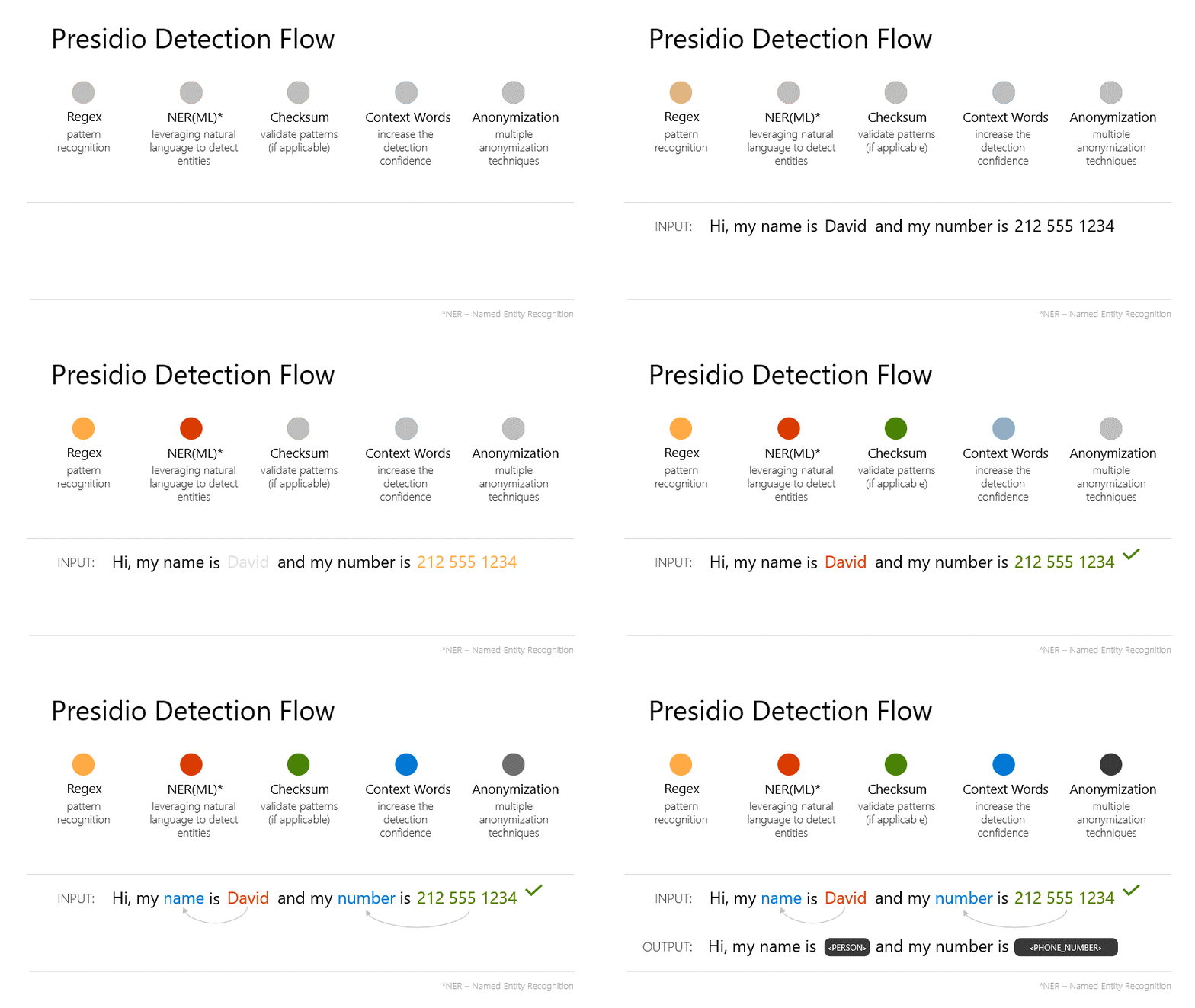
This plugin integrates with Microsoft's Presidio to analyze and anonymize sensitive data in your fields. The plugin uses two Presidio services:
- Analyzer API for detecting PII entities
- Anonymizer API for anonymizing detected entities
This plugin integrates with Microsoft's Presidio Anonymizer API to anonymize sensitive data in your fields. The Presidio anonymizer is module for anonymizing detected PII text entities with desired values.
Configuration
presidio_anonymizer:
    anonymize_url: http://localhost:8080/anonymize
    analyzer_url: http://localhost:8080/analyze
    language: en
    hash_type: md5    # Optional, used for hash operator
    encrypt_key: ""    # Optional, used for encrypt operator
    anonymizer_rules:
      - type: EMAIL_ADDRESS
        operator: mask
        masking_char: "*"
        chars_to_mask: 4
      - type: PERSON
        operator: replace
        new_value: "[REDACTED]"
      - type: PHONE_NUMBER
        operator: hash
      - type: CREDIT_CARD
        operator: encrypt
Configuration Parameters
anonymize_url: Required. The URL of your Presidio Anonymizer API endpoint.analyzer_url: Required. The URL of your Presidio Analyzer API endpoint.language: Optional. Language for the analyzer (default: "en").hash_type: Optional. Hash algorithm for "hash" operator (e.g., "md5", "sha256").encrypt_key: Optional. Encryption key for "encrypt" operator.anonymizer_rules: List of anonymization rules that will be applied to detected entities.
Each rule contains:
type: The type of PII to detect (e.g., "PERSON", "EMAIL_ADDRESS", "PHONE_NUMBER", etc.)operator: The anonymization operation. Supported values:mask: Mask the value with a characterreplace: Replace with a new valuehash: Hash the value using specified algorithmencrypt: Encrypt the value using provided key
masking_char: Used with "mask" operator - the character to use for maskingchars_to_mask: Used with "mask" operator - number of characters to masknew_value: Used with "replace" operator - the value to replace the detected PII with
Example
Input:
{
  "email": "john.doe@example.com",
  "name": "John Doe",
  "phone": "+1-555-123-4567",
  "description": "Contact John Doe at john.doe@example.com or +1-555-123-4567"
}
Output:
{
  "email": "****.doe@example.com",
  "name": "John Doe",
  "phone": "+1-555-123-4567",
  "description": "Contact <PERSON> at ****.doe@example.com or +<IN_PAN>4567"
}
Notes
- The plugin first uses Presidio Analyzer to detect PII entities in the text
- Then it applies the configured anonymization rules to the detected entities
- If no PII is detected, the original data is returned unchanged
- Each anonymization operator requires specific parameters:
mask: requiresmasking_charandchars_to_maskreplace: requiresnew_valuehash: uses globalhash_typeconfigurationencrypt: uses globalencrypt_keyconfiguration
- The anonymization is applied to all detected entities of the specified type in the text
 Documentation

Documentation

Index 
Constants 
This section is empty.
Variables 
This section is empty.
Functions 
Types 
type AnonymizerRule 
type AnonymizerRule struct {
	// Type of PII to detect (e.g. "PERSON", "PHONE_NUMBER", etc.)
	Type string `json:"type" yaml:"type"`
	// Operator defines the anonymization operation ("mask", "replace", "hash", "encrypt")
	Operator string `json:"operator" yaml:"operator"`
	// NewValue is used with "replace" operator
	NewValue string `json:"new_value,omitempty" yaml:"new_value,omitempty"`
	// MaskingChar is used with "mask" operator
	MaskingChar string `json:"masking_char,omitempty" yaml:"masking_char,omitempty"`
	// CharsToMask is used with "mask" operator
	CharsToMask int `json:"chars_to_mask,omitempty" yaml:"chars_to_mask,omitempty"`
}
AnonymizerRule defines how to anonymize a specific type of PII
type Config 
type Config struct {
	// AnonymizeURL is the URL of the Presidio Anonymizer API
	AnonymizeURL string `json:"anonymize_url" yaml:"anonymize_url"`
	// AnalyzerURL is the URL of the Presidio Analyzer API
	AnalyzerURL string `json:"analyzer_url" yaml:"analyzer_url"`
	// Language is the language used for analysis (default: "en")
	Language string `json:"language" yaml:"language"`
	// HashType is the hash algorithm used for hash operator (e.g., "md5", "sha256")
	HashType string `json:"hash_type" yaml:"hash_type"`
	// EncryptKey is the key used for encrypt operator
	EncryptKey string `json:"encrypt_key" yaml:"encrypt_key"`
	// AnonymizerRules defines the anonymization rules that apply to detected entities
	AnonymizerRules []AnonymizerRule `json:"anonymizer_rules" yaml:"anonymizer_rules"`
}
Config represents the configuration for the Presidio Anonymizer plugin
type PresidioAnonymizer 
type PresidioAnonymizer struct {
	Type        string `json:"type"`
	NewValue    string `json:"new_value,omitempty"`
	MaskingChar string `json:"masking_char,omitempty"`
	CharsToMask int    `json:"chars_to_mask,omitempty"`
	HashType    string `json:"hash_type,omitempty"`
	CryptoKey   string `json:"key,omitempty"`
	FromEnd     bool   `json:"from_end"`
}
PresidioAnonymizer represents configuration for anonymization
type PresidioClient 
type PresidioClient struct {
	// contains filtered or unexported fields
}
PresidioClient handles communication with Presidio API endpoints
func NewPresidioClient 
func NewPresidioClient(analyzerURL, anonymizerURL string) *PresidioClient
NewPresidioClient creates a new instance of PresidioClient
func (*PresidioClient) Analyze 
func (c *PresidioClient) Analyze(text string, templates []analyzeTemplate, language string) ([]analyzeResult, error)
Analyze sends request to Presidio Analyzer API
func (*PresidioClient) Anonymize 
func (c *PresidioClient) Anonymize(text string, anonymizers map[string]PresidioAnonymizer, analyzerResults []analyzeResult) (string, error)
Anonymize sends request to Presidio Anonymizer API
 Source Files