

 README

README






SOPS: Secrets OPerationS - Kubernetes Operator
Operator which manages Kubernetes Secret Resources created from user defined SopsSecrets
CRs, inspired by Bitnami SealedSecrets and
sops. SopsSecret CR defines multiple
kubernetes Secret resources. It supports managing kubernetes Secrets with
annotations and labels, that allows using these kubernetes secrets as Jenkins Credentials.
The SopsSecret resources can be deployed by Flux GitOps CD and
encrypted using sops for AWS, GCP, Azure or
on-prem hosted kubernetes clusters. Using sops greatly simplifies changing
encrypted files stored in git repository.
Versioning
| Kubernetes | Sops | Chart | Operator |
|---|---|---|---|
| v1.36.x | v3.13.1 | 0.28.0 | 0.21.1 |
| v1.35.x | v3.12.2 | 0.26.0 | 0.20.2 |
| v1.35.x | v3.12.2 | 0.25.4 | 0.20.1 |
| v1.34.x | v3.11.0 | 0.24.1 | 0.17.3 |
| v1.33.x | v3.10.2 | 0.22.0 | 0.16.0 |
| v1.32.x | v3.9.4 | 0.21.0 | 0.15.0 |
| v1.31.x | v3.9.4 | 0.20.5 | 0.14.3 |
| v1.30.x | v3.9.0 | 0.19.4 | 0.13.3 |
| v1.29.x | v3.8.1 | 0.18.6 | 0.12.6 |
| v1.28.x | v3.8.1 | 0.17.4 | 0.11.4 |
| v1.27.x | v3.7.3 | 0.15.5 | 0.9.5 |
| v1.26.x | v3.7.3 | 0.14.2 | 0.8.2 |
| v1.25.x | v3.7.3 | 0.12.5 | 0.6.4 |
| v1.24.x | v3.7.3 | 0.11.3 | 0.5.3 |
| v1.23.x | v3.7.2 | 0.10.8 | 0.4.8 |
| v1.22.x | v3.7.1 | 0.9.7 | 0.3.7 |
| v1.21.x | v3.7.1 | 0.9.6 | 0.3.6 |
Requirements for building operator from source code
Requirements for building operator from source code can be found in .tool-versions, this file can be used with asdf
Operator Installation
Helm repository
Add helm repository for chart installation:
helm repo add sops https://isindir.github.io/sops-secrets-operator/
AWS
- Create KMS key
- Create AWS Role which can be used by operator to decrypt CR data structure, follow sops documentation
- Deploy CRD:
kubectl apply -f config/crd/bases/isindir.github.com_sopssecrets.yaml
NOTE: to grant access to aws for
sops-secret-operator- kiam, kube2iam or IAM roles for service accounts can be used.
- Deploy helm chart:
kubectl create namespace sops

helm repo add sops https://isindir.github.io/sops-secrets-operator/
helm upgrade --install sops sops/sops-secrets-operator --namespace sops
Age
- Create age reference
keys.txtfile, create kubernetes secret from it. - Deploy helm chart:
- Use
secretsAsFilesto specify the secret which contains thekeys.txt. - Use
extraEnvand specify mountedkeys.txtpathSOPS_AGE_KEY_FILEenvironment variable.
- Use
See example:
---
secretsAsFiles:
  - mountPath: /etc/sops-age-key-file
    name: sops-age-key-file
    secretName: sops-age-key-file
extraEnv:
  - name: SOPS_AGE_KEY_FILE
    value: /etc/sops-age-key-file/key
- Also see: Local testing using age
References:
PGP
For instructions on how-to configure PGP keys for operator, see Preparing GPG keys
Then install operator:
kubectl create namespace sops

kubectl apply -f docs/gpg/1.yaml --namespace sops
kubectl apply -f docs/gpg/2.yaml --namespace sops

kubectl apply -f config/crd/bases/isindir.github.com_sopssecrets.yaml

helm repo add sops https://isindir.github.io/sops-secrets-operator/
helm upgrade --install sops sops/sops-secrets-operator \
  --namespace sops --set gpg.enabled=true
Azure
Outline
- Create a KeyVault if you don't have one already
- Create a Key in that KeyVault
- Create Service principal with permissions to use the key for Encryption/Decryption
- follow the SOPS documentation
- Either put Tenant ID, Client ID and Client Secret for the Service Principal in your custom values.yaml file or create a Kubernetes Secret with the same information and put the name of that secret in your values.yaml. Enable Azure in the Helm Chart by setting
azure.enabled: truein values.yaml.
Login info in values.yaml
cat <<EOF > azure_values.yaml
azure:
  enabled: true
  tenantId: 6ec4c881-32ee-4340-a456-d6ca65a42193
  clientId: 9c325550-b264-4aee-ab6f-719771adda28
  clientSecret: 'YOUR_CLIENT_SECRET'
EOF

kubectl create namespace sops

helm repo add sops https://isindir.github.io/sops-secrets-operator/
helm upgrade --install sops sops/sops-secrets-operator \
  --namespace sops -f azure_values.yaml
Use pre-existing secret for Azure login
cat <<EOF > azure_secret.yaml
kind: Secret
apiVersion: v1
metadata:
  name: azure-sp-credentials
type: Opaque
stringData:
  clientId: 9c325550-b264-4aee-ab6f-719771adda28
  tenantId: 6ec4c881-32ee-4340-a456-d6ca65a42193
  clientSecret: 'YOUR_CLIENT_SECRET'
EOF

cat <<EOF > azure_values.yaml
azure:
  enabled: true
  existingSecret: azure-sp-credentials
EOF

kubectl create namespace sops
kubectl apply -n sops -f azure_secret.yaml

helm repo add sops https://isindir.github.io/sops-secrets-operator/
helm upgrade --install sops sops/sops-secrets-operator \
  --namespace sops -f azure_values.yaml
SopsSecret Custom Resource File creation
- create SopsSecret file, for example:
cat >jenkins-secrets.yaml <<EOF
apiVersion: isindir.github.com/v1alpha3
kind: SopsSecret
metadata:
  name: example-sopssecret
spec:
  # suspend reconciliation of the sops secret object
  suspend: false
  secretTemplates:
    - name: my-secret-name-1
      labels:
        label1: value1
      annotations:
        key1: value1
      stringData:
        data-name0: data-value0
      data:
        data-name1: ZGF0YS12YWx1ZTE=
    - name: jenkins-secret
      labels:
        "jenkins.io/credentials-type": "usernamePassword"
      annotations:
        "jenkins.io/credentials-description": "credentials from Kubernetes"
      stringData:
        username: myUsername
        password: 'Pa$$word'
    - name: some-token
      stringData:
        token: Wb4ziZdELkdUf6m6KtNd7iRjjQRvSeJno5meH4NAGHFmpqJyEsekZ2WjX232s4Gj
    - name: docker-login
      type: 'kubernetes.io/dockerconfigjson'
      stringData:
        .dockerconfigjson: '{"auths":{"index.docker.io":{"username":"imyuser","password":"mypass","email":"myuser@abc.com","auth":"aW15dXNlcjpteXBhc3M="}}}'
EOF
- Encrypt file using
sopsand AWS kms key:
sops encrypt \
  --kms 'arn:aws:kms:<region>:<account>:alias/<key-alias-name>' \
  --encrypted-suffix='Templates' jenkins-secrets.yaml \
  > jenkins-secrets.enc.yaml
or
sops encrypt \
  --kms 'arn:aws:kms:<region>:<account>:alias/<key-alias-name>' \
  --encrypted-regex='^(data)$' jenkins-secrets.yaml \
  > jenkins-secrets.enc.yaml
NOTE: after using regex
sops --encrypted-regexresulting file may be inapplicable to the kubernetes cluster, use this feature with care
- Encrypt file using
sopsand GCP KMS key:
sops encrypt \
  --gcp-kms 'projects/<project-name>/locations/<location>/keyRings/<keyring-name>/cryptoKeys/<key-name>' \
  --encrypted-suffix='Templates' jenkins-secrets.yaml \
  > jenkins-secrets.enc.yaml
- Encrypt file using
sopsand Azure Keyvault key:
sops encrypt \
  --azure-kv 'https://<vault-url>/keys/<key-name>/<key-version>' \
  --encrypted-suffix='Templates' jenkins-secrets.yaml \
  > jenkins-secrets.enc.yaml
- Encrypt file using
sopsand PGP key:
sops encrypt \
  --pgp '<pgp-finger-print>' \
  --encrypted-suffix='Templates' jenkins-secrets.yaml \
  > jenkins-secrets.enc.yaml
Note: Multiple keys can be used to encrypt secrets. At the time of decryption access to one of these is needed. For more information see
sopsdocumentation.
Note: Files encrypted with
sops --mac-only-encryptedare supported. The resultingsops.mac_only_encrypted: truemetadata field is recognised by the CRD, so such resources pass strict server-side field validation when applied withkubectl applyorhelm upgrade.
Changing ownership of existing secrets
If there is a need to re-own existing Secrets by SopsSecret, following annotation should
be added to the target kubernetes native secret:
---
metadata:
  annotations:
    "sopssecret/managed": "true"
previously not managed secret will be replaced by
SopsSecretowned at the next rescheduled reconciliation event.
Example procedure to upgrade from one SopsSecret API version to another
Please see document here: SopsSecret API and Operator Upgrade
License
Mozilla Public License Version 2.0
Known Issues
sops-secrets-operatoris not using standardsopslibrary decryption interface function, modified upstream function is used to decrypt data which ignoresencsignature field insopsmetadata. This means if some encrypted fields are removed or changed to plain text - it still will be able to decrypt the resource.This is due to the fact that when Kubernetes resource is applied it is always mutated by Kubernetes, for example resource version is generated and added to the resource. But any mutation invalidatessopsmetadataencfield and standard decryption function fails.sops-secrets-operatorby design is not wrapping encrypted object to some field in spec. This was deliberate decision for the simplicity of the operations - ability to directly encrypt the wholeSopsSecretresource usingsopscli. This causes side effects like: if the user of the k8s cluster (which runssops-secrets-operator) has RBAC access to read secrets in some namespace - it allows directly applying encryptedSopsSecretresource to that namespaces and getting access to the secret material. This operator was only designed to protect access to the secret material from git repository.sops-secrets-operatoris not strictly following Kubernetes OpenAPI naming conventions. This is due to the fact thatsopsgenerates substructures in encrypted file with incompatible to OpenAPI names (containing underscore symbols, where it should belowerCamelCasefor OpenAPI compatibility).
Links
Projects and tools inspired development of sops-secrets-operator:
- sops
- kube2iam
- kiam - in ABANDONED mode now
- Flux GitOps CD - flux supports
sopsout of the box - Jenkins Configuration as Code
- Bitnami SealedSecrets
- kubebuilder
Alternative tools
- Sops Operator (Peak Scale)
- Kubernetes external secrets
- Vault Secrets Operator
- Sealed Secrets
- Secrets Store CSI driver
- Kamus
- Tesoro
- Sops Operator (Craftypath)
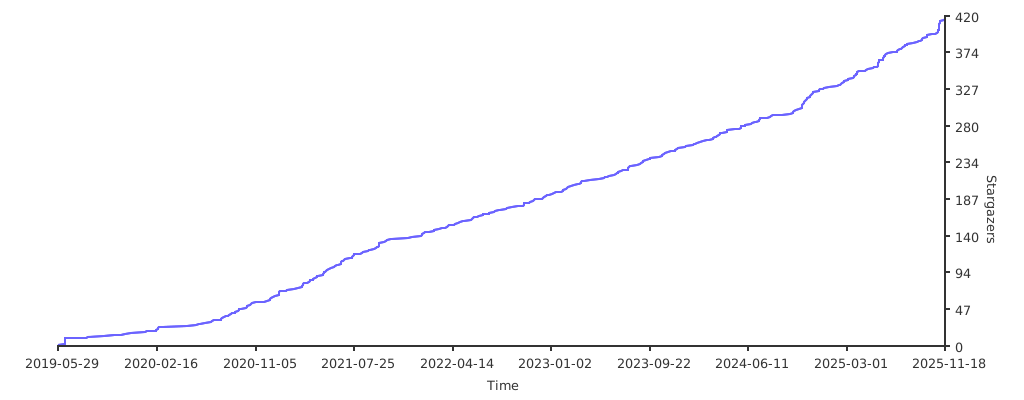
Stargazers over time
 Directories

Directories

| Path | Synopsis |
|---|---|
|
api
|
|
|
v1alpha1
Package v1alpha1 contains API Schema definitions for the isindir v1alpha1 API group +kubebuilder:object:generate=true +groupName=isindir.github.com
|
Package v1alpha1 contains API Schema definitions for the isindir v1alpha1 API group +kubebuilder:object:generate=true +groupName=isindir.github.com |
|
v1alpha2
Package v1alpha2 contains API Schema definitions for the isindir v1alpha2 API group +kubebuilder:object:generate=true +groupName=isindir.github.com
|
Package v1alpha2 contains API Schema definitions for the isindir v1alpha2 API group +kubebuilder:object:generate=true +groupName=isindir.github.com |
|
v1alpha3
Package v1alpha3 contains API Schema definitions for the isindir v1alpha3 API group +kubebuilder:object:generate=true +groupName=isindir.github.com
|
Package v1alpha3 contains API Schema definitions for the isindir v1alpha3 API group +kubebuilder:object:generate=true +groupName=isindir.github.com |
|
internal
|
|