Documentation

Documentation

Index 
- Constants
- Variables
- func BlockUpdate(position minecraft.Position, blk block.Block)
- func GetPlayerCount() int32
- func JoinPlayer(player *Player)
- func LeftPlayer(player *Player)
- func RegisterForTick(cb func(), ticks int)
- func StartGameLoop()
- type BlockPlacement
- type PendingChange
- type Player
- func (p *Player) Change(cb func())
- func (p *Player) ChangeHeldItem(slot int)
- func (p *Player) String() string
- func (p *Player) TransformItemToStateId(itm *item.Item, face minecraft.Face) (uint16, bool)
- func (p *Player) UnitVector() math.Point
- func (p *Player) UpdateInventory(slot int, item *play.Slot)
- func (p *Player) ViewRect() *math.Rect
- type PlayerAction
- type PlayerActionType
- type World
Constants 
const (
	PlayerActionDig = PlayerActionType(iota)
	PlayerActionPlace
	PlayerActionUseItem
)
Variables 
var OurWorld = NewWorld(
	&flatgrass.FlatgraassGenerator{},
	&nullprovider.NullProvider{},
)
the world we are going to use
Functions 
func BlockUpdate 
This is done right after the chunk processes all of the block changes that happened in this tick the reason for this is to make sure the map is in the most updated state.
if you want to register future block updates just use the ticker to register a block update, and since right after the ticker the block updates happen it will just work
func GetPlayerCount 
func GetPlayerCount() int32
func LeftPlayer 
func LeftPlayer(player *Player)
func RegisterForTick 
func RegisterForTick(cb func(), ticks int)
func StartGameLoop 
func StartGameLoop()
Types 
type BlockPlacement 
type PendingChange 
type PendingChange struct {
	Field      interface{}
	Value      interface{}
	ChangeFlag interface{}
}
type Player 
type Player struct {
	// the socket
	socket.Socket

	// The entity player
	*entity.Player

	// Client settings we need to know about
	ViewDistance int

	// ping related
	Ping          time.Duration
	LastKeepAlive time.Time
	PingChanged   bool

	// The world we are in
	World *World

	ActionQueue *queue.Queue

	// the inventory of the player
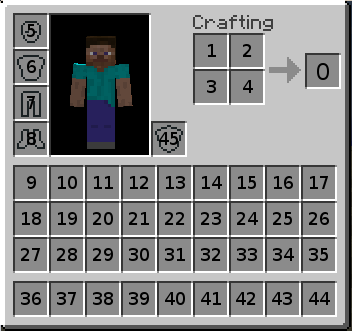
	//	https://wiki.vg/images/1/13/Inventory-slots.png
	HeldItemIndex int
	Inventory     [46]*play.Slot
	// contains filtered or unexported fields
}
func (*Player) ChangeHeldItem 
func (*Player) TransformItemToStateId 
Top level transformation function that turns an item to a block, this will also handle item uses like flint&steel and buckets.
The reason for that is that it is just easier to handle it on block placement rather than item use as the game sends more info
func (*Player) UnitVector 
func (*Player) UpdateInventory 
this is used when there is data from the player that should be updated on the server, this will also make sure to give back the player a confirmation about this
type PlayerAction 
type PlayerAction struct {
	Type PlayerActionType
	Data interface{}
}
type PlayerActionType 
type PlayerActionType int
type World 
type World struct {
	// the minecraft world
	*world.World

	// The block changes in this world
	BlockChanges map[world.ChunkPos][]play.BlockRecord
	// contains filtered or unexported fields
}
 Source Files