

 README

README

 /pkg/node
[!NOTE] asyncmachine-go is a pathless control-flow graph with a consensus (AOP, actor model, state-machine).
/pkg/node provides distributed workflows via state-based orchestration of worker pools. Features a failsafe supervision, as well as state machines for workers and clients. All actors communicate via aRPC, as each worker is started in a separate OS process.
Installation
import amnode "github.com/pancsta/asyncmachine-go/pkg/node"
Workflow Rules
- worker can serve only 1 client
- supervisor can serve many clients
- client has a direct connection to the worker
- supervisor can supervise only 1 kind of workers
- client can be connected to 1 supervisor
[!NOTE] Node Worker and RPC Worker are different things. RPC Worker reports it's state to the RPC Client, which can mutate it, while a Node Worker performs work for a Node Client. Node Worker is also an RPC Worker, just like Node Supervisor is.
Flow
- OS starts the supervisor
- supervisor opens a public port
- supervisor starts workers based on pool criteria
- supervisor connects to all the workers via private ports
- client connects to supervisor's public port and requests a worker
- supervisor confirms with a worker and provides the client with connection info
- client connects to the worker, and delegates work via states
- worker reports state changes to both the client and supervisor
- supervisor maintains the worker, eg triggers log rotation, monitors errors and restarts
- worker delivers payload to the client via ClientSendPayload

Components
Worker
Any state machine can be exposed as a Node Worker, as long as it implements /pkg/node/states.WorkerStructDef. This can
be done either manually, or by using state helpers (SchemaMerge,
SAdd), or by generating a schema file with am-gen.
It's also required to have the states verified by Machine.VerifyStates.
Worker should respond to WorkRequested and produce ClientSendPayload to send data to the client.
import (
    am "github.com/pancsta/asyncmachine-go/pkg/machine"
    amnode "github.com/pancsta/asyncmachine-go/pkg/node"
    arpc "github.com/pancsta/asyncmachine-go/pkg/rpc"
)

// ...

type workerHandlers struct {
    t *testing.T
}

func (w *workerHandlers) WorkRequestedState(e *am.Event) {
    // client-defined input
    input := e.Args["input"].(int)

    // create payload
    payload := &rpc.ArgsPayload{
        Name:   "mypayload",
        Data:   input * input,
        Source: e.Machine.ID,
    }

    // send payload
    e.Machine.Add1(ssW.ClientSendPayload, arpc.Pass(&arpc.A{
        Name:    payload.Name,
        Payload: payload,
    }))
}

// ...

// inherit from Node worker
schema := am.SchemaMerge(ssnode.WorkerStruct, am.Schema{
    "Foo": {Require: am.S{"Bar"}},
    "Bar": {},
})
names := am.SAdd(ssnode.WorkerStates.Names(), am.S{"Foo", "Bar"})

// init
mach := am.New(ctx, schema, nil)
mach.VerifyStates(names)
worker, err := NewWorker(ctx, workerKind, mach.Schema(), mach.StateNames(), nil)
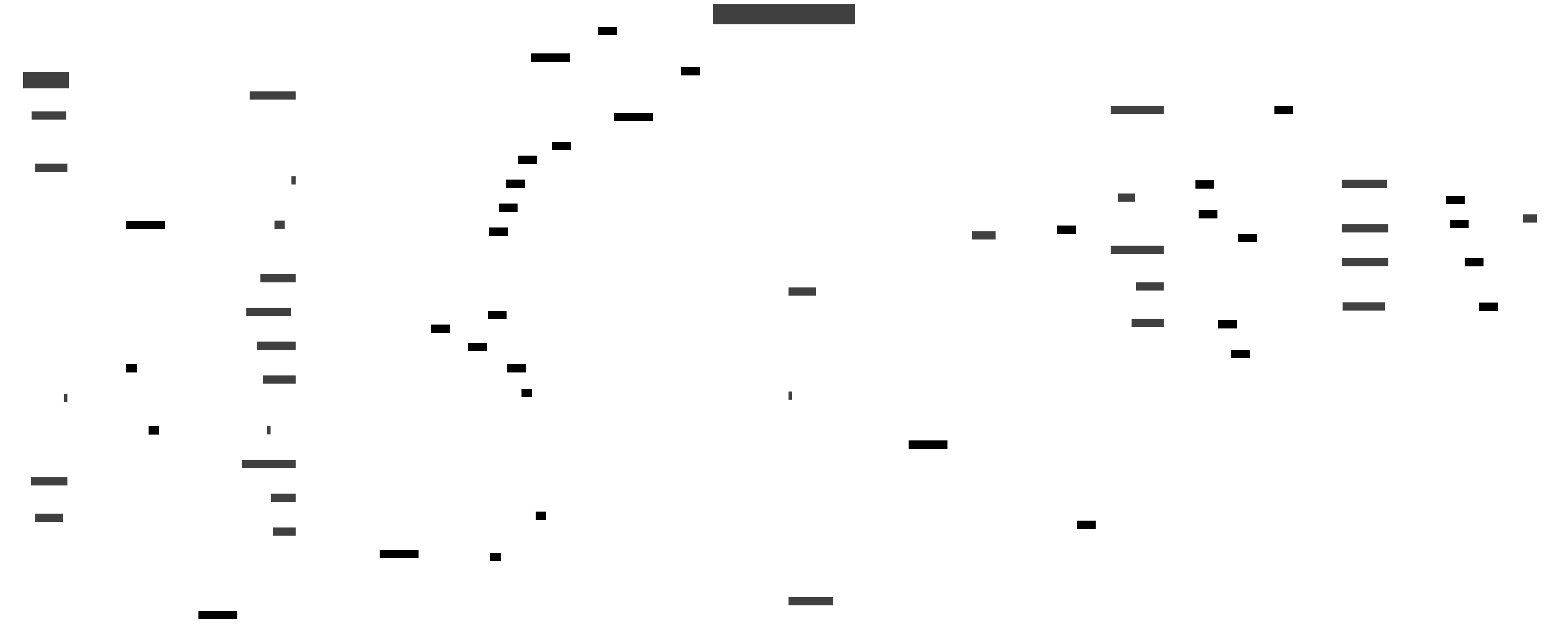
Worker Schema
State schema from /pkg/node/states/ss_node_worker.go.
Supervisor
Supervisor needs a path to the worker's binary (with optional parameters) for exec.Command. It exposes states like
Ready, PoolReady, WorkersAvailable and awaits ProvideWorker.
import (
    am "github.com/pancsta/asyncmachine-go/pkg/machine"
    amnode "github.com/pancsta/asyncmachine-go/pkg/node"
)

// ...

// var names am.S
// var schema am.Schema
// var workerKind string
// var workerBin []string

// supervisor
super, err := amnode.NewSupervisor(ctx, workerKind, workerBin, schema, nil)
if err != nil {
    t.Fatal(err)
}
super.Start("localhost:1234")
err := amhelp.WaitForAll(ctx, 2*time.Second,
    super.When1(ssnode.SupervisorStates.PoolReady, ctx))
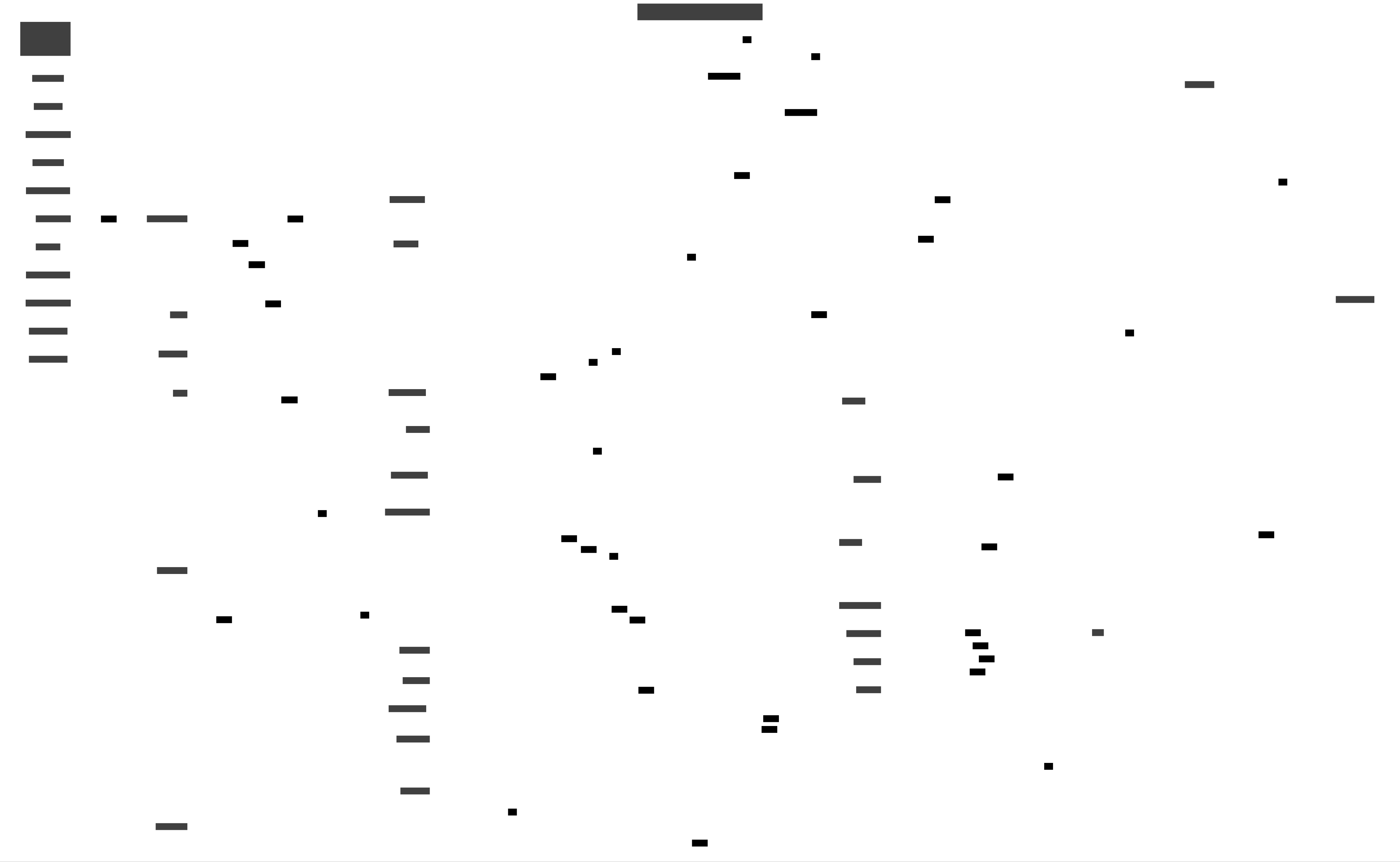
Supervisor Schema
State schema from /pkg/node/states/ss_supervisor.go.
Client
Any state machine can be a Node Client, as long as it implements /pkg/node/states.ClientStructDef. This can be done
either manually, or by using state helpers (SchemaMerge,
SAdd), or by generating a schema file with am-gen.
Client also needs to know his worker's machine schema. To connect to the worker pool, client accepts a list
of supervisor addresses (PubSub discovery in on the roadmap), and will be trying to connect to them in order. After
SuperReady activates, client can call Client.ReqWorker(ctx),
which will request a worker from the supervisor, resulting in WorkerReady. At this point client can access the worker
at Client.WorkerRpc.NetMach, then add the
WorkRequested state multiple times, and handle WorkerPayload.
import (
    am "github.com/pancsta/asyncmachine-go/pkg/machine"
    amnode "github.com/pancsta/asyncmachine-go/pkg/node"
)

// ...

// var workerKind string
// var workerSchema am.Schema
// var superAddrs []string

// inherit from Node client
schema := am.SchemaMerge(ssnode.ClientSchema, am.Schema{
    "Foo": {Require: am.S{"Bar"}},
    "Bar": {},
})
names := am.SAdd(ssnode.ClientStates.Names(), am.S{"Foo", "Bar"})

// describe client
opts := &amnode.ClientOpts{
    ClientSchema:  schema,
    ClientStates:  names,
}

// init
client, err := amnode.NewClient(ctx, "myclient", workerKind, workerSchema, opts)
client.Start(superAddrs)
err := amhelp.WaitForAll(ctx, 2*time.Second,
    super.When1(ssnode.ClientStates.SuperReady, ctx))

// request a worker
client.ReqWorker(ctx)
err := amhelp.WaitForAll(ctx, 2*time.Second,
    super.When1(ssnode.ClientStates.WorkerReady, ctx))
worker := client.WorkerRpc.NetMach
worker.Add1(ssnode.WorkerStates.WorkRequested, am.A{"input": 2})
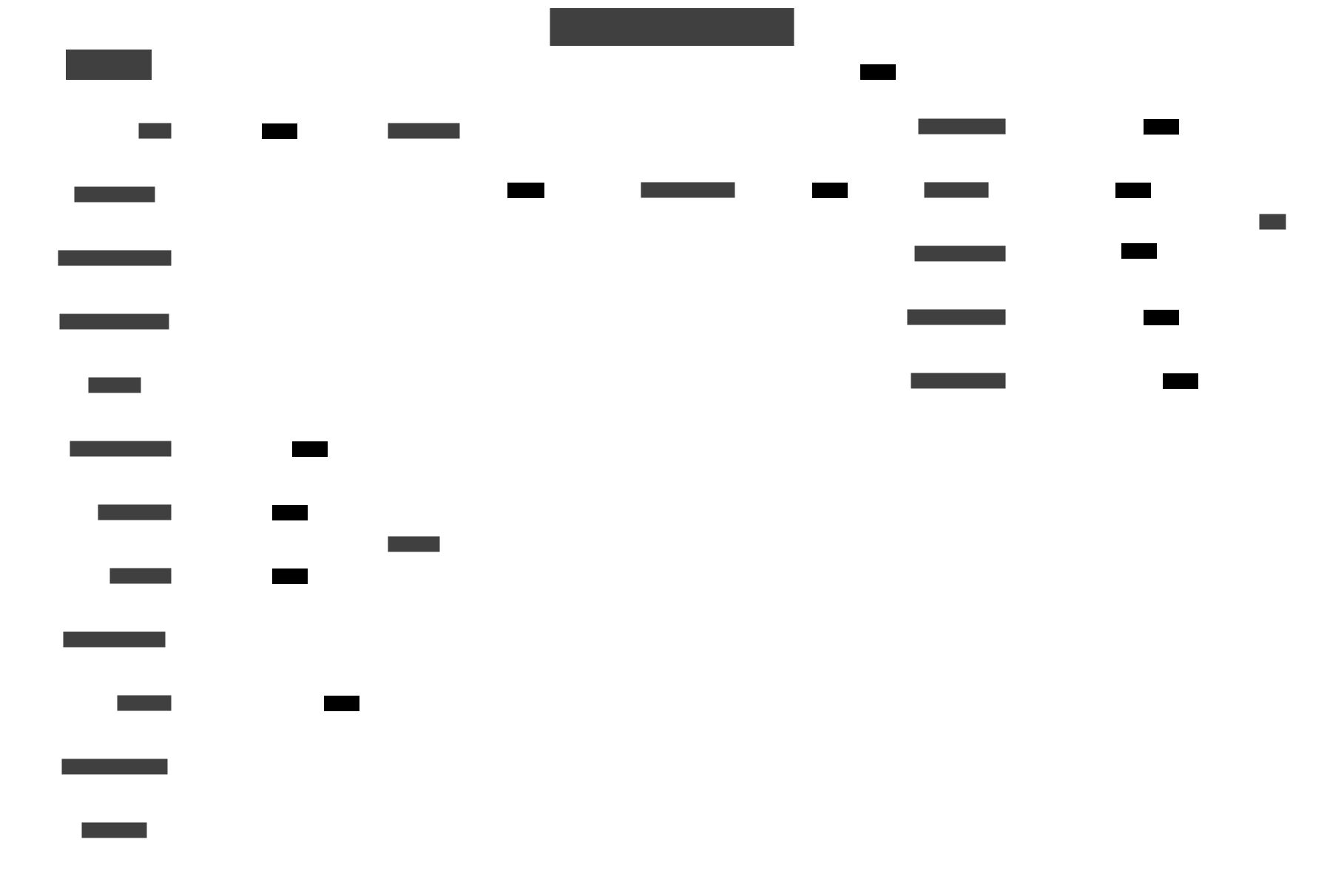
Client Schema
State schema from /pkg/node/states/ss_node_client.go.
TODO
- supervisor redundancy
- connecting to a pool of supervisors +rotation
Documentation
Tests
At this point only a test suite exists, but a reference implementation is on the way. See /pkg/node/node_test.go,
eg TestClientWorkerPayload and uncomment amhelp.EnableDebugging. Below a command to run an exported debugging
session (no installation needed).
go run github.com/pancsta/asyncmachine-go/tools/cmd/am-dbg@latest \
  --import-data https://pancsta.github.io/assets/asyncmachine-go/am-dbg-exports/node-payload.gob.br
Status
Alpha, work on hold, not semantically versioned. Blocked by #395.
monorepo
Go back to the monorepo root to continue reading.
 Documentation

Documentation

Overview 
Package node provides distributed worker pools with supervisors.
Index 
- Constants
- Variables
- func AddErrPool(event *am.Event, mach *am.Machine, err error, args am.A) am.Result
- func AddErrPoolStr(event *am.Event, mach *am.Machine, msg string, args am.A) am.Result
- func AddErrRpc(event *am.Event, mach *am.Machine, err error, args am.A) am.Result
- func AddErrWorker(event *am.Event, mach *am.Machine, err error, args am.A) am.Result
- func AddErrWorkerStr(event *am.Event, mach *am.Machine, msg string, args am.A) am.Result
- func GetSuperClientId(name string) string
- func GetWorkerClientId(name string) string
- type A
- type ARpc
- type Args
- type Client
- func (c *Client) Dispose(ctx context.Context)
- func (c *Client) ReqWorker(ctx context.Context) error
- func (c *Client) ServerPayloadEnter(e *am.Event) bool
- func (c *Client) ServerPayloadState(e *am.Event)
- func (c *Client) Start(nodesList []string)
- func (c *Client) StartEnd(e *am.Event)
- func (c *Client) StartEnter(e *am.Event) bool
- func (c *Client) StartState(e *am.Event)
- func (c *Client) Stop(ctx context.Context)
- func (c *Client) WorkerRequestedEnter(e *am.Event) bool
- func (c *Client) WorkerRequestedState(e *am.Event)
- type ClientOpts
- type Supervisor
- func (s *Supervisor) CheckPool() bool
- func (s *Supervisor) ClientConnectedState(e *am.Event)
- func (s *Supervisor) ClientDisconnectedEnter(e *am.Event) bool
- func (s *Supervisor) ClientDisconnectedState(e *am.Event)
- func (s *Supervisor) Dispose()
- func (s *Supervisor) ErrWorkerState(e *am.Event)
- func (s *Supervisor) ForkWorkerEnter(e *am.Event) bool
- func (s *Supervisor) ForkWorkerState(e *am.Event)
- func (s *Supervisor) ForkingWorkerEnter(e *am.Event) bool
- func (s *Supervisor) ForkingWorkerState(e *am.Event)
- func (s *Supervisor) HeartbeatState(e *am.Event)
- func (s *Supervisor) KillingWorkerEnter(e *am.Event) bool
- func (s *Supervisor) KillingWorkerState(e *am.Event)
- func (s *Supervisor) ListWorkersEnter(e *am.Event) bool
- func (s *Supervisor) ListWorkersState(e *am.Event)
- func (s *Supervisor) NormalizingPoolState(e *am.Event)
- func (s *Supervisor) PoolReadyEnter(e *am.Event) bool
- func (s *Supervisor) PoolReadyExit(e *am.Event) bool
- func (s *Supervisor) ProvideWorkerEnter(e *am.Event) bool
- func (s *Supervisor) ProvideWorkerState(e *am.Event)
- func (s *Supervisor) SetPool(min, max, warm, maxPerClient int)
- func (s *Supervisor) SetWorkerEnter(e *am.Event) bool
- func (s *Supervisor) SetWorkerState(e *am.Event)
- func (s *Supervisor) Start(publicAddr string)
- func (s *Supervisor) StartEnd(e *am.Event)
- func (s *Supervisor) StartEnter(e *am.Event) bool
- func (s *Supervisor) StartState(e *am.Event)
- func (s *Supervisor) Stop()
- func (s *Supervisor) WorkerConnectedEnter(e *am.Event) bool
- func (s *Supervisor) WorkerConnectedState(e *am.Event)
- func (s *Supervisor) WorkerForkedEnter(e *am.Event) bool
- func (s *Supervisor) WorkerForkedState(e *am.Event)
- func (s *Supervisor) WorkerKilledEnter(e *am.Event) bool
- func (s *Supervisor) WorkerKilledState(e *am.Event)
- func (s *Supervisor) Workers(ctx context.Context, state WorkerState) ([]*workerInfo, error)
- type SupervisorOpts
- type Worker
- func (w *Worker) ErrNetworkState(e *am.Event)
- func (w *Worker) HealthcheckState(e *am.Event)
- func (w *Worker) LocalRpcReadyState(e *am.Event)
- func (w *Worker) PublicRpcReadyState(e *am.Event)
- func (w *Worker) RpcReadyState(e *am.Event)
- func (w *Worker) ServeClientEnter(e *am.Event) bool
- func (w *Worker) ServeClientState(e *am.Event)
- func (w *Worker) Start(bootAddr string) am.Result
- func (w *Worker) StartEnd(e *am.Event)
- func (w *Worker) StartEnter(e *am.Event) bool
- func (w *Worker) StartState(e *am.Event)
- func (w *Worker) Stop(dispose bool)
- type WorkerOpts
- type WorkerState
Constants 
const (
	// EnvAmNodeLogSupervisor enables extra logging for node supervisor.
	EnvAmNodeLogSupervisor = "AM_NODE_LOG_SUPERVISOR"
	// EnvAmNodeLogClient enables extra logging for node client.
	EnvAmNodeLogClient = "AM_NODE_LOG_CLIENT"
)
const APrefix = "am_node"
Variables 
var (
	ErrWorker        = errors.New("worker error")
	ErrWorkerMissing = errors.New("worker missing")
	ErrWorkerHealth  = errors.New("worker failed healthcheck")
	ErrWorkerConn    = errors.New("error starting connection")
	ErrWorkerKill    = errors.New("error killing worker")
	ErrPool          = errors.New("pool error")
	ErrHeartbeat     = errors.New("heartbeat failed")
	ErrRpc           = errors.New("rpc error")
)
var ArgsRpc = []am.ArgsApi{ARpc{}}
ArgsRpc will be available in the REPL.
var Pass = am.Pass
Functions 
func AddErrPool 
AddErrPool wraps an error in the ErrPool sentinel and adds to a machine. TODO add event param
func AddErrPoolStr 
AddErrPoolStr wraps a msg in the ErrPool sentinel and adds to a machine. TODO add event param
func AddErrRpc 
AddErrRpc wraps an error in the ErrRpc sentinel and adds to a machine. TODO add event param
func AddErrWorker 
AddErrWorker wraps an error in the ErrWorker sentinel and adds to a machine.
func AddErrWorkerStr 
AddErrWorkerStr wraps a msg in the ErrWorker sentinel and adds to a machine. TODO add event param
func GetSuperClientId ¶ added in v0.9.0
GetSuperClientId returns a Node Supervisor machine ID from a name.
func GetWorkerClientId ¶ added in v0.9.0
GetWorkerClientId returns a Node Client machine ID from a name.
Types 
type A 
type A struct {
	Args `json:"-"`

	// Id is a machine ID.
	Id string `log:"id"`
	// PublicAddr is the public address of a Supervisor or WorkerRpc.
	PublicAddr string `log:"public_addr"`
	// LocalAddr is the public address of a Supervisor or WorkerRpc.
	LocalAddr string `log:"local_addr"`
	// BootAddr is the local address of the Bootstrap machine.
	BootAddr string `log:"boot_addr"`
	// NodesList is a list of available nodes (supervisors' public RPC addresses).
	NodesList []string
	// WorkerRpcId is a machine ID of the worker RPC client.
	WorkerRpcId string `log:"id"`
	// SuperRpcId is a machine ID of the super RPC client.
	SuperRpcId string `log:"id"`

	// WorkerRpc is the RPC client connected to a WorkerRpc.
	WorkerRpc *rpc.Client
	// Bootstrap is the RPC machine used to connect WorkerRpc to the Supervisor.
	Bootstrap *bootstrap
	// Dispose the worker.
	Dispose bool
	// WorkerAddr is an index for WorkerInfo.
	WorkerAddr string
	// WorkerInfo describes a worker.
	WorkerInfo *workerInfo
	// WorkersCh returns a list of workers. This channel has to be buffered.
	WorkersCh chan<- []*workerInfo
	// WorkerState is a requested state of workers, eg for listings.
	WorkerState WorkerState
}
A is a struct for node arguments. It's a typesafe alternative to am.A.
type ARpc 
type ARpc struct {
	Args `json:"-"`

	// Id is a machine ID.
	Id string `log:"id"`
	// PublicAddr is the public address of a Supervisor or Worker.
	PublicAddr string `log:"public_addr"`
	// LocalAddr is the public address of a Supervisor, Worker, or [bootstrap].
	LocalAddr string `log:"local_addr"`
	// BootAddr is the local address of the Bootstrap machine.
	BootAddr string `log:"boot_addr"`
	// NodesList is a list of available nodes (supervisors' public RPC addresses).
	NodesList []string
	// WorkerRpcId is a machine ID of the worker RPC client.
	WorkerRpcId string `log:"worker_rpc_id"`
	// SuperRpcId is a machine ID of the super RPC client.
	SuperRpcId string `log:"super_rpc_id"`
}
ARpc is a subset of A, that can be passed over RPC.
type Args ¶ added in v0.19.0
func (Args) ArgsPrefix ¶ added in v0.19.0
type Client 
type Client struct {
	*am.ExceptionHandler
	Mach *am.Machine

	Name       string
	SuperAddr  string
	LogEnabled bool
	// LeaveSuper is a flag to leave the supervisor after connecting to the
	// worker. TODO
	LeaveSuper bool
	// ConnTimeout is the time to wait for an outbound connection to be
	// established. Default is 5 seconds.
	ConnTimeout time.Duration

	RpcSuper  *arpc.Client
	RpcWorker *arpc.Client
	// contains filtered or unexported fields
}
Client is a node client, connecting to a supervisor and then a worker.
func NewClient 
func NewClient(ctx context.Context, clientId string, workerKind string,
	workerSchema am.Schema, opts *ClientOpts,
) (*Client, error)
NewClient creates a new Client instance with the provided context, id, workerKind, state dependencies, and options. Returns a pointer to the Client instance and an error if any validation or initialization fails.
workerKind: any string used to build IDs and address workers
func (*Client) ReqWorker 
ReqWorker sends a request to add a "WorkerRequested" state to the client's state machine and waits for "WorkerReady" state.
func (*Client) ServerPayloadEnter ¶ added in v0.18.0
func (*Client) ServerPayloadState ¶ added in v0.18.0
ServerPayloadState handles both Supervisor and Worker inbound payloads, but this shared code only deals with [ssC.ClientStatesDef.WorkerRequested].
func (*Client) StartState 
func (*Client) Stop 
Stop halts the client's connection to both the supervisor and worker RPCs, and removes the client state from the state machine.
func (*Client) WorkerRequestedState 
type ClientOpts 
type ClientOpts struct {
	// Parent is a parent state machine for a new client state machine. See
	// [am.Opts].
	Parent am.Api
	Tags   []string
	// Optional schema for the client. Should extend [states.ClientStatesDef].
	ClientSchema am.Schema
	// Optional state names for ClientSchema.
	ClientStates am.S
}
ClientOpts provides configuration options for creating a new client state machine.
type Supervisor 
type Supervisor struct {
	*am.ExceptionHandler
	Mach *am.Machine

	// WorkerKind is the kind of worker this supervisor is managing.
	WorkerKind string
	// WorkerBin is the path and args to the worker binary.
	WorkerBin []string
	// Name is the name of the supervisor.
	Name       string
	LogEnabled bool

	// Max is the maximum number of workers. Default is 10.
	Max int
	// Min is the minimum number of workers. Default is 2.
	Min int
	// Warm is the number of warm (ready) workers. Default is 5.
	Warm int
	// MaxClientWorkers is the maximum number of workers per 1 client. Defaults to
	// Max.
	MaxClientWorkers int
	// WorkerErrTtl is the time to keep worker errors in memory. Default is 10m.
	WorkerErrTtl time.Duration
	// WorkerErrRecent is the time to consider recent errors. Default is 1m.
	WorkerErrRecent time.Duration
	// WorkerErrKill is the number of errors to kill a worker. Default is 3.
	WorkerErrKill int

	// ConnTimeout is the time to wait for an outbound connection to be
	// established. Default is 5s.
	ConnTimeout time.Duration
	// DeliveryTimeout is a timeout for RPC delivery.
	DeliveryTimeout time.Duration
	// OpTimeout is the default timeout for operations (eg getters).
	OpTimeout time.Duration
	// PoolPause is the time to wait between normalizing the pool. Default is 5s.
	PoolPause time.Duration
	// HealthcheckPause is the time between trying to get a Healtcheck response
	// from a worker.
	HealthcheckPause time.Duration
	// Heartbeat is the frequency of the Heartbeat state, which normalized the
	// pool and checks workers. Default 1m.
	Heartbeat time.Duration
	// WorkerCheckInterval defines how often to pull a worker's state. Default 1s.
	WorkerCheckInterval time.Duration

	// PublicAddr is the address for the public RPC server to listen on. The
	// effective address is at [PublicMux.Addr].
	PublicAddr string
	// PublicMux is the public listener to create RPC servers for each client.
	PublicMux *arpc.Mux
	// PublicRpc are the public RPC servers of connected clients, indexed by
	// remote addresses.
	PublicRpcs map[string]*arpc.Server

	// LocalAddr is the address for the local RPC server to listen on. The
	// effective address is at [LocalRpc.Addr].
	LocalAddr string
	// LocalRpc is the local RPC server, used by other supervisors to connect.
	// TODO rpc/mux
	LocalRpc *arpc.Server

	TestFork func(string) error
	TestKill func(string) error

	WorkerReadyState am.HandlerFinal
	WorkerGoneState  am.HandlerFinal
	KillWorkerState  am.HandlerFinal
	HealthcheckState am.HandlerFinal
	// contains filtered or unexported fields
}
func NewSupervisor 
func NewSupervisor(
	ctx context.Context, workerKind string, workerBin []string,
	workerSchema am.Schema, opts *SupervisorOpts,
) (*Supervisor, error)
NewSupervisor initializes and returns a new Supervisor instance with specified context, worker attributes, and options.
workerBin: path to run the worker binary file (for exec.CommandContext).
func (*Supervisor) CheckPool 
func (s *Supervisor) CheckPool() bool
CheckPool tries to set pool as ready and normalizes it, if not.
func (*Supervisor) ClientConnectedState 
func (s *Supervisor) ClientConnectedState(e *am.Event)
func (*Supervisor) ClientDisconnectedEnter 
func (s *Supervisor) ClientDisconnectedEnter(e *am.Event) bool
func (*Supervisor) ClientDisconnectedState 
func (s *Supervisor) ClientDisconnectedState(e *am.Event)
func (*Supervisor) Dispose 
func (s *Supervisor) Dispose()
func (*Supervisor) ErrWorkerState 
func (s *Supervisor) ErrWorkerState(e *am.Event)
func (*Supervisor) ForkWorkerEnter 
func (s *Supervisor) ForkWorkerEnter(e *am.Event) bool
func (*Supervisor) ForkWorkerState 
func (s *Supervisor) ForkWorkerState(e *am.Event)
func (*Supervisor) ForkingWorkerEnter 
func (s *Supervisor) ForkingWorkerEnter(e *am.Event) bool
func (*Supervisor) ForkingWorkerState 
func (s *Supervisor) ForkingWorkerState(e *am.Event)
func (*Supervisor) HeartbeatState 
func (s *Supervisor) HeartbeatState(e *am.Event)
func (*Supervisor) KillingWorkerEnter 
func (s *Supervisor) KillingWorkerEnter(e *am.Event) bool
func (*Supervisor) KillingWorkerState 
func (s *Supervisor) KillingWorkerState(e *am.Event)
func (*Supervisor) ListWorkersEnter ¶ added in v0.10.0
func (s *Supervisor) ListWorkersEnter(e *am.Event) bool
func (*Supervisor) ListWorkersState ¶ added in v0.10.0
func (s *Supervisor) ListWorkersState(e *am.Event)
func (*Supervisor) NormalizingPoolState 
func (s *Supervisor) NormalizingPoolState(e *am.Event)
func (*Supervisor) PoolReadyEnter 
func (s *Supervisor) PoolReadyEnter(e *am.Event) bool
func (*Supervisor) PoolReadyExit 
func (s *Supervisor) PoolReadyExit(e *am.Event) bool
func (*Supervisor) ProvideWorkerEnter 
func (s *Supervisor) ProvideWorkerEnter(e *am.Event) bool
func (*Supervisor) ProvideWorkerState 
func (s *Supervisor) ProvideWorkerState(e *am.Event)
func (*Supervisor) SetPool 
func (s *Supervisor) SetPool(min, max, warm, maxPerClient int)
SetPool sets the pool parameters with defaults.
func (*Supervisor) SetWorkerEnter ¶ added in v0.10.0
func (s *Supervisor) SetWorkerEnter(e *am.Event) bool
func (*Supervisor) SetWorkerState ¶ added in v0.10.0
func (s *Supervisor) SetWorkerState(e *am.Event)
func (*Supervisor) Start 
func (s *Supervisor) Start(publicAddr string)
func (*Supervisor) StartEnd 
func (s *Supervisor) StartEnd(e *am.Event)
func (*Supervisor) StartEnter 
func (s *Supervisor) StartEnter(e *am.Event) bool
func (*Supervisor) StartState 
func (s *Supervisor) StartState(e *am.Event)
func (*Supervisor) Stop 
func (s *Supervisor) Stop()
func (*Supervisor) WorkerConnectedEnter ¶ added in v0.9.0
func (s *Supervisor) WorkerConnectedEnter(e *am.Event) bool
func (*Supervisor) WorkerConnectedState ¶ added in v0.9.0
func (s *Supervisor) WorkerConnectedState(e *am.Event)
func (*Supervisor) WorkerForkedEnter 
func (s *Supervisor) WorkerForkedEnter(e *am.Event) bool
func (*Supervisor) WorkerForkedState 
func (s *Supervisor) WorkerForkedState(e *am.Event)
func (*Supervisor) WorkerKilledEnter 
func (s *Supervisor) WorkerKilledEnter(e *am.Event) bool
func (*Supervisor) WorkerKilledState 
func (s *Supervisor) WorkerKilledState(e *am.Event)
func (*Supervisor) Workers ¶ added in v0.10.0
func (s *Supervisor) Workers(
	ctx context.Context, state WorkerState,
) ([]*workerInfo, error)
Workers returns a list of workers in a desired state. If [ctx] expires, it will reutrn nil, nil.
type SupervisorOpts 
type Worker 
type Worker struct {
	*am.ExceptionHandler
	Mach *am.Machine

	Name string
	Kind string
	// AcceptClient is the ID of a client, passed by the supervisor. Worker should
	// only accept connections from this client.
	AcceptClient string

	// ConnTimeout is the time to wait for an outbound connection to be
	// established.
	ConnTimeout     time.Duration
	DeliveryTimeout time.Duration

	// BootAddr is the address of the bootstrap machine.
	BootAddr string
	// BootRpc is the RPC client connection to bootstrap machine, which passes
	// connection info to the Supervisor.
	BootRpc *rpc.Client

	// LocalAddr is the address of the local RPC server.
	LocalAddr string
	// LocalRpc is the local RPC server, used by the Supervisor to connect.
	LocalRpc *rpc.Server

	// PublicAddr is the address of the public RPC server.
	PublicAddr string
	// PublicRpc is the public RPC server, used by the Client to connect.
	PublicRpc *rpc.Server
}
func NewWorker 
func NewWorker(ctx context.Context, kind string, workerStruct am.Schema,
	stateNames am.S, opts *WorkerOpts,
) (*Worker, error)
NewWorker initializes a new Worker instance and returns it, or an error if validation fails.
func (*Worker) ErrNetworkState 
func (*Worker) HealthcheckState 
func (*Worker) LocalRpcReadyState 
func (*Worker) PublicRpcReadyState 
func (*Worker) RpcReadyState 
func (*Worker) ServeClientState 
func (*Worker) StartState 
type WorkerOpts 
type WorkerState ¶ added in v0.10.0
type WorkerState string
states of a worker
const (
	StateIniting WorkerState = "initing"
	StateRpc     WorkerState = "rpc"
	StateIdle    WorkerState = "idle"
	StateBusy    WorkerState = "busy"
	StateReady   WorkerState = "ready"
)
 Source Files
 Directories