

 README


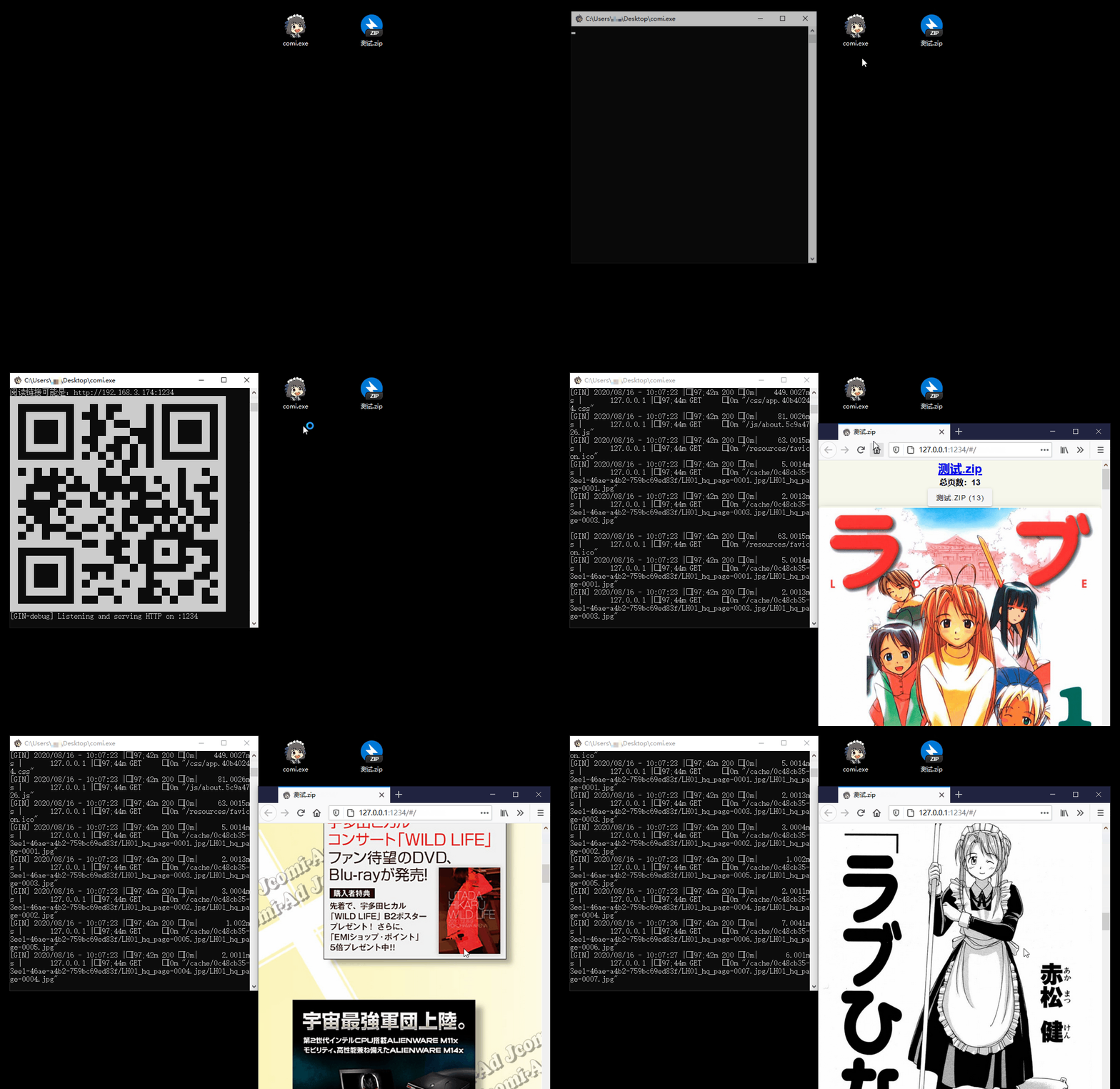
Try it Online
Features
- 📚 Multiple Format Support: Supports image folders and compressed files like
.rar,.zip,.tar,.cbz,.cbr,.epub - 📱 Easy Access: QR code scanning for mobile/tablet devices, drag-and-drop support for Windows
- 📴 Offline Mode / PWA App: Read ZIP/CBZ/RAR/CBR directly in your browser without uploading files
- 🐧 Cross-Platform: Compatibility with Windows, Linux, and macOS
- 📖 Diverse Reading Modes: Offers scroll, and page-turning modes
- ⚙️ Flexible Configuration: Command-line operation with
config.tomllibrary settings - 🖼️ Modern Image Formats: In addition to
jpgandpng, it also supports next-gen formats likeheicandavif - ✂️ Smart Optimization: Automatic image cropping and compression for bandwidth saving
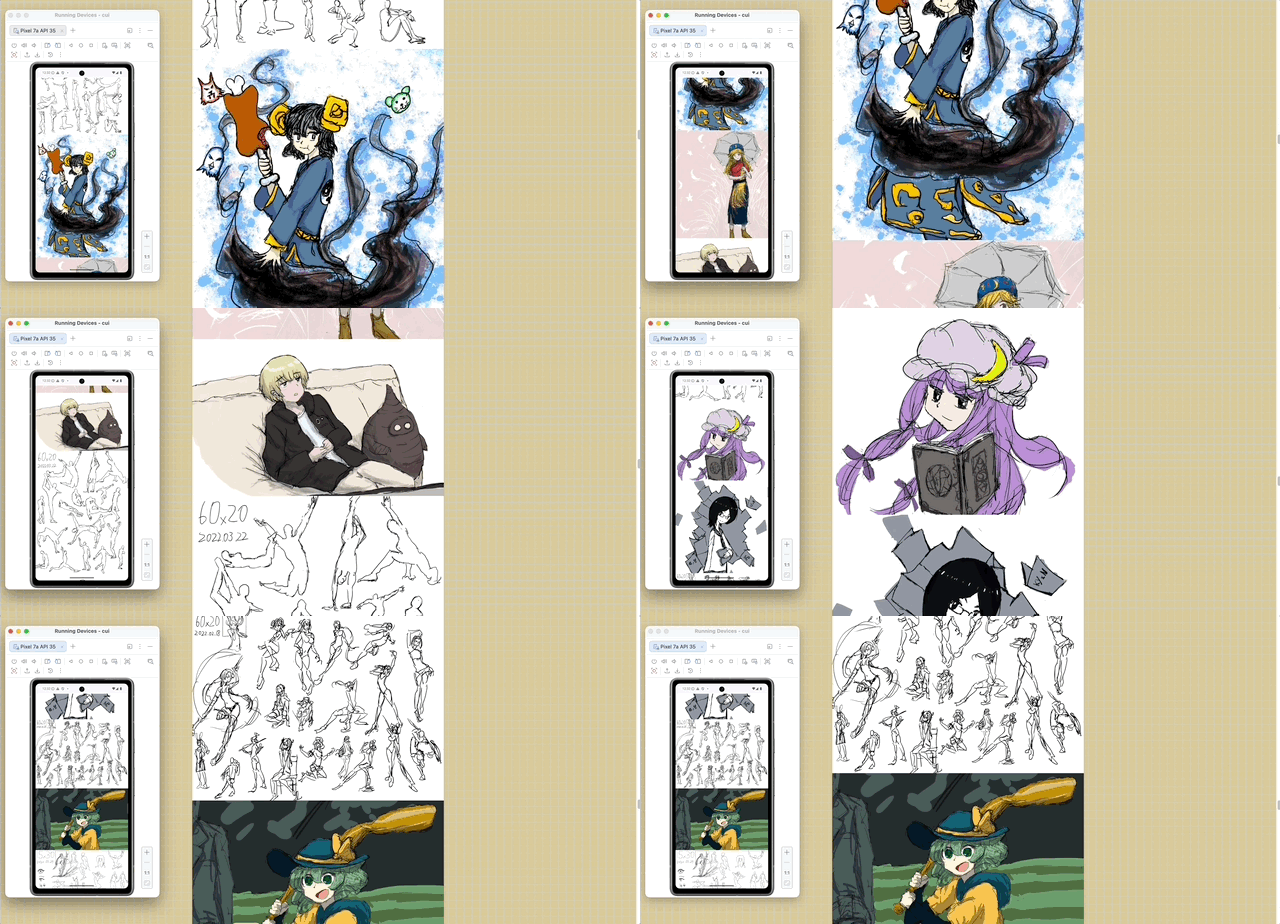
- 🔄 Sync Reading: Synchronized page-turning across different devices
- 🔌 Plugin System: Built-in plugins like auto page-turn and clock, with custom plugin support
- 🎬 Media Playback: Built-in audio and video player
- 📥 Flexible Use: Supports remote Comigo libraries, batch image-folder downloads, and EPUB conversion
- 📜 Reading History: Automatic reading history tracking for easy continuation
PC/Mobile Sync:
Installation Guide
GUI Version (Recommended for Beginners)
| Version | System | Download |
|---|---|---|
| Tray | Windows 64-bit | comigo-tray_latest_Windows_x86_64.zip |
| Tray | Windows ARM64 | comigo-tray_latest_Windows_arm64.zip |
| Tray | macOS (Intel/Apple Silicon) | comigo-tray_latest_MacOS_universal.dmg |
| Tray | Linux 64-bit | comigo-tray_latest_Linux_x86_64.tar.gz |
| Tray | Linux ARM64 | comigo-tray_latest_Linux_arm64.tar.gz |
| Desktop | Windows 64-bit | comigo-desktop_latest_Windows_x86_64.zip |
| Desktop | Windows ARM64 | comigo-desktop_latest_Windows_arm64.zip |
| Desktop | macOS (Intel/Apple Silicon) | comigo-desktop_latest_MacOS_universal.dmg |
| Desktop | Linux 64-bit | comigo-desktop_latest_Linux_x86_64.tar.gz |
| Desktop | Linux ARM64 | comigo-desktop_latest_Linux_arm64.tar.gz |
💡 Which GUI package should I choose? Choose Tray if you want ComiGo to keep running in the background and manage it from the system tray. The Tray version starts the local Web service and opens the reader in your browser; the tray menu can open the browser, copy the reading URL, open config/library folders, switch languages, check for updates, and toggle Tailscale remote access. On Windows, it can also register folder context menus, file associations, and desktop shortcuts.
Choose Desktop if you prefer a regular app window. It displays the ComiGo reader in a standalone window and adds desktop-only actions such as selecting folders with the system picker and moving local source files to the system trash after confirmation. The current Desktop build does not include the tray menu or built-in Tailscale remote access.
macOS tip: If macOS says the app is damaged and should be moved to Trash, the downloaded file is usually not actually broken. Run this after moving the app to Applications:
xattr -dr com.apple.quarantine /Applications/comigo-desktop.app
Quick install for CLI
bash <(curl -s https://raw.githubusercontent.com/yumenaka/comigo/master/get.sh)
Recommended for users in mainland China:
bash <(curl -s https://comigo.xyz/get.sh) --cn
CLI Version
| System | Download |
|---|---|
| Windows 64-bit | comi_latest_Windows_x86_64.zip |
| Windows ARM64 | comi_latest_Windows_arm64.zip |
| Windows 32-bit | comi_latest_Windows_i386.zip |
| macOS Intel | comi_latest_MacOS_x86_64.tar.gz |
| macOS Apple Silicon | comi_latest_MacOS_arm64.tar.gz |
| Linux 64-bit | comi_latest_Linux_x86_64.tar.gz |
| Linux ARM64 | comi_latest_Linux_arm64.tar.gz |
| Linux ARM32 | comi_latest_Linux_armv7.tar.gz |
| Linux 32-bit | comi_latest_Linux_i386.tar.gz |
| Debian/Ubuntu 64-bit | comi_latest_amd64.deb |
| Debian/Ubuntu ARM64 | comi_latest_arm64.deb |
💡 Note: CLI version suitable for server deployment and advanced users. Manual PATH configuration required after download.
Manual Installation
Download the latest version from the Releases page and add the executable to your system's PATH environment variable.
Omarchy status bar integration
Comigo supports Omarchy through the comigo-omarchy plugin, which controls local or remote services from the status bar.
omarchy plugin add https://github.com/yumenaka/comigo-omarchy --enable
Docker Deployment
Quick Start with Docker
# Pull and run the latest image
docker run -d \
  --name comigo \
  -p 1234:1234 \
  -v /path/to/your/books:/data \
  yumenaka/comigo:latest
Visit http://localhost:1234 to access your library.
Using Docker Compose
- Download the
docker-compose.ymlfile - Edit the configuration as needed
- Start the service:
docker-compose up -d
Supported Platforms
linux/amd64- Standard x86_64 serverslinux/arm64- ARM64 servers (Raspberry Pi 4/5)linux/arm/v7- ARMv7 devices (Raspberry Pi 2-4)
For more details, see the complete Docker documentation.
Usage
comi [flags] [file_or_dir ...]
Run in the background and stop:
# Start in the background and scan this library
comi start /path/to/manga
comi status

# Stop local CLI processes (choose one or all if multiple match)
comi stop
comi go is equivalent to comi start, and comi ls / comi ps to comi status, with identical arguments and behavior.
See the deployment manual for detailed usage, environment variables and multiple instances.
Command Line Options
| Option | Short | Default | Description |
|---|---|---|---|
--config |
-c |
- | Specify config file path |
--port |
-p |
1234 | Service port |
--host |
- | - | Custom hostname/domain |
--local |
- | false | Local access only |
--max-depth |
-m |
5 | Max scan depth |
--open-browser |
-o |
false | Open browser on start |
--enable-upload |
- | true | Enable file upload |
--read-only |
- | false | Read-only mode |
--username |
- | - | Login username |
--password |
- | - | Login password |
--debug |
- | false | Debug mode |
Examples
# Open current directory
comi .

# Specify port and path
comi -p 8080 /path/to/manga
Configuration File
The CLI uses config.toml, searching the user’s .config/comigo/ directory, the executable directory, then the working directory, and loading the first match. Use --config to select a file explicitly. Desktop and Tray use desktop.toml and tray.toml, respectively.
Feedback and Support
If you have any suggestions or encounter issues, feel free to:
Special Thanks
Thanks to the following open-source projects and their contributors:
- mholt
- spf13
- disintegration
- Baozisoftware
- And many more contributors
Star History
License
This software is released under the MIT license.
 Documentation


There is no documentation for this package.
 Source Files
 Directories

| Path | Synopsis |
|---|---|
|
archivewasm
command
|
|
|
comi
command
|
|
|
comigo
command
|
|
|
upscale
command
upscale 是供 Comigo 调用的独立图片转换实验程序。
|
upscale 是供 Comigo 调用的独立图片转换实验程序。 |
|
htmx
module
|
|
|
templ
|
|
|
autostart
Package autostart manages the current Comigo program's login startup.
|
Package autostart manages the current Comigo program's login startup. |
|
releases
Package releases 为 CLI、托盘及状态 API 共享只读的版本查询逻辑。
|
Package releases 为 CLI、托盘及状态 API 共享只读的版本查询逻辑。 |
|
traffic
Package traffic 统计本进程提供 HTTP 服务时实际读写的正文,不统计协议开销。
|
Package traffic 统计本进程提供 HTTP 服务时实际读写的正文,不统计协议开销。 |
|
vfs
Package vfs 提供虚拟文件系统抽象层,支持本地文件系统和远程存储(WebDAV、SFTP等)
|
Package vfs 提供虚拟文件系统抽象层,支持本地文件系统和远程存储(WebDAV、SFTP等) |